EUROPE
25230 items
USA
0 items
DIGITAL
24998 items (to print)
Download and print sheet music after purchase
Sheetmusic to print
24998 sheet music found


Woodwind Ensemble Bassoon,Double Reed Quintet - Level 3 - Digital Download SKU: A0.1321298 Composed by Various. Arranged by Ander. Chamber,Christmas. 104 pages. Woods Only, Arrangements #909754. Published by Woods Only, Arrangements (A0.1321298). We present our enchanting Collection of Christmas Arrangements for Bassoon Quintet, specially crafted for the festive Christmas season! Delight in the spirit of Christmas with these innovative interpretations of timeless classics, meticulously crafted to bring joy and magic to your musical repertoire.1 - Jingle Bells in Different Styles:Are you ready for a musical journey through various styles of Jingle Bells? Our arrangement for Bassoon Quintet takes you from a slow and gentle opening to an animated version, exploring waltz and samba styles along the way. Perfect for Christmas parties, chamber music groups, recitals, and concerts, this unique arrangement is a charming twist on a holiday favorite. Don’t miss the chance to surprise and delight your audience with this creative interpretation!2 - We Wish You a Merry Christmas:Step into the magic of Christmas with our innovative arrangement for Bassoon Quintet of We Wish You a Merry Christmas. This score breathes new life into the classic melody, creating an enchanting atmosphere while preserving the essence of the original work. Ideal for Christmas events, recitals, concerts, and educational purposes, this arrangement is a valuable addition to any musical collection. Embrace the universal language of music and charm your audience with this special interpretation.3 - Joy to the World:Immerse yourself in the beauty of our reimagined arrangement for Bassoon Quintet of Joy to the World. This classic Christmas hymn takes on a new and magical guise, exploring new rhythms, harmonies, and counterpoints without losing the original essence. Perfect for Christmas events, recitals, concerts, and music education, this arrangement highlights the beauty and creativity that will captivate every listener. Be part of the history of this wonderful song with our exclusive score.4 - Silent Night:Step into the serene magic of our arrangement for Silent Night, a beloved Christmas song translated into over 300 languages. Originally composed in 1818, this rendition captures the longing for redemption and peace, making it perfect for various Christmas occasions. Dive into the historical significance of the piece and add a touch of magic to your musical repertoire with our innovative arrangement.5 - Deck the Halls:Enter the enchanting world of our arrangement for Bassoon Quintet of Deck the Halls. This interpretation offers a fresh and magical perspective on the traditional melody, making it perfect for Christmas events, recitals, concerts, and music education. Originating from the 16th-century Welsh melody, this arrangement adds a modern touch while preserving the essence of the historical piece. Elevate your Christmas celebrations with this charming and historically rich arrangement.Bonus - God Rest Ye Merry Gentlemen:Uncover the beauty of Christmas with our arrangement for Bassoon Quintet of God Rest Ye Merry Gentlemen. This timeless English Christmas song is reborn in this innovative interpretation, maintaining the original essence while breathing new life into the melody. Whether for chamber music recitals, concerts, public shows, or educational purposes, this arrangement is a perfect blend of tradition and innovation. Capture the magic of Christmas and add this valuable piece to your repertoire today!Our Christmas Collection for Bassoon Quintet is a testament to the transformative power of music. Each arrangement is a journey, taking familiar melodies and presenting them in a new light that is both innovative and respectful of their origins. These arrangements are more than just music; they are an invitation to experience the joy, wonder, and magic of Christmas in a unique and unforgettable way. So, whether you're a seasoned musician or a beginner, we invite you to explore these arrangements and let the music fill your heart with the spirit of Christmas. Enjoy the journey!
5 Christmas Songs for Bassoon Quintet plus one Bonus

$49.99 43.26 € PDF SheetMusicPlus

Voice and piano (2 songs with violoncello; 1 vocal duet) - Medium - Digital Download SKU: MQ.8491-21E Composed by MeeAe Cecilia Nam and Theodore Gouvy. 7 pages. E. C. Schirmer Music Company - Digital #8491-21E. Published by E. C. Schirmer Music Company - Digital (MQ.8491-21E). French.A French composer, Théodore Gouvy (1819-1898) was one of the most significant composers of 19th Century in Europe. The movement of rediscovering his instrumental music has been increasingly successful in Europe since the 1990s, especially following the birth of L’Institut Gouvy in France. However, his solo vocal music has been waiting to be unveiled to the public. Volume One includes 52 songs of Gouvy.Gouvy traveled widely throughout Europe. He was also a lover of nature. Generally, he spent his winters in Leipzig, but in the summertime, he always returned to Hombourg-Haut, France, to stroll through the woods, to hunt, and to relax. Gouvy was fluent in several languages and had a great appreciation of the Renaissance French Poetry of Pierre de Ronsard whose poetry he had set to music. The fifty-two songs in this volume are largely by Ronsard and other Renaissance poets of La Pléiade.Although Ronsard is approximately 300 years older than Gouvy, they both seem to have the same interest in classical literature, though, admittedly, for different reasons. Celebrated by the French and English courts, Ronsard (1525-1585) was the leader of La Pléiade: a group of seven poets (Joachim Du Bellay (1522-1560), Rémy Belleau (1528-1577), Étienne Jodelle (1532-1573), Pontus de Tyard (1521-1603), Jean–Antoine Baïf (1532-1589), and Jean Daurat (1508-1588), who dedicated their efforts to writing poetry in French rather than in Latin (or Greek) as most of the Romantic poets did. They wished to enrich the French language, and establish a new literature which would be the equal of the other literature of their period, and the equal to poets of the past. French Romantic poetry featured the closeness of the poet to nature, and his ability to communicate with nature by personifying (anthropomorphizing) all of nature’s elements: flowers, the planets, the moon, the breeze, and even the sand upon the shore. As a significant melodist, Gouvy’s treatment of the vocal solo line and his treatment and development of the piano accompaniment places him in the upper echelons as a composer of songs. His diverse cultural life led a rich and significant musical life, interacting with his contemporaries who admired his work, and whom Gouvy knew well, such as Liszt, Brahms, Schumann, Mendelssohn, Berlioz and Gounod. Contents:Six Odes de Ronsard pour ténor et piano, Op. 37 (No. 3 et No. 5 avec violoncelle) Neuf Poésies de Ronsard pour soprano ou ténor et piano, Op. 41 Six Poésies de Ronsard pour soprano ou ténor et piano, Op. 42 Quatre Odes de Ronsard pour baryton et piano, Op. 43 Huit Poésies de Ronsard pour ténor ou soprano et piano, Op. 44 Sept Poésies de Ronsard pour ténor ou soprano et piano, Op. 47.
Op. 42, No. 6: Chanson from Songs of Gouvy, V1 (Downloadable)
Piano, Voice

$3.00 2.6 € Piano, Voice PDF SheetMusicPlus

Voice and piano (2 songs with violoncello; 1 vocal duet) - Medium - Digital Download SKU: MQ.8491-23E Composed by MeeAe Cecilia Nam and Theodore Gouvy. 5 pages. E. C. Schirmer Music Company - Digital #8491-23E. Published by E. C. Schirmer Music Company - Digital (MQ.8491-23E). French.A French composer, Théodore Gouvy (1819-1898) was one of the most significant composers of 19th Century in Europe. The movement of rediscovering his instrumental music has been increasingly successful in Europe since the 1990s, especially following the birth of L’Institut Gouvy in France. However, his solo vocal music has been waiting to be unveiled to the public. Volume One includes 52 songs of Gouvy.Gouvy traveled widely throughout Europe. He was also a lover of nature. Generally, he spent his winters in Leipzig, but in the summertime, he always returned to Hombourg-Haut, France, to stroll through the woods, to hunt, and to relax. Gouvy was fluent in several languages and had a great appreciation of the Renaissance French Poetry of Pierre de Ronsard whose poetry he had set to music. The fifty-two songs in this volume are largely by Ronsard and other Renaissance poets of La Pléiade.Although Ronsard is approximately 300 years older than Gouvy, they both seem to have the same interest in classical literature, though, admittedly, for different reasons. Celebrated by the French and English courts, Ronsard (1525-1585) was the leader of La Pléiade: a group of seven poets (Joachim Du Bellay (1522-1560), Rémy Belleau (1528-1577), Étienne Jodelle (1532-1573), Pontus de Tyard (1521-1603), Jean–Antoine Baïf (1532-1589), and Jean Daurat (1508-1588), who dedicated their efforts to writing poetry in French rather than in Latin (or Greek) as most of the Romantic poets did. They wished to enrich the French language, and establish a new literature which would be the equal of the other literature of their period, and the equal to poets of the past. French Romantic poetry featured the closeness of the poet to nature, and his ability to communicate with nature by personifying (anthropomorphizing) all of nature’s elements: flowers, the planets, the moon, the breeze, and even the sand upon the shore. As a significant melodist, Gouvy’s treatment of the vocal solo line and his treatment and development of the piano accompaniment places him in the upper echelons as a composer of songs. His diverse cultural life led a rich and significant musical life, interacting with his contemporaries who admired his work, and whom Gouvy knew well, such as Liszt, Brahms, Schumann, Mendelssohn, Berlioz and Gounod. Contents:Six Odes de Ronsard pour ténor et piano, Op. 37 (No. 3 et No. 5 avec violoncelle) Neuf Poésies de Ronsard pour soprano ou ténor et piano, Op. 41 Six Poésies de Ronsard pour soprano ou ténor et piano, Op. 42 Quatre Odes de Ronsard pour baryton et piano, Op. 43 Huit Poésies de Ronsard pour ténor ou soprano et piano, Op. 44 Sept Poésies de Ronsard pour ténor ou soprano et piano, Op. 47.
Op. 43, No. 2: À Nicolas from Songs of Gouvy, V1 (Downloadable)
Piano, Voice

$3.00 2.6 € Piano, Voice PDF SheetMusicPlus

Voice and piano (2 songs with violoncello; 1 vocal duet) - Medium - Digital Download SKU: MQ.8491-38E Composed by MeeAe Cecilia Nam and Theodore Gouvy. 5 pages. E. C. Schirmer Music Company - Digital #8491-38E. Published by E. C. Schirmer Music Company - Digital (MQ.8491-38E). French.A French composer, Théodore Gouvy (1819-1898) was one of the most significant composers of 19th Century in Europe. The movement of rediscovering his instrumental music has been increasingly successful in Europe since the 1990s, especially following the birth of L’Institut Gouvy in France. However, his solo vocal music has been waiting to be unveiled to the public. Volume One includes 52 songs of Gouvy.Gouvy traveled widely throughout Europe. He was also a lover of nature. Generally, he spent his winters in Leipzig, but in the summertime, he always returned to Hombourg-Haut, France, to stroll through the woods, to hunt, and to relax. Gouvy was fluent in several languages and had a great appreciation of the Renaissance French Poetry of Pierre de Ronsard whose poetry he had set to music. The fifty-two songs in this volume are largely by Ronsard and other Renaissance poets of La Pléiade.Although Ronsard is approximately 300 years older than Gouvy, they both seem to have the same interest in classical literature, though, admittedly, for different reasons. Celebrated by the French and English courts, Ronsard (1525-1585) was the leader of La Pléiade: a group of seven poets (Joachim Du Bellay (1522-1560), Rémy Belleau (1528-1577), Étienne Jodelle (1532-1573), Pontus de Tyard (1521-1603), Jean–Antoine Baïf (1532-1589), and Jean Daurat (1508-1588), who dedicated their efforts to writing poetry in French rather than in Latin (or Greek) as most of the Romantic poets did. They wished to enrich the French language, and establish a new literature which would be the equal of the other literature of their period, and the equal to poets of the past. French Romantic poetry featured the closeness of the poet to nature, and his ability to communicate with nature by personifying (anthropomorphizing) all of nature’s elements: flowers, the planets, the moon, the breeze, and even the sand upon the shore. As a significant melodist, Gouvy’s treatment of the vocal solo line and his treatment and development of the piano accompaniment places him in the upper echelons as a composer of songs. His diverse cultural life led a rich and significant musical life, interacting with his contemporaries who admired his work, and whom Gouvy knew well, such as Liszt, Brahms, Schumann, Mendelssohn, Berlioz and Gounod. Contents:Six Odes de Ronsard pour ténor et piano, Op. 37 (No. 3 et No. 5 avec violoncelle) Neuf Poésies de Ronsard pour soprano ou ténor et piano, Op. 41 Six Poésies de Ronsard pour soprano ou ténor et piano, Op. 42 Quatre Odes de Ronsard pour baryton et piano, Op. 43 Huit Poésies de Ronsard pour ténor ou soprano et piano, Op. 44 Sept Poésies de Ronsard pour ténor ou soprano et piano, Op. 47.
Op. 47, No. 5: Adieu from Songs of Gouvy, V1 (Downloadable)
Piano, Voice

$3.00 2.6 € Piano, Voice PDF SheetMusicPlus

Voice and piano (2 songs with violoncello; 1 vocal duet) - Medium - Digital Download SKU: MQ.8491-24E Composed by MeeAe Cecilia Nam and Theodore Gouvy. 4 pages. E. C. Schirmer Music Company - Digital #8491-24E. Published by E. C. Schirmer Music Company - Digital (MQ.8491-24E). French.A French composer, Théodore Gouvy (1819-1898) was one of the most significant composers of 19th Century in Europe. The movement of rediscovering his instrumental music has been increasingly successful in Europe since the 1990s, especially following the birth of L’Institut Gouvy in France. However, his solo vocal music has been waiting to be unveiled to the public. Volume One includes 52 songs of Gouvy.Gouvy traveled widely throughout Europe. He was also a lover of nature. Generally, he spent his winters in Leipzig, but in the summertime, he always returned to Hombourg-Haut, France, to stroll through the woods, to hunt, and to relax. Gouvy was fluent in several languages and had a great appreciation of the Renaissance French Poetry of Pierre de Ronsard whose poetry he had set to music. The fifty-two songs in this volume are largely by Ronsard and other Renaissance poets of La Pléiade.Although Ronsard is approximately 300 years older than Gouvy, they both seem to have the same interest in classical literature, though, admittedly, for different reasons. Celebrated by the French and English courts, Ronsard (1525-1585) was the leader of La Pléiade: a group of seven poets (Joachim Du Bellay (1522-1560), Rémy Belleau (1528-1577), Étienne Jodelle (1532-1573), Pontus de Tyard (1521-1603), Jean–Antoine Baïf (1532-1589), and Jean Daurat (1508-1588), who dedicated their efforts to writing poetry in French rather than in Latin (or Greek) as most of the Romantic poets did. They wished to enrich the French language, and establish a new literature which would be the equal of the other literature of their period, and the equal to poets of the past. French Romantic poetry featured the closeness of the poet to nature, and his ability to communicate with nature by personifying (anthropomorphizing) all of nature’s elements: flowers, the planets, the moon, the breeze, and even the sand upon the shore. As a significant melodist, Gouvy’s treatment of the vocal solo line and his treatment and development of the piano accompaniment places him in the upper echelons as a composer of songs. His diverse cultural life led a rich and significant musical life, interacting with his contemporaries who admired his work, and whom Gouvy knew well, such as Liszt, Brahms, Schumann, Mendelssohn, Berlioz and Gounod. Contents:Six Odes de Ronsard pour ténor et piano, Op. 37 (No. 3 et No. 5 avec violoncelle) Neuf Poésies de Ronsard pour soprano ou ténor et piano, Op. 41 Six Poésies de Ronsard pour soprano ou ténor et piano, Op. 42 Quatre Odes de Ronsard pour baryton et piano, Op. 43 Huit Poésies de Ronsard pour ténor ou soprano et piano, Op. 44 Sept Poésies de Ronsard pour ténor ou soprano et piano, Op. 47.
Op. 43, No. 3: Pour boire dessus l’herbe tendre from Songs of Gouvy, V1 (Downloadable)
Piano, Voice

$3.00 2.6 € Piano, Voice PDF SheetMusicPlus

Choral Choir (Mixed) - Level 3 - Digital Download SKU: A0.958765 Composed by Peter Ilyich Tchaikovsky. Arranged by Juan Carlos Cortés A. Instructional,Romantic Period,World. Octavo. 234 pages. Juan Carlos Cortés Aguirre #6473855. Published by Juan Carlos Cortés Aguirre (A0.958765). Traducción al idioma Español (Castellano) de la obra pedagógica musical Guía práctica para el estudio de la armonía por Piotr Ilich Tchaikovsky (Vótkinsk, 7 de mayo de 1840 - San Petersburgo, 6 de noviembre de 1893), compositor ruso del Siglo XIX basado en la versión rusa, luego traducida a los idiomas Alemán e Inglés. Obra amparada por el © Copyright como Derecho Conexo que otorga protección a quienes, sin ser autores, contribuyen con creatividad, técnica u organización, en el proceso de poner a disposición del público una obra.VÍDEOS:VIMEO:https://vimeo.com/679341606Перевод на испанский (кастильский) язык музыкально-педагогического сочинения «Практическое пособие по изучению гармонии Петра Ильича Чайковского (Воткинск, 7 мая 1840 г. - Санкт-Петербург, 6 ноября 1893 г.), русского композитора XIX века. Русская версия, затем переведенная на немецкий и английский языки. Работа защищена авторским правом © как смежное право, которое обеспечивает защиту тем, кто, не являясь авторами, вносит свой творческий вклад, используя технику или организацию, в процессе предоставления общественности Работа.Übersetzung in die spanische Sprache (Kastilisch) des musikpädagogischen Werks Praktischer Leitfaden für das Studium der Harmonielehre von Pjotr ​​Iljitsch Tschaikowsky (Vótkinsk, 7. Mai 1840 - Sankt Petersburg, 6. November 1893), russischer Komponist des 19. Russische Version, dann in die deutsche und englische Sprache übersetzt.. Werk geschützt durch © Copyright als verwandtes Recht, das denjenigen Schutz gewährt, die, ohne Autoren zu sein, mit Kreativität, Technik oder Organisation einen Beitrag zur öffentlichen Zugänglichmachung leisten a Arbeit.Translation into Spanish language (Castilian) of the musical pedagogical work Practical guide for the study of harmony by Pyotr Ilyich Tchaikovsky (Vótkinsk, May 7, 1840 - Saint Petersburg, November 6, 1893), Russian composer of the XIX century based in the Russian version, later translated into the German and English languages. Work protected by © Copyright as a Related Right that grants protection to those who, without being authors, contribute with creativity, technique or organization, in the process of making available to the public a work.Traduzione in lingua spagnola (castigliano) dell'opera di pedagogia musicale Guida pratica per lo studio dell'armonia di Pyotr Ilyich Tchaikovsky (Vótkinsk, 7 maggio 1840 - San Pietroburgo, 6 novembre 1893), compositore russo del XIX secolo con sede nel Versione russa, poi tradotta in lingua tedesca e inglese Opera protetta da © Copyright as a Related Right che garantisce protezione a coloro che, senza essere autori, contribuiscono con creatività, tecnica o organizzazione, nel processo di messa a disposizione del pubblico di un lavoro. Traduction en espagnol (castillan) de l'ouvrage de pédagogie musicale Guide pratique pour l'étude de l'harmonie de Piotr Ilich Tchaïkovski (Votkinsk, 7 mai 1840 - Saint-Pétersbourg, 6 novembre 1893), compositeur russe du XIXe siècle, basée sur la version russe, traduite ultérieurement en allemand et en anglais. L'œuvre est couverte par le © Copyright en tant que droit voisin qui accorde une protection à ceux qui, sans être des auteurs, contribuent de manière créative, technique ou organisationnelle au processus de mise à disposition d'une œuvre au public.
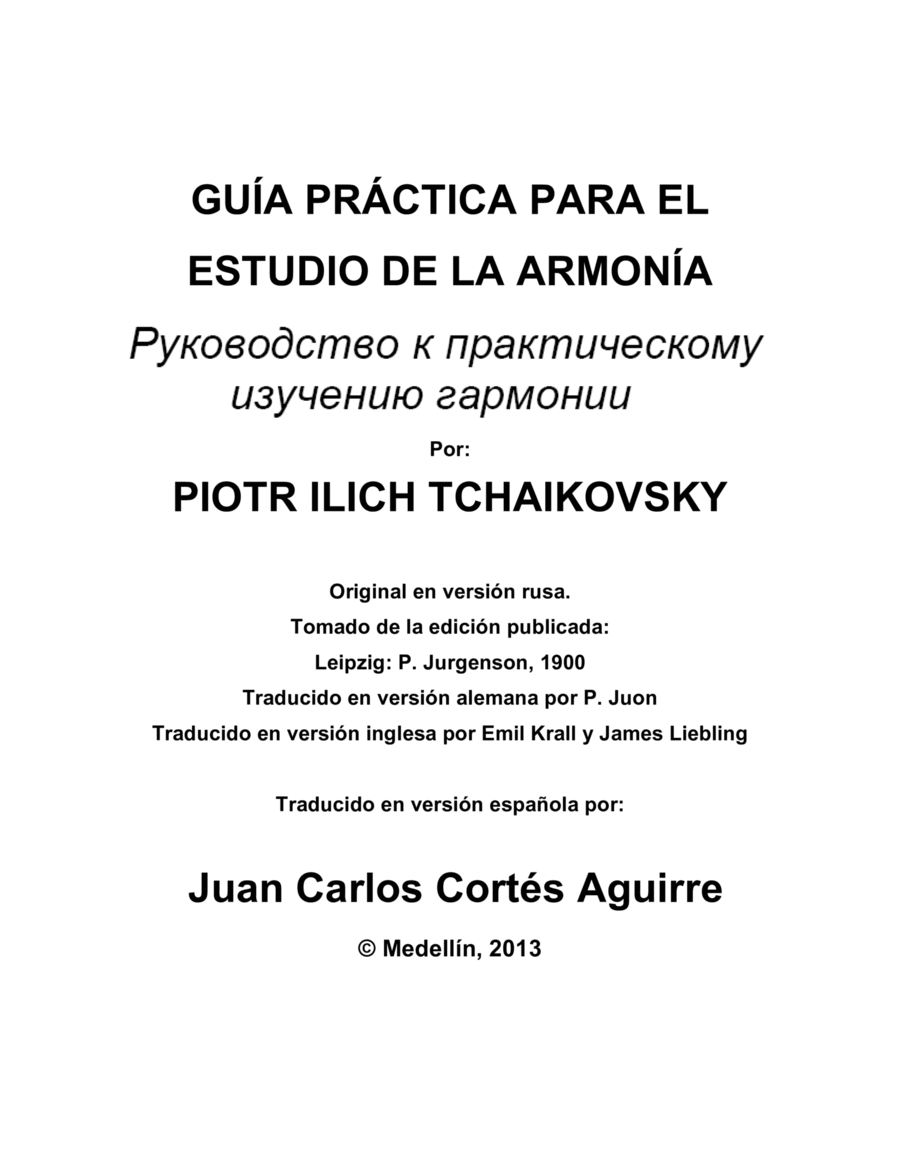
Guía práctica para el estudio de la armonía - Piotr Ilich Tchaikovsky
Choral SATB

$39.99 34.6 € Choral SATB PDF SheetMusicPlus

Voice and piano (2 songs with violoncello; 1 vocal duet) - Medium - Digital Download SKU: MQ.8491-45E Composed by MeeAe Cecilia Nam and Theodore Gouvy. 5 pages. E. C. Schirmer Music Company - Digital #8491-45E. Published by E. C. Schirmer Music Company - Digital (MQ.8491-45E). French.A French composer, Théodore Gouvy (1819-1898) was one of the most significant composers of 19th Century in Europe. The movement of rediscovering his instrumental music has been increasingly successful in Europe since the 1990s, especially following the birth of L’Institut Gouvy in France. However, his solo vocal music has been waiting to be unveiled to the public. Volume One includes 52 songs of Gouvy.Gouvy traveled widely throughout Europe. He was also a lover of nature. Generally, he spent his winters in Leipzig, but in the summertime, he always returned to Hombourg-Haut, France, to stroll through the woods, to hunt, and to relax. Gouvy was fluent in several languages and had a great appreciation of the Renaissance French Poetry of Pierre de Ronsard whose poetry he had set to music. The fifty-two songs in this volume are largely by Ronsard and other Renaissance poets of La Pléiade.Although Ronsard is approximately 300 years older than Gouvy, they both seem to have the same interest in classical literature, though, admittedly, for different reasons. Celebrated by the French and English courts, Ronsard (1525-1585) was the leader of La Pléiade: a group of seven poets (Joachim Du Bellay (1522-1560), Rémy Belleau (1528-1577), Étienne Jodelle (1532-1573), Pontus de Tyard (1521-1603), Jean–Antoine Baïf (1532-1589), and Jean Daurat (1508-1588), who dedicated their efforts to writing poetry in French rather than in Latin (or Greek) as most of the Romantic poets did. They wished to enrich the French language, and establish a new literature which would be the equal of the other literature of their period, and the equal to poets of the past. French Romantic poetry featured the closeness of the poet to nature, and his ability to communicate with nature by personifying (anthropomorphizing) all of nature’s elements: flowers, the planets, the moon, the breeze, and even the sand upon the shore. As a significant melodist, Gouvy’s treatment of the vocal solo line and his treatment and development of the piano accompaniment places him in the upper echelons as a composer of songs. His diverse cultural life led a rich and significant musical life, interacting with his contemporaries who admired his work, and whom Gouvy knew well, such as Liszt, Brahms, Schumann, Mendelssohn, Berlioz and Gounod. Contents:Six Odes de Ronsard pour ténor et piano, Op. 37 (No. 3 et No. 5 avec violoncelle) Neuf Poésies de Ronsard pour soprano ou ténor et piano, Op. 41 Six Poésies de Ronsard pour soprano ou ténor et piano, Op. 42 Quatre Odes de Ronsard pour baryton et piano, Op. 43 Huit Poésies de Ronsard pour ténor ou soprano et piano, Op. 44 Sept Poésies de Ronsard pour ténor ou soprano et piano, Op. 47.
Op. 48, No. 5: Père du doux repos from Songs of Gouvy, V1 (Downloadable)
Piano, Voice

$3.00 2.6 € Piano, Voice PDF SheetMusicPlus

Voice and piano (2 songs with violoncello; 1 vocal duet) - Medium - Digital Download SKU: MQ.8491-43E Composed by MeeAe Cecilia Nam and Theodore Gouvy. 4 pages. E. C. Schirmer Music Company - Digital #8491-43E. Published by E. C. Schirmer Music Company - Digital (MQ.8491-43E). French.A French composer, Théodore Gouvy (1819-1898) was one of the most significant composers of 19th Century in Europe. The movement of rediscovering his instrumental music has been increasingly successful in Europe since the 1990s, especially following the birth of L’Institut Gouvy in France. However, his solo vocal music has been waiting to be unveiled to the public. Volume One includes 52 songs of Gouvy.Gouvy traveled widely throughout Europe. He was also a lover of nature. Generally, he spent his winters in Leipzig, but in the summertime, he always returned to Hombourg-Haut, France, to stroll through the woods, to hunt, and to relax. Gouvy was fluent in several languages and had a great appreciation of the Renaissance French Poetry of Pierre de Ronsard whose poetry he had set to music. The fifty-two songs in this volume are largely by Ronsard and other Renaissance poets of La Pléiade.Although Ronsard is approximately 300 years older than Gouvy, they both seem to have the same interest in classical literature, though, admittedly, for different reasons. Celebrated by the French and English courts, Ronsard (1525-1585) was the leader of La Pléiade: a group of seven poets (Joachim Du Bellay (1522-1560), Rémy Belleau (1528-1577), Étienne Jodelle (1532-1573), Pontus de Tyard (1521-1603), Jean–Antoine Baïf (1532-1589), and Jean Daurat (1508-1588), who dedicated their efforts to writing poetry in French rather than in Latin (or Greek) as most of the Romantic poets did. They wished to enrich the French language, and establish a new literature which would be the equal of the other literature of their period, and the equal to poets of the past. French Romantic poetry featured the closeness of the poet to nature, and his ability to communicate with nature by personifying (anthropomorphizing) all of nature’s elements: flowers, the planets, the moon, the breeze, and even the sand upon the shore. As a significant melodist, Gouvy’s treatment of the vocal solo line and his treatment and development of the piano accompaniment places him in the upper echelons as a composer of songs. His diverse cultural life led a rich and significant musical life, interacting with his contemporaries who admired his work, and whom Gouvy knew well, such as Liszt, Brahms, Schumann, Mendelssohn, Berlioz and Gounod. Contents:Six Odes de Ronsard pour ténor et piano, Op. 37 (No. 3 et No. 5 avec violoncelle) Neuf Poésies de Ronsard pour soprano ou ténor et piano, Op. 41 Six Poésies de Ronsard pour soprano ou ténor et piano, Op. 42 Quatre Odes de Ronsard pour baryton et piano, Op. 43 Huit Poésies de Ronsard pour ténor ou soprano et piano, Op. 44 Sept Poésies de Ronsard pour ténor ou soprano et piano, Op. 47.
Op. 48, No. 3: Doux rossignol, c’est toi! from Songs of Gouvy, V1 (Downloadable)
Piano, Voice

$3.00 2.6 € Piano, Voice PDF SheetMusicPlus

Voice and piano (2 songs with violoncello; 1 vocal duet) - Medium - Digital Download SKU: MQ.8491-19E Composed by MeeAe Cecilia Nam and Theodore Gouvy. 6 pages. E. C. Schirmer Music Company - Digital #8491-19E. Published by E. C. Schirmer Music Company - Digital (MQ.8491-19E). French.A French composer, Théodore Gouvy (1819-1898) was one of the most significant composers of 19th Century in Europe. The movement of rediscovering his instrumental music has been increasingly successful in Europe since the 1990s, especially following the birth of L’Institut Gouvy in France. However, his solo vocal music has been waiting to be unveiled to the public. Volume One includes 52 songs of Gouvy.Gouvy traveled widely throughout Europe. He was also a lover of nature. Generally, he spent his winters in Leipzig, but in the summertime, he always returned to Hombourg-Haut, France, to stroll through the woods, to hunt, and to relax. Gouvy was fluent in several languages and had a great appreciation of the Renaissance French Poetry of Pierre de Ronsard whose poetry he had set to music. The fifty-two songs in this volume are largely by Ronsard and other Renaissance poets of La Pléiade.Although Ronsard is approximately 300 years older than Gouvy, they both seem to have the same interest in classical literature, though, admittedly, for different reasons. Celebrated by the French and English courts, Ronsard (1525-1585) was the leader of La Pléiade: a group of seven poets (Joachim Du Bellay (1522-1560), Rémy Belleau (1528-1577), Étienne Jodelle (1532-1573), Pontus de Tyard (1521-1603), Jean–Antoine Baïf (1532-1589), and Jean Daurat (1508-1588), who dedicated their efforts to writing poetry in French rather than in Latin (or Greek) as most of the Romantic poets did. They wished to enrich the French language, and establish a new literature which would be the equal of the other literature of their period, and the equal to poets of the past. French Romantic poetry featured the closeness of the poet to nature, and his ability to communicate with nature by personifying (anthropomorphizing) all of nature’s elements: flowers, the planets, the moon, the breeze, and even the sand upon the shore. As a significant melodist, Gouvy’s treatment of the vocal solo line and his treatment and development of the piano accompaniment places him in the upper echelons as a composer of songs. His diverse cultural life led a rich and significant musical life, interacting with his contemporaries who admired his work, and whom Gouvy knew well, such as Liszt, Brahms, Schumann, Mendelssohn, Berlioz and Gounod. Contents:Six Odes de Ronsard pour ténor et piano, Op. 37 (No. 3 et No. 5 avec violoncelle) Neuf Poésies de Ronsard pour soprano ou ténor et piano, Op. 41 Six Poésies de Ronsard pour soprano ou ténor et piano, Op. 42 Quatre Odes de Ronsard pour baryton et piano, Op. 43 Huit Poésies de Ronsard pour ténor ou soprano et piano, Op. 44 Sept Poésies de Ronsard pour ténor ou soprano et piano, Op. 47.
Op. 42, No. 4: Le Bouquet from Songs of Gouvy, V1 (Downloadable)
Piano, Voice

$3.00 2.6 € Piano, Voice PDF SheetMusicPlus

Saxophone Ensemble,Woodwind Ensemble Alto Saxophone,Baritone Saxophone,Bass Saxophone,Soprano Saxophone,Tenor Saxophone - Level 3 - Digital Download SKU: A0.1324977 Composed by Various. Arranged by Ander. Chamber,Christmas. 104 pages. Woods Only, Arrangements #913193. Published by Woods Only, Arrangements (A0.1324977). We present our enchanting Collection of Christmas Arrangements for Sax Ensemble, specially crafted for the festive Christmas season! Delight in the spirit of Christmas with these innovative interpretations of timeless classics, meticulously crafted to bring joy and magic to your musical repertoire.1 - Jingle Bells in Different Styles:Are you ready for a musical journey through various styles of Jingle Bells? Our arrangement for Sax Ensemble takes you from a slow and gentle opening to an animated version, exploring waltz and samba styles along the way. Perfect for Christmas parties, chamber music groups, recitals, and concerts, this unique arrangement is a charming twist on a holiday favorite. Don’t miss the chance to surprise and delight your audience with this creative interpretation!2 - We Wish You a Merry Christmas:Step into the magic of Christmas with our innovative arrangement for Sax Ensemble of We Wish You a Merry Christmas. This score breathes new life into the classic melody, creating an enchanting atmosphere while preserving the essence of the original work. Ideal for Christmas events, recitals, concerts, and educational purposes, this arrangement is a valuable addition to any musical collection. Embrace the universal language of music and charm your audience with this special interpretation.3 - Joy to the World:Immerse yourself in the beauty of our reimagined arrangement for Sax Ensemble of Joy to the World. This classic Christmas hymn takes on a new and magical guise, exploring new rhythms, harmonies, and counterpoints without losing the original essence. Perfect for Christmas events, recitals, concerts, and music education, this arrangement highlights the beauty and creativity that will captivate every listener. Be part of the history of this wonderful song with our exclusive score.4 - Silent Night:Step into the serene magic of our arrangement for Silent Night, a beloved Christmas song translated into over 300 languages. Originally composed in 1818, this rendition captures the longing for redemption and peace, making it perfect for various Christmas occasions. Dive into the historical significance of the piece and add a touch of magic to your musical repertoire with our innovative arrangement.5 - Deck the Halls:Enter the enchanting world of our arrangement for Sax Ensemble of Deck the Halls. This interpretation offers a fresh and magical perspective on the traditional melody, making it perfect for Christmas events, recitals, concerts, and music education. Originating from the 16th-century Welsh melody, this arrangement adds a modern touch while preserving the essence of the historical piece. Elevate your Christmas celebrations with this charming and historically rich arrangement.Bonus - God Rest Ye Merry Gentlemen:Uncover the beauty of Christmas with our arrangement for Sax Ensemble of God Rest Ye Merry Gentlemen. This timeless English Christmas song is reborn in this innovative interpretation, maintaining the original essence while breathing new life into the melody. Whether for chamber music recitals, concerts, public shows, or educational purposes, this arrangement is a perfect blend of tradition and innovation. Capture the magic of Christmas and add this valuable piece to your repertoire today!Our Christmas Collection for Sax Ensemble is a testament to the transformative power of music. Each arrangement is a journey, taking familiar melodies and presenting them in a new light that is both innovative and respectful of their origins. These arrangements are more than just music; they are an invitation to experience the joy, wonder, and magic of Christmas in a unique and unforgettable way. So, whether you're a seasoned musician or a beginner, we invite you to explore these arrangements and let the music fill your heart with the spirit of Christmas. Enjoy the journey!
5 Christmas Songs for Saxophone Ensemble plus one Bonus
Saxophone ensemble

$49.99 43.26 € Saxophone ensemble PDF SheetMusicPlus

Voice and piano (2 songs with violoncello; 1 vocal duet) - Medium - Digital Download SKU: MQ.8491-35E Composed by MeeAe Cecilia Nam and Theodore Gouvy. 4 pages. E. C. Schirmer Music Company - Digital #8491-35E. Published by E. C. Schirmer Music Company - Digital (MQ.8491-35E). French.A French composer, Théodore Gouvy (1819-1898) was one of the most significant composers of 19th Century in Europe. The movement of rediscovering his instrumental music has been increasingly successful in Europe since the 1990s, especially following the birth of L’Institut Gouvy in France. However, his solo vocal music has been waiting to be unveiled to the public. Volume One includes 52 songs of Gouvy.Gouvy traveled widely throughout Europe. He was also a lover of nature. Generally, he spent his winters in Leipzig, but in the summertime, he always returned to Hombourg-Haut, France, to stroll through the woods, to hunt, and to relax. Gouvy was fluent in several languages and had a great appreciation of the Renaissance French Poetry of Pierre de Ronsard whose poetry he had set to music. The fifty-two songs in this volume are largely by Ronsard and other Renaissance poets of La Pléiade.Although Ronsard is approximately 300 years older than Gouvy, they both seem to have the same interest in classical literature, though, admittedly, for different reasons. Celebrated by the French and English courts, Ronsard (1525-1585) was the leader of La Pléiade: a group of seven poets (Joachim Du Bellay (1522-1560), Rémy Belleau (1528-1577), Étienne Jodelle (1532-1573), Pontus de Tyard (1521-1603), Jean–Antoine Baïf (1532-1589), and Jean Daurat (1508-1588), who dedicated their efforts to writing poetry in French rather than in Latin (or Greek) as most of the Romantic poets did. They wished to enrich the French language, and establish a new literature which would be the equal of the other literature of their period, and the equal to poets of the past. French Romantic poetry featured the closeness of the poet to nature, and his ability to communicate with nature by personifying (anthropomorphizing) all of nature’s elements: flowers, the planets, the moon, the breeze, and even the sand upon the shore. As a significant melodist, Gouvy’s treatment of the vocal solo line and his treatment and development of the piano accompaniment places him in the upper echelons as a composer of songs. His diverse cultural life led a rich and significant musical life, interacting with his contemporaries who admired his work, and whom Gouvy knew well, such as Liszt, Brahms, Schumann, Mendelssohn, Berlioz and Gounod. Contents:Six Odes de Ronsard pour ténor et piano, Op. 37 (No. 3 et No. 5 avec violoncelle) Neuf Poésies de Ronsard pour soprano ou ténor et piano, Op. 41 Six Poésies de Ronsard pour soprano ou ténor et piano, Op. 42 Quatre Odes de Ronsard pour baryton et piano, Op. 43 Huit Poésies de Ronsard pour ténor ou soprano et piano, Op. 44 Sept Poésies de Ronsard pour ténor ou soprano et piano, Op. 47.
Op. 47, No. 2: Que vous ai-je fait? from Songs of Gouvy, V1 (Downloadable)
Piano, Voice

$3.00 2.6 € Piano, Voice PDF SheetMusicPlus


Free Sheet Music
Buy Sheet Music
But Sheet Music To Print
Buy Music Instruments

© 2000 - 2026

Home - Desktop version