EUROPE
971 articles
USA
4 articles
DIGITAL
90 articles (à imprimer)
Partitions Digitales
Partitions à imprimer
90 partitions trouvées

1 16 31 ....76

Brass Quintet Euphonium,Flugelhorn,Trombone,Trumpet,Tuba - Level 4 - Digital Download SKU: A0.1047456 Composed by R. Nathaniel Dett. Arranged by Charles Decker. 20th Century,Contest,Festival,Jazz,Pop,Ragtime. 24 pages. Charles Decker Music Press #652018. Published by Charles Decker Music Press (A0.1047456). This entertaining and playful cakewalk, forerunner of ragtime style, is by the prominent Canadian-American Black composer Nathaniel Dett who studied with notable teachers such as composer Arthur Foote at Harvard, was the first African-American to receive a Bachelor's Degree in Music from Oberlin Conservatory in composition and piano in 1908 and received an Honorary Masters Degree in 1932 from the Eastman School of Music. Scored for two trumpets in B-flat (with alternate C trumpet parts), horn (with flugelhorn substitute), trombone (with treble clef euphonium substitute) and tuba, the arrangement has wide audience appeal and is very accessible for less experienced players. The recoding is of the entire edition.“The Music of Black Composers Series is a welcome and timely addition to the brass repertoire. Interesting music, expertly arranged, fun to perform, and well received by audiences. These pieces are now permanently in my quintet book and I will be using them with my student groups as well. Highly recommended!†  Wesley Nance, Rochester Philharmonic Orchestra, Eastman School of Music“I was so pleased to see the great works arranged for brass ensemble by Charles Decker Music Press especially the Music of Black Composers’ Series. It was especially rewarding to perform several of these with Summit Brass and with the students attending the Rafael Mendez Brass institute. Please keep these wonderful settings coming. You have provided the brass world with some real gems.† Joseph Parisi, Director Summit Brass, Fountain City Brass Band, University of Missouri Kansas City Conservatory Wind EnsembleThe Interlochen Arts Academy and the University of Denver have purchased the Music of Black Composer Series with Charles Decker Music Press and the summer Rafael Mendez Brass Institute and Eastman School of Music uses the series arrangements in their chamber and brass ensembles music programs. See 50+ homogeneous brass editions for trumpet, horn and trombone ensembles and 75+ mixed brass ensemble publications with Charles Decker Music Press at Sheet Music Plus for inexperienced to advanced musicians with music ranging from the Renaissance to contemporary new works for trios, quartets, quintets, brass choir and brass band. Many of the mixed brass ensemble editions include alternate and substitute parts being alternate C trumpet parts for B-flat trumpet parts, flugelhorn/trumpet substitute for horn, horn substitute for trombone and treble clef euphonium substitute for trombone. To see our Music of Black Composers Series enter “Black Composers Series†in the search box at Charles Decker Music Press for 25 arrangements for mixed brass ensembles ranging from early jazz to symphonic works with composers Samuel Coleridge-Taylor, R. Nathaniel Dett, William Grant Still, Will Marion Cook, James Reese Europe, James Johnson and others..For more brass quintet editions by Charles Decker use these links to Kendor Music  and Cherry Classics Music for listings of my arrangements of music by J.S. Bach, H.L. Clarke, Debussy, Dukas, Elgar, Falla, Holst, Ives, Nestico, Rachmaninoff, Satie, and Tchaikovsky.
After the Cake Walk for Brass Quintet
Quintette de Cuivres: 2 trompettes, Cor, trombone, tuba

$12.99 10.95 € Quintette de Cuivres: 2 trompettes, Cor, trombone, tuba PDF SheetMusicPlus

Horn,Trombone,Trumpet,Tuba - Level 4 - Digital Download SKU: A0.1158388 Composed by Dr. Daniel N. Thrower. 20th Century,Chamber,Classical,Comedy. 22 pages. Https://gildedmusicpress.com/ #758669. Published by https://gildedmusicpress.com/ (A0.1158388). My wife’s from-scratch cinnamon rolls are famous throughout our community—especially among our children’s circle of friends. While enjoying a socially-distanced church service at home on Easter Sunday, there was a batch of those butterfly-inducing cinnamon rolls baking in the new oven. They filled the home with an exquisite aromatic delight. Then the magic motif chimed: “The food is done!†I happened to have my composition notebook with me, and the little four-note tune inspired this composition. It just naturally took me in some happy musical directions, and within a minute or two, the melodic content, replete with fun-filled, muted second-trumpet echoes, was scrawled down. The next day, the music was entered into the computer. It is interesting that I gave the horn the cliché off-beats that all hornists know and love so well. Funny, I usually pride myself on writing for horn as an equal musical instrument; however, this fun, happy melody just demanded an “um-pah†accompaniment. Hopefully there is enough variety to keep the part fun to play. It helps that the piece is only two minutes and something long. The transition into the B section almost wrote itself, modulating to the relative minor. There I paused briefly, wondering how to treat a minor section in such an exuberant piece. Oh, but inspiration continued to flow, and I resumed writing in earnest with a mischievous smile! This section beautifully portrays a naughty, sneaky kid tiptoeing into the kitchen for another cinnamon roll—forbidden until after dinner! The listener can hear the kid’s nervous fluttering heart, and moments of pulling his hand back in startled impishness, and even shuddering as he looks fearfully over his shoulder. At the end of the B section, he gets caught! Witnessing that low-hanging head and puppy dog eyes, mommy finds that she can’t scold the lad too severely. “After dinner, little one…†she reprimands with an understanding grin. The jubilant melody returns to round out the work’s ternary ABA form, though this time with a very sticky Ives-esque climax, reminiscent of a gooey cinnamon roll mess. Too enjoyable to be bothered by prospects of cleaning up, the music shrugs it off with flippant ragtime syncopations, and ends with the “hic-burp†of a very satisfied tummy.
Cinnamon Rolls (for Brass Quintet)
Quintette de Cuivres: 2 trompettes, Cor, trombone, tuba

$19.95 16.82 € Quintette de Cuivres: 2 trompettes, Cor, trombone, tuba PDF SheetMusicPlus

Brass Quintet Horn,Trombone,Trumpet,Tuba - Level 3 - Digital Download SKU: A0.1444646 Composed by Franklin Stover. 20th Century,21st Century,Medieval. 54 pages. Edition Hohenstaufen #1024536. Published by Edition Hohenstaufen (A0.1444646). This partly derivative work was written in 2024 and centers around Fumeux Fume par fumée, a secular song praising smoking, is a product of the Ars Subtillior school in France, the so-called 'avant-garde' of the 14th century. The composers of this time and place using neume notation witnessed and survived the Black Plague. In Fumeux, Jean Solage (c.1350-c.1403) experimented with different combinations of hexachords approved by the Church since the days of Guido van Arezzo (11th century). Using Fumeux as the basis of my composition, my idea was to alternate the tune with a complimentary contrapuntal responsive of my own making.
Reverie on 'Fumeux Fume par fumée' after Solage
Quintette de Cuivres: 2 trompettes, Cor, trombone, tuba

$6.00 5.06 € Quintette de Cuivres: 2 trompettes, Cor, trombone, tuba PDF SheetMusicPlus

Horn,Trombone,Trumpet,Tuba - Level 3 - Digital Download SKU: A0.763332 Composed by Johann Cruger. Arranged by Nigel Williams. Holiday,Multicultural,Sacred,World. 11 pages. Nigel Williams #4800764. Published by Nigel Williams (A0.763332). This great Chorale melody Nun Danket Alle Gott is arranged for Brass Quintet in the key of E flat major in the Renaissance style of Monteverdi. After an eight bar introduction with rising trumpet eighth notes, the chorale is stated in block chords by the horn, trombone and tuba with the two trumpets repeating the phrases. The five instruments come together at the point where the chorale modulates to B flat Major/G minor, and again at the conclusion with the two trumpets repeating their eighth note running passages. This festive style arrangement is ideal for both church and college at any time during the year, and especially during Thanksgiving. The performance duration is over two minutes and the full score has five individual parts attached.
Now Thank We All Our God (Nun Danket), for Brass Quintet
Quintette de Cuivres: 2 trompettes, Cor, trombone, tuba

$11.99 10.11 € Quintette de Cuivres: 2 trompettes, Cor, trombone, tuba PDF SheetMusicPlus

Horn,Trombone,Trumpet,Tuba - Digital Download SKU: A0.1158495 Composed by Haans Eisler. Arranged by Keith Terrett. Historic,Multicultural,Patriotic,Traditional,World. 10 pages. Keith Terrett #758783. Published by Keith Terrett (A0.1158495). The former East German National Anthem arranged for Brass Quintet. In 1949, the Soviet occupation zone of Allied-occupied Germany became a socialist state under the name of the German Democratic Republic (GDR). For the nascent state's national anthem, the poet Johannes Becher, who later became the East German Minister of Culture, wrote the lyrics. Two musicians, Ottmar Gerster and Hanns Eisler, proposed music to Becher's lyrics, and Eisler's version was selected. History Written in 1949, the East German national anthem reflects the early stages of German separation, in which continuing progress towards reunification of the occupation zones was seen by most Germans as appropriate and natural. Consequently, Becher's lyrics develop several connotations of unity and combine them with fatherland (einig Vaterland), meaning Germany as a whole. However, this concept soon would not conform to an increasingly icy Cold War context, especially after the Berlin Wall had been erected in 1961 by the East German government.[1] In September 1973, East and West Germany were admitted to the United Nations simultaneously, following talks between the two governments that conferred a degree of mutual recognition. The term Germany was later removed from the East German constitution, and only the national anthem's tune was played on official occasions. No new lyrics were ever written to replace Becher's, which continued to be used unofficially, especially after die Wende in late 1989: once it became clear that the countries were actually moving towards reunification, East German television Deutscher Fernsehfunk reinstated the work and signed off every night with a joyous symphonic rendition of the vocal arrangement, with accompanying picturesque footage of East Germany's main tourist attractions. Auferstanden aus Ruinen ceased to be a national anthem when the German Democratic Republic dissolved and its states joined the Federal Republic of Germany as a result of German reunification in 1990. Deutschlandlied, composed in 1841, became the national anthem of a united Germany again. East German Premier Lothar de Maizière had proposed that Becher's lyrics be added to the united German national anthem, but this was rejected by his West German counterpart, chancellor Helmut Kohl. At the end of its last broadcast on 2 October 1990, the East German international radio broadcaster Radio Berlin International signed off with a vocal version of the East German national anthem. In November 1995, Auferstanden aus Ruinen was played again when German President Roman Herzog visited Brazil. This was the first event at which the anthem had been played since the German reunification.
''Risen from Ruins'' - "Auferstanden aus Ruinen"
Quintette de Cuivres: 2 trompettes, Cor, trombone, tuba

$7.99 6.74 € Quintette de Cuivres: 2 trompettes, Cor, trombone, tuba PDF SheetMusicPlus

Horn,Trombone,Trumpet,Tuba - Level 4 - Digital Download SKU: A0.1158382 Composed by Dr. Daniel N. Thrower. 20th Century,Chamber,Classical. 49 pages. Https://gildedmusicpress.com/ #758665. Published by https://gildedmusicpress.com/ (A0.1158382). Brass quintet in six short movements. Duration, approx. 8 minutes. Movement I: “Family Vacations.†Fond memories of childhood vacations as well as leading out on road trips as a father, are reflected by the excitement of this movement. Feel free to reminisce on your own family trips as you listen to or perform this movement. Movement II: “Jovial Banter.†I was going to call this movement “Roughhousing,†but that is only part of what this playful piece conjures. Besides wrestling my five boys (with my one girl amusedly watching off to the side), friendly joking with friends about rival universities, and playing harmless pranks on friends and family, all seem to be rolled up into this truly jovial movement. It has its own tricks and surprises to one who has never heard it before. Movement III: “Holiday Foods.†This waltz displays more elegance and structure than most of the other movements. It primarily elicits memories of the distinctive Thrower Christmas feasts, for which we created a unique tradition. Our yuletide banquets hail from a different country every year. Through the decades, we have discovered and adopted many international favorites that we continue to enjoy! Note the middle section of the waltz gets a bit spicy… Movement IV: “Pets.†Though as an adult I have not had the pleasure of enjoying personal pets, my youngest son developed an affinity for YouTube videos about funny cats and dogs. Nevertheless, my favorite childhood pet was “Blackie,†the splendid satin feline featured on the cover of this work. Pets are often quirky and extremely fun, as is this music. If it doesn’t put a smile on the listener’s face, someone in the line of musical communication may have failed. Movement V: “Sharing God’s Wonders.†Slow and wondrous, the music in this movement yearns to be shared. The theme, though only somewhat related to the other variations, strays to its own content after the first motivic notes. The melody is borrowed from a 2010 band composition of mine titled “Tribute to Joel Robison,†an ancestor, and a Texas hero. One passion I have enjoyed through the years is family history, truly a God-given legacy from which I draw much inspiration. Movement VI: “Personal Triumphs.†Indeed a subject to celebrate, triumphs of self-mastery, conquests over difficult tasks, and achievements of monumental goals all prompt me to break out in triumphant fanfares!
Variations of Joy (for Brass Quintet)
Quintette de Cuivres: 2 trompettes, Cor, trombone, tuba

$34.95 29.46 € Quintette de Cuivres: 2 trompettes, Cor, trombone, tuba PDF SheetMusicPlus

Horn,Trombone,Trumpet,Tuba - Level 5 - Digital Download SKU: A0.1158411 Composed by Dr. Daniel N. Thrower. 20th Century,Chamber,Classical,Contemporary,Historic. 33 pages. Https://gildedmusicpress.com/ #758693. Published by https://gildedmusicpress.com/ (A0.1158411). The year 2022 marked a milestone for the United States Air Force, as the world’s greatest airpower celebrated 75 years of air and space dominance. Omaha’s classical radio station was also celebrating a milestone year with its 50th anniversary. The resulting composition, cleverly titled “On the Air,†was written to observe both momentous anniversaries. The introduction plays on a cleverly adapted four-bar rhythmic motif that repeats, each time growing in intensity, conjuring images of a radio newsroom about to air breaking news. This opening rhythm is derived from Morse code letters K, V, N, & O (__ . __ | . . . __ | __ . | __ __ __), which is Omaha’s classical radio station. The main melodic theme begins after the intense introduction, stemming from the KVNO motif, and exudes energy worthy of the greatest of celebrations, replete with trumpets punctuating the strains with fanfare-like figures. After the KVNO transition to an exciting new key, the theme occurs a second time in the trumpets before simmering down to the second theme in a slower tempo, intended to be retrospective of the last 75 and 50 years of the two celebrating entities. In homage to the conflicts, sacrifices, and losses during 75 years of Air Force history, this melancholy melody in the horn repeats in octaves with horn and tuba, contrasting with the opening jubilation. However, without starkly “snapping back†to a celebratory mood, the original theme gently makes its reentry in the form of a mellow waltz with duetting trumpets, as a hopeful look to the future. The second iteration of the waltz brings back hints of the Morse code letters in the introduction, as underlying accompaniment to build energy and drive. It pivots fully with the KVNO introductory motif that changes keys while exploding with the recapitulation of the original full theme, intensifying the celebratory mood for the present festivities. The waltz version of the theme comes back, fragmented, hinting toward a fugato treatment. The non-fugal fragmentation is laced with virtuosically ornamented accompanimental lines reminiscent of a British-style brass band, and quickly settles into a full climactic presentation of the waltz iteration. The work ends full circle, with repeated KVNO rhythmic statements, in grand fashion for a firework finale.
On the Air (for Brass Quintet & Marimba)
Quintette de Cuivres: 2 trompettes, Cor, trombone, tuba

$24.95 21.03 € Quintette de Cuivres: 2 trompettes, Cor, trombone, tuba PDF SheetMusicPlus

Brass Quintet Horn,Trombone,Trumpet,Tuba - Level 4 - Digital Download SKU: A0.1287157 Composed by Jenny Klein and Sonya Belousova. Arranged by Tom Holtz. Film/TV,Folk,Pop. 14 pages. Tom Holtz #878166. Published by Tom Holtz (A0.1287157). From the first season of the Netflix series The Witcher comes a clever, catchy song sung by Jaskier the bard as he accompanies the title character, Geralt of Rivia, on his journeys. Toss A Coin To Your Witcher immediately earned a following from the show's fanbase after airing in 2019. This arrangement for brass quintet has an optional drum part which can be covered by whatever percussion is available, even if it's just a field drum and a tambourine. 
Toss A Coin To Your Witcher
Quintette de Cuivres: 2 trompettes, Cor, trombone, tuba

$15.00 12.65 € Quintette de Cuivres: 2 trompettes, Cor, trombone, tuba PDF SheetMusicPlus

Brass Quintet - Level 2 - Digital Download SKU: A0.1489486 Composed by Dr. Daniel N. Thrower. Chamber,Classical,Contest,Festival,Instructional. 45 pages. Https://gildedmusicpress.com/ #1066349. Published by https://gildedmusicpress.com/ (A0.1489486). This collection of short compositions for brass quintet was conceived specifically to supplement a dearth of appropriate and artistic original compositions for the young aspiring brass quintet.  These pieces are most fitting for a good high school quintet or a beginning college ensemble that wants a conquerable challenge.  With a variety of keys, styles, and tempos, they lend themselves well for deep work on the core ensemble skills of rhythmic accuracy, intonation, and dynamic balance.  These brief works are also quite enjoyable for the professional quintet to perform for ever-popular school shows, or simply to read as a warmup with the focus of improving ensemble skills.  Performance time for all five pieces is approximately five minutes.“Blackhawk” (duration 0:45) was originally composed in D-sharp minor as a melody to be used in Comprehensive Trumpet Skills, Book 9: Sightreading and Transposition (p. 39).  The quintet version is in concert D minor for more manageable execution.  This brisk four-four work is perhaps the most difficult in the collection, with demands of multiple tonguing for all the instruments as well as fairly advanced intervallic jumps.  “Lamb of God” (duration 1:00) is one of many hymn tunes originally composed by Dr. Thrower for use in Comprehensive Trumpet Skills, Book 7: Ensemble Skills (p. 54), intended to be used to tune unisons and octaves.  As a tuning study it was published in the key of F major for B-flat trumpet, or concert E-flat major.  The quintet version retained the original key of concert E-flat.  The reverently subdued four-four tempo makes this the easiest piece in the collection, technically, though the three core ensemble skills listed in the introductory paragraph (rhythm, intonation, and balance) must still be extensively addressed.  The horn part is perhaps the most demanding in “Lamb of God,” with arpeggiated discant lines toward the end.“Summer Solstice” (duration 1:10) was started on June 21, 2023, which was the summer solstice.  It is a bright, cheerful piece in concert F major with a lot of interest in all the parts.  One source of the title’s inspiration came from my family’s new situation living in Tokyo, Japan, where the dawn sky brightens around 4:00 AM on the longest days of the year, which obviously coincide with the summer solstice.  The 70-second piece was completed four days after conception while the long days started at their earliest.“Triumph: Children’s March” (duration 1:00) was the catalyst for this collection.  It started as a cute little brass quintet piece in the key of concert B-flat major, to be performed for children, such as for school concerts.  The cut-time tempo is very brisk for a march, but animated little legs (or a more manageable audience activity of clapping hands) can easily handle the task.  Although the first trumpet part ends up on a high C, there is an alternate note for a more comfortable ending.“Waltzing Puma” (duration 0:30) is an evocative title for an evocative piece.  Like “Blackhawk,” this melody was composed as a melody for Comprehensive Trumpet Skills, Book 9: Sightreading and Transposition (p. 36).  The melodies in that series took on titles of military aircraft, and this one was the helicopter “Puma.”  Since this tune is in a fast three-four, it became the “Waltzing Puma.”  The quintet version retains the original key of concert F minor.
Five Miniatures for the Aspiring Brass Quintet, Op. 134
Quintette de Cuivres: 2 trompettes, Cor, trombone, tuba

$24.95 21.03 € Quintette de Cuivres: 2 trompettes, Cor, trombone, tuba PDF SheetMusicPlus

Brass Quintet Horn,Trombone,Trumpet,Tuba - Level 3 - Digital Download SKU: A0.746742 Composed by Charles W.A Ellerbrook, Daniel Adams Butterfield, Daniel Decatur Dan Emmett ( 1815 – 1904), and Valentine Vousden. Arranged by Keith Terrett. Contemporary,Multicultural,Patriotic,Traditional,World. 39 pages. Keith Terrett #2941995. Published by Keith Terrett (A0.746742). De facto Anthems of the Confederate States of America  ''I Wish I Was in Dixie & Taps''- ''God Save the South No. 1''  - The Bonnie Blue Flag, ''God Save the South No. 2'', arranged for Brass Quintet & Percussion.The Confederate States of America (also referred to as The Confederacy or simply The South) had, like the United States at the time, several patriotic songs in use which could have been considered anthems, like Dixie, The Bonnie Blue Flag, and God Save the South, none of which were officially declared (possibly because declaring an official anthem wasn’t as important to a new nation then as it is now). God Save the South does have more of an anthemaic quality in the music and lyrics, and several publications of the song refer to it as a (or the) anthem, and was also the first song to be published in the Confederacy (which was subsequently published in at least nine editions).God Save the South was written by George H. Miles under the pseudonym Earnest Halphin, soon after the war started. Miles was a Marylander, a state that did not officially secede and join the confederacy, but, being a border state, had several citizens with sympathies for the south. An interesting thing to note about the song is the reference to George Washington (the first president of the United States) in the song’s fifth verse. Apparently, the author of the song meant to tie in Washington’s stance as a rebel against the British in the American revolution with the South’s rebellion against the northern United States in the civil war.The music was written by C. W. A. Ellerbock, but another tune by C. T. De CÅ“niél was also popular at the time as well. (Ellerbock’s version, however, seems to be the original.)For more of my original music, great arrangements and all the national anthems of the world, check out my on-line stores:http://www.scoreexchange.com/profiles/keith_terrethttp://musicforalloccasions.org.ukhttp://www.sheetmusicplus.com/search?Ntt=keith+terrettNeed an anthem fast?  They are ALL in my store!All my anthem arrangements are also available for Orchestra, Recorders, Saxophones, Wind, Brass and Flexible band. If you need an anthem urgently for an instrumentation not in my store, let me know via e-mail, and I will arrange it for you FOC if possible! keithterrett@gmail.comIf you perform this arrangement in public, make a recording or broadcast it through any media, please notify the PRS (UK), or ASCAP (USA), or SOCAN (Canada), or APRA (Australia) or KODA (Denmark) or the equivalent organisation in your own country, giving the name of the arranger as Keith Terrett.   
De facto Anthems of the Confederate States of America 
Quintette de Cuivres: 2 trompettes, Cor, trombone, tuba

$19.99 16.85 € Quintette de Cuivres: 2 trompettes, Cor, trombone, tuba PDF SheetMusicPlus

Brass Quintet Horn,Trombone,Trumpet,Tuba - Digital Download SKU: A0.1462303 By The Beatles. By John Lennon and Paul McCartney. Arranged by Will Corbin. Pop. 25 pages. Will Corbin #1041060. Published by Will Corbin (A0.1462303). This light-hearted ditty (critics hated that about it) appeared on the Beatles' 1968 White Album. It was released as a single everywhere but the U.S. and the UK, and it topped the charts in several countries. When it was issued as a single in the U.S. in 1976, after the Beatles had broken up, it crawled about halfway up the Billboard Hot 100.Although it's credited to the team of John Lennon and Paul McCartney, McCartney was its composer. Lennon hated it.If you'd like different instrumentation, please contact me at wilcor@aol.com.
Ob-La-Di, Ob-La-Da
Quintette de Cuivres: 2 trompettes, Cor, trombone, tuba
The Beatles
$15.00 12.65 € Quintette de Cuivres: 2 trompettes, Cor, trombone, tuba PDF SheetMusicPlus

Level 3 - Digital Download SKU: A0.1122680 Composed by Johann Sebastian Bach. Arranged by Ander. Baroque,Christmas,Easter,Sacred,Wedding. 8 pages. Woods Only, Arrangements #723645. Published by Woods Only, Arrangements (A0.1122680). This easy arrangement for brass quintet was adapted to be simple to perform and understand the structure of the original work for various levels of musical knowledge. It can be played freely by beginning students due to the ease imposed on the piece; however, this does not preclude it from being played by professionals and music teachers. It is also ideal for academic recitals, weddings, student method and ceremonies that are arranged in the same way as the piece contains. The Cantata 156 (BWV 156) was written for the third Sunday after Epiphany in 1729, and was first performed on January 23 of that year. The text is by Picander, one of Bach's favorite librettists. of the four cantatas written by Bach for the feast, it was the last and only one scored for solo voice. This is a choral cantata, employing a choral melody in several movements. Cantata 156, in fact, employs two different choral melodies and texts in the second and sixth movements. A cantata is a sung symphony consisting of several parts, one of which is the Arioso, which is the initial instrumental part.
Arioso by Bach for Brass Quintet
Quintette de Cuivres: 2 trompettes, Cor, trombone, tuba

$9.99 8.42 € Quintette de Cuivres: 2 trompettes, Cor, trombone, tuba PDF SheetMusicPlus

Brass Quintet Horn,Trombone,Trumpet,Tuba - Level 3 - Digital Download SKU: A0.1460761 By Billie Holiday. By Arthur Herzog Jr. and Billie Holiday. Arranged by Will Corbin. Blues,Jazz,Pop. 20 pages. Will Corbin #1039660. Published by Will Corbin (A0.1460761). Billie Holiday first recorded this song in 1941 (and a couple more times after that, in different settings). As the story goes, it was inspired when Holiday's mother refused her a loan with the words, God bless the child that's got his own. She and frequent collaborator Arthur Herzog Jr. then put the song together in 20. Or so the story goes. Whatever the case, this classic anthem, covered by just about every singer born since then, is in the Grammy Hall of Fame. It also helped win a Grammy for Album of the Year for Blood, Sweat & Tears in 1968. They also performed it at Woodstock. This arrangement, for two trumpets, horn, trombone and tuba (featuring the trombonist in the role of lead BS&T singer David Clayton-Thomas), is based on their treatment of Holiday's soulful tune.
God Bless' The Child
Quintette de Cuivres: 2 trompettes, Cor, trombone, tuba
Billie Holiday
$15.00 12.65 € Quintette de Cuivres: 2 trompettes, Cor, trombone, tuba PDF SheetMusicPlus

Brass Quintet Horn,Trombone,Trumpet,Tuba - Level 4 - Digital Download SKU: A0.1446054 Composed by Christoph Willibald Gluck,. Arranged by Keith Terrett. Classical,Contest,Festival,Historic,Instructional,Opera. 16 pages. Keith Terrett #1025876. Published by Keith Terrett (A0.1446054). Orfeo ed Euridice is an opera composed by Christoph Willibald Gluck, based on the myth of Orpheus and set to a libretto by Ranieri de' Calzabigi. It belongs to the genre of the azione teatrale, meaning an opera on a mythological subject with choruses and dancing.The piece was first performed at the Burgtheater in Vienna on 5 October 1762, in the presence of Empress Maria Theresa. Orfeo ed Euridice is the first of Gluck's reform operas, in which he attempted to replace the abstruse plots and overly complex music of opera seria with a noble simplicity in both the music and the drama.The opera is the most popular of Gluck's works, and was one of the most influential on subsequent German operas. Variations on its plot—the underground rescue mission in which the hero must control, or conceal, his emotions—can be found in Mozart's The Magic Flute, Beethoven's Fidelio, and Wagner's Das Rheingold.Though originally set to an Italian libretto, Orfeo ed Euridice owes much to the genre of French opera, particularly in its use of accompanied recitative and a general absence of vocal virtuosity. Indeed, twelve years after the 1762 premiere, Gluck re-adapted the opera to suit the tastes of a Parisian audience at the Académie Royale de Musique with a libretto by Pierre-Louis Moline. This reworking was given the title Orphée et Eurydice, and several alterations were made in vocal casting and orchestration to suit French tastes.Ther picture is Count Francesco Algarotti, an Italian polymath, philosopher, poet, essayist, anglophile, art critic and art collector. He was a man of broad knowledge, an expert in Newtonianism, architecture and opera. He was a friend of Frederick the Great and leading authors of his times: Voltaire, Jean-Baptiste de Boyer, Marquis d'Argens, Pierre-Louis de Maupertuis and the atheist Julien Offray de La Mettrie. Lord Chesterfield, Thomas Gray, George Lyttelton, Thomas Hollis, Metastasio, Benedict XIV and Heinrich von Brühl were among his correspondents.''The Sicilienne and Rigaudon is one of the many pieces that violin virtuoso Fritz Kreisler composed in the style of other composers. When he first presented and published these pieces, he offered them as recently discovered works by those other composers, newly adapted and arranged by himself. In the case of Sicilienne and Rigaudon, it is eighteenth-century French violinist/composer François Francoeur whose name is on the title sheet, though the piece really has nothing to do with Francoeur's style.The piece is a simple and a charming one, however. The Sicilienne is a binary-form miniature that sweeps along on a characteristic dotted rhythm, with a rather melancholy melody. Think old French ballet. The constant 16th notes of the Rigaudon, give it a character quite unlike that of a traditional rigaudon-a cheerful Baroque dance movement in duple meter.
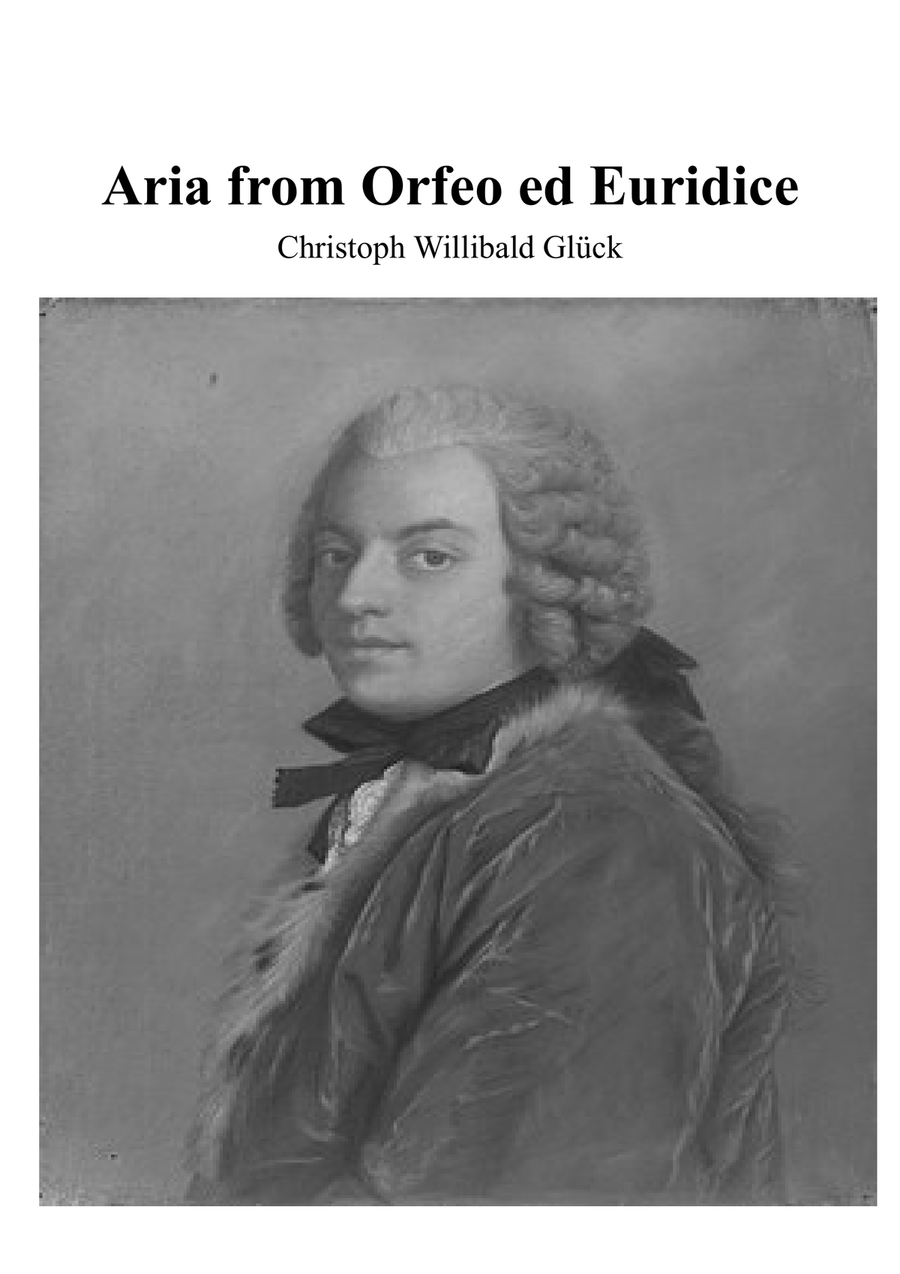
Aria from the Opera Orfeo ed Euridice for Brass Quintet (French Horn solo)
Quintette de Cuivres: 2 trompettes, Cor, trombone, tuba

$8.99 7.58 € Quintette de Cuivres: 2 trompettes, Cor, trombone, tuba PDF SheetMusicPlus

Brass Ensemble - Digital Download SKU: A0.954085 Composed by Melody Dawning. Concert,Contemporary. Score and parts. 33 pages. Melody Dawning #3004801. Published by Melody Dawning (A0.954085). Maneo [pronounced MAH-nee-oh] is a Latin word meaning I remain or I await. The concept behind this piece is the process of waiting for and working toward the fulfillment of goals and dreams that seem far off, which requires both patience and persistence. The first movement, Patience, is painfully slow and full of dense, dissonant chords that avoid resolution. Although the melody wanders through several tonal centers, in many ways it feels as though it has not gone anywhere. However, as the movement progresses to a climax, the incessant tritone dissonance finally begins to dissolve. In the second movement, Persistence, the augmented triad dominates both harmonically and melodically for much of the piece, accompanied by relentless eighth-note motion. The main theme from the first movement appears first as an accompaniment figure, and later in a more prominent melodic role in combination with other motives used throughout the movement. A contrasting, dream-like middle section represents catching a glimpse of reaching the sought-after goal, and this theme returns towards the end in a triumphant finish. The two movements are played consecutively with no pause in between.
Maneo for Brass Quintet
Quintette de Cuivres: 2 trompettes, Cor, trombone, tuba

$25.00 21.08 € Quintette de Cuivres: 2 trompettes, Cor, trombone, tuba PDF SheetMusicPlus


1 16 31 ....76


Partitions Gratuites
Acheter des Partitions Musicales
Acheter des Partitions Digitales à Imprimer
Acheter des Instruments de Musique

© 2000 - 2026

Accueil - Version intégrale





