EUROPE
91 articles
USA
5 articles
DIGITAL
12 articles (à imprimer)
Partitions Digitales
Partitions à imprimer
12 partitions trouvées


Solo Guitar - Level 3 - Digital Download SKU: A0.1372204 By Lady Gaga. By Andrew Wyatt, Anthony Rossomando, Mark Ronson, and Stefani Germanotta. Arranged by Barry McCormick. Film/TV,Pop,Wedding. Individual part. 7 pages. B. McCormick #956465. Published by B. McCormick (A0.1372204). Shallow is a hit song by Lady Gaga and Bradley Cooper from the 2018 musical drama film A Star is Born. The song won several awards, including an Oscar, a Golden Globe, and four Grammys. It is a powerful duet that showcases the vocal talents and emotional connection of the two singers. Lady Gaga is one of the most influential and versatile artists of our time, with a range of genres and styles in her repertoire.This guitar fingerstyle sheet music arrangement of Shallow captures the essence and beauty of the original song, while adding some unique touches and embellishments. It is a higher intermediate level guitar piece that requires some technical skills and expressive playing. The arrangement closely follows the structure of the original song. The performance markings indicate the dynamics, tempo, articulation, and other aspects of how to play the piece. The piece also comes with a performance note that provides more details and tips on how to interpret the arrangement.This sheet music is perfect for guitarists who want to impress their audience with a stunning rendition of this popular song. It can be used as a solo piece or as part of a set list for various occasions. Whether you are a fan of Lady Gaga, A Star is Born, or just love beautiful music, this guitar fingerstyle sheet music arrangement of Shallow will make you feel the emotions and depth of this masterpiece.
Shallow
Guitare
Lady Gaga
$5.99 5.07 € Guitare PDF SheetMusicPlus

Solo Guitar - Level 1 - Digital Download SKU: A0.842801 Composed by Ludwig van Beethoven, Mit Musik von Bach, Vivaldi und anderen Komponisten, and Wolfgang Amadeus Mozart. Arranged by Javier Marcó. Baroque,Classical,Romantic Period. Individual part. 28 pages. Javier Marco #6357209. Published by Javier Marco (A0.842801). Diese Sammlung bietet eine Auswahl an klassischen Stücken von den weltweit renommiertesten Komponisten: Johann Sebastian Bach, Ludwig van Beethoven, George Frideric Handel, Wolfgang Amadeus Mozart, Antonio Lucio Vivaldi, Piotr Ilyich Tchaikovsky, Johann Strauss II, Edvard Grieg, Johann Pachelbel, Giuseppe Verdi, Edward Elgar, Richard Wagner und Johannes Brahms.18 leichte Themen zum Solos, die in einer vereinfachten Version für den Anfänger präsentiert werden, die von Klavier oder Gitarre begleitet werden können (Akkordsymbole).In Tabulatur und Noten.Enthält:1812 Overture, Op. 49An der schönen blauen Donau, Op. 314Chorfantasie, Op. 80Dance of the Flowers, Op. 71aEine kleine Nachtmusik, K.525Für Elise, WoO 59GreensleevesGuten Abend, gut’ NachtI Dovregubbens hallJesus bleibet meine Freude, BWV 147La Donna è MobileMenuett, BWV Anh 114Ode an die Freude, Op. 125la Primavera, RV. 269Pomp and Circumstance March Nº1, Op. 39Tannhäuser OvertureTreulich geführtWater Music, HWV 349
Klassische Loog Gitarre
Guitare

$9.99 8.45 € Guitare PDF SheetMusicPlus

Solo Guitar - Level 4 - Digital Download SKU: A0.1201117 Composed by Geoffrey Zanelli, Hans Zimmer, and Klaus Badelt. Arranged by André Nusa. Film/TV. Individual part. 3 pages. Andre_Nusa #799762. Published by Andre_Nusa (A0.1201117). An arrangement for solo guitar of He's a Pirate by Hans Zimmer is a dynamic and exciting interpretation of the original composition. This arrangement is designed for a skilled guitarist with advanced technical abilities. The arrangement captures the iconic melody of He's a Pirate on the higher register of the guitar, while the lower strings provide a driving bassline, the performer may incorporate changes in tempo, dynamics, and phrasing to add excitement and depth to the arrangement. Overall, the arrangement of He's a Pirate is a thrilling and challenging interpretation of the original composition. It showcases the performer's technical and musical abilities and is a valuable addition to any guitarist's repertoire.
He's A Pirate
Guitare

$5.99 5.07 € Guitare PDF SheetMusicPlus

Solo Guitar - Level 3 - Digital Download SKU: A0.742404 Composed by Matteo Carcassi. Arranged by Arte Nova Music Lab. Concert,Romantic Period,Standards,World. Individual part. 3 pages. Arte Nova Music Lab #3007597. Published by Arte Nova Music Lab (A0.742404). Carcassi was born in Florence, Italy, and first studied the piano, but learned guitar when still a child. He quickly gained a reputation as a virtuosoconcert guitarist.He moved to Germany in 1810, gaining almost immediate success. In 1815, he was living in Paris, earning his living as a teacher of both the piano and the guitar. On a concert tour in Germany in 1819, he met his friend Antoine Meissonnier for the first time. Also a famous guitarist, Meissonnier published many of Carcassi's works in his Paris publishing house. For Meissonnier he also arranged a number of popular songs for guitar that were originally written for piano, including works by Théodore Labarre and Loïsa Puget.From 1820 on, Carcassi spent the majority of his time in Paris. In 1823, he performed an extremely successful series of concerts in London that earned him great fame, both as a performing artist and as a teacher. However, in Paris, a long time passed before his talents were truly recognized, partly because of the presence of Ferdinando Carulli.Carcassi was in Germany again during autumn 1824. Afterwards he performed in London, where his reputation now gave him access to more prestigious concert halls. Finally he returned to Paris. For several years, he made concert trips from here to the most important cultural towns of Europe, including London. After a short return to performing in 1836, he quit his concert practice around 1840 and died in Paris in 1853. Taken from https://en.wikipedia.org/wiki/Matteo_Carcassi
Etude No 10 opus 60 for Guitar
Guitare

$5.00 4.23 € Guitare PDF SheetMusicPlus

Guitar - Intermediate - Digital Download SKU: M0.30906MEB Country. Folk. Ebook and online audio. 41 pages. Mel Bay Publications - Digital Sheet Music #30906MEB. Published by Mel Bay Publications - Digital Sheet Music (M0.30906MEB). ISBN 9781513476667. 8.75X11.75 inches.This solo collection presents 19 iconic melodies from the American traditional song book plus 6 modern original compositions by William Bay, president of Mel Bay Publications; all selections have been arranged in tablature for the 5-string banjo in gDGBD tuning by Catalonian multi-instrumentalist and bluegrass specialist, Llu?s G?mez.Any collection of American ballads would be incomplete without settings of the beautiful melodies penned by Stephen Foster, several of which appear here including Beautiful Dreamer, Darling Nellie Gray, I Dream of Jeanie with the Light Brown Hair, and Hard Times, Come Again No More. Some of these tunes are arranged in uncommon banjo keys, all without retuning the banjo or using a capo. These keys may be challenging at first but will teach you a lot about the banjo fretboard.The authorÆs generous preface offers tips on practice, performance and interpretation rarely found in tablature collections such as these, but this book has it all, including online recordings of each arrangement.
Banjo Picking Tunes - Beautiful American Airs & Ballads
Guitare

$14.99 12.68 € Guitare PDF SheetMusicPlus

Solo Guitar - Level 3 - Digital Download SKU: A0.1441062 By Keith Terrett. By Francisco Tarrega. Arranged by Keith Terrett. 20th Century,Classical,Contest,Festival,Instructional,Multicultural,World. Individual part. 12 pages. Keith Terrett #1021041. Published by Keith Terrett (A0.1441062). Recuerdos de la Alhambra (Memories of the Alhambra) is a classical guitar piece composed in Málaga by Spanish composer and guitarist Francisco Tárrega. It requires the tremolo technique and is often performed by advanced players.The piece was written for and dedicated to Tárrega's patron Concepción Gómez de Jacoby in 1899, commemorating their visit to the Alhambra palace and fortress complex in Granada, Spain. It was originally titled Improvisación ¡A Granada! Cantiga Árabe. It became known through an early 20th-century publication edited by Tárrega and dedicated as an homage to the French guitarist Alfred Cottin.Performance notesThe piece showcases a challenging guitar tremolo, wherein a single melody note is plucked consecutively by the ring, middle and index fingers in such rapid succession that the result is an illusion of one long sustained note. The thumb plays an arpeggio-pattern accompaniment simultaneously. Many who have heard the piece but not seen it performed mistake it for a duet.The A-section of the piece is written in A-minor and the B-section is written in the parallel major (A-major).Arrangements:Ruggiero Ricci arranged this piece for solo violin and often performed it as an encore.Chris Freeman and John Shaw recorded the song for their album Chris Freeman and John Shaw (May 1981, EMI Custom Records YPRX 1828, MAC 126).Nana Mouskouri recorded a vocal version for her 1989 album Classical. Sarah Brightman recorded a re-adapted vocal version for her album Classics.Alex Jacobowitz frequently performs a version of the song on his marimba and xylophone. He recorded it for several of his albums: Spanish Rosewood (1996), The Art of Xylos (2002), and Aria (2010).Luiza Borac arranged this piece for solo piano on her 2014 CD Chants Nostalgiques (Avie AV-2316).Xavi Ganjam made a special arrangement for sitar on his EP Soham (2019, Ganjam Records, Spain).Italian violist Marco Misciagna published the arrangement of this piece for solo viola.Soundtrack use:Recuerdos de la Alhambra has been used as title or incidental music in many films, including the soundtrack for René Clément's Forbidden Games (as played by Narciso Yepes), for The Killing Fields (under the title Étude as performed by Mike Oldfield), and in the films Sideways and Margaret.Performed and arranged by Jonathon Coudrille, it was used as the title music for the British television series Out of Town and a version performed by Pepe Romero was used as incidental music in The Sopranos episode Luxury Lounge. Gideon Coe on BBC Radio 6Music uses this tune as a musical background at approximately the half-way point of his evening weekday show. A sung version appears in the Studio Ghibli film When Marnie Was There.It is also the theme used for Philip II of Spain in the 4X strategy game Civilization VI, with the track progressing from a simple guitar arrangement to an entire orchestral performance as Spain advances through the ages.The theme was part of the soundtrack and storyline for the eponymous 2018 Korean television series Memories of the Alhambra.
Recuerdos de la Alhanbra for Classical Guitar
Guitare
Keith Terrett
$1.99 1.68 € Guitare PDF SheetMusicPlus

Guitar - Intermediate - Digital Download SKU: ZY.DO-1522 Composed by Francis Bebey. Arranged by Ingrid Riollot. Score. 5 pages. Les Editions Doberman-Yppan (digital) #DO 1522. Published by Les Editions Doberman-Yppan (digital) (ZY.DO-1522). Francis Bebey est né à Douala en juillet 1929, dans une grande famille où son père, pasteur, luttait pour nourrir ses enfants. Mais Francis a eu l'opportunité d'aller à l'école. Admirant son frère aîné, Marcel Eyidi Bebey, il s'est éduqué, s'est distingué, et a finalement reçu une bourse pour passer son baccalauréat en France.Nous approchions de la fin des années 1950 lorsqu'il est arrivé à La Rochelle. Plus que jamais, dans cette France où les Africains étaient regardés avec curiosité, condescendance ou dédain, Francis s'appuyait sur ses ressources intellectuelles. Travailleur assidu, il a obtenu son baccalauréat, puis s'est installé à Paris où il a commencé des études d'anglais à la Sorbonne. Un jour, il a su ce qui l'attirait vraiment : il voulait faire de la radio. Francis a appris son métier en France et aux Ã?tats-Unis.Après avoir travaillé quelques années comme reporter, il a été embauché en 1961 en tant que fonctionnaire international au Département de l'information de l'UNESCO.Parallèlement, Francis a toujours été attiré par la création musicale. Son activité diurne très sérieuse ne l'empêchait pas de fréquenter les clubs de jazz le soir. Ã? Paris, le jazz, la musique à la mode à cette époque, mais aussi la rumba et la salsa l'attiraient. Il collectionnait les disques et assistait à de nombreux concerts. Avec son complice Manu Dibango, Francis montait sur scène et jouait de la musique.Francis aimait la musique classique depuis son enfance. Il avait grandi en écoutant les cantates et les oratorios de Bach ou Handel que son père chantait au temple. Il s'est passionné pour la guitare, impressionné par les maîtres espagnols et sud-américains, et a décidé d'apprendre à jouer de l'instrument lui-même.Il a commencé à composer des pièces pour guitare, mêlant les diverses influences qui le traversaient avec la musique traditionnelle africaine qu'il portait en lui depuis son enfance. Son approche a captivé le directeur du Centre culturel américain (alors situé dans le quartier de Saint-Germain à Paris), qui lui a offert l'opportunité de se produire devant un public. Francis y a donné son premier récital de guitare (1963) devant un public hypnotisé. Son premier album solo est sorti peu de temps après.Progressivement, Francis est devenu reconnu comme musicien et compositeur. Plusieurs albums de l'ambassadeur africain de la guitare, comme le décrivait la presse, sont sortis. Il a également écrit des livres, au point que sa carrière artistique est devenue difficile à concilier avec sa carrière de fonctionnaire. En 1974, même s'il était devenu le directeur général chargé de la musique à l'UNESCO, il a fait le saut audacieux et a démissionné de cette prestigieuse institution pour se consacrer aux trois activités qui l'intéressaient : la musique, la littérature et le journalisme.Il a exploré le patrimoine musical traditionnel du continent africain, notamment à travers le piano à pouce sanza et la musique polyphonique des pygmées d'Afrique centrale, ou en chantant dans sa langue maternelle et en composant des chansons humoristiques en français !Le succès a suivi. Francis Bebey a parcouru le monde : de la France au Brésil, du Cameroun à la Suède, de l'Allemagne aux Caraïbes, ou du Maroc au Japon... la liste des pays où il a été invité à se produire, à donner des conférences ou à rencontrer des lecteurs est très longue. En plus de la reconnaissance publique, il bénéficiait de la reconnaissance de ses collègues musiciens, tels que le guitariste John Williams ou le Vénézuélien Antonio Lauro, qui l'ont invité à faire partie du jury d'un concours de guitare classique à Caracas.Sa vie était le voyage d'un pionnier africain, un homme enraciné dans son patrimoine culturel et portant un message de partage et d'espoir pour le monde. Son originalité continue de résonner dans le monde entier depuis son décès à la fin du mois de mai 2001.Francis Bebey was born in Douala in July 1929, into a large family where his father, a pastor, struggled to feed his children. But Francis had the opportunity to go to school. Admiring his elder brother, Marcel Eyidi Bebey, he educated himself, distinguished himself, and eventually received a scholarship to go and take his baccalaureate in France.We approached the end of the 1950s when he arrived in La Rochelle. More than ever, in this France where Africans were looked at with curiosity, condescension, or disdain, Francis relied on his intellectual resources. A diligent worker, he obtained his Baccalaureate, then moved to Paris where he started English studies at the Sorbonne. One day, he knew what truly attracted him: he wanted to do radio. Francis learned his craft in France and in the USA.After working for a few years as a reporter, he was hired in 1961 as an international civil servant in the UNESCO Information Department.In parallel, Francis had always been drawn to musical creation. His very serious daytime activity didnâ??t prevent him from frequenting jazz clubs in the evenings. In Paris, the Jazz, the trendy music of that time, but also rumba and salsa attracted him. He collected records and attended numerous concerts. With his accomplice Manu Dibango, Francis took the stage and played music.Francis liked classical music since his childhood. He grew up listening to the cantatas and oratorios of Bach or Handel that his father had sung in the temple. He became passionate about the guitar, impressed by the Spanish and South American masters, and decided to learn to strum the instrument himself.He started composing guitar pieces, blending the various influences that flow through him with the traditional African music he had carried within since childhood. His approach captivated the director of the American Cultural Center (then located in the Saint-Germain neighborhood of Paris), who offered him the opportunity to perform in front of an audience. Francis gave his first guitar recital there (1963) in front of a mesmerized audience. His first solo album was released shortly thereafter.Gradually, Francis became recognized as a musician and composer. Several albums of the African guitar ambassador, as described by the press, were released. He also wrote books, to the point that his artistic career became challenging to reconcile with his career as a civil servant. In 1974, even though he had become the General Manager in charge of music at UNESCO, he took the bold leap and resigned from this prestigious institution to dedicated himself to the three activities that interested him: music, literature, and journalism. He explored the traditional musical heritage of the African continent, notably through the thumb piano sanza, and the polyphonic music of the Central African pygmies, or singing in his native language and composing humoristic songs in French!Success followed. Francis Bebey traveled the world: from France to Brazil, Cameroon to Sweden, Germany to the Carribean, or Morocco to Japan... the list of countries where he was invited to perform, gives lectures, or meets readers is very long. In addition to public recognition, he enjoyed the recognition of his fellow musicians, such as guitarist John Williams or Venezuelan Antonio Lauro, who invited him to be a part of the jury for a classical guitar competition in Caracas.His life was the journey of an African pioneer, a man rooted in his cultural heritage and carrying a message of sharing and hope for the world. His originality continues to vibrate around the world since his passing at the end of May 2001.
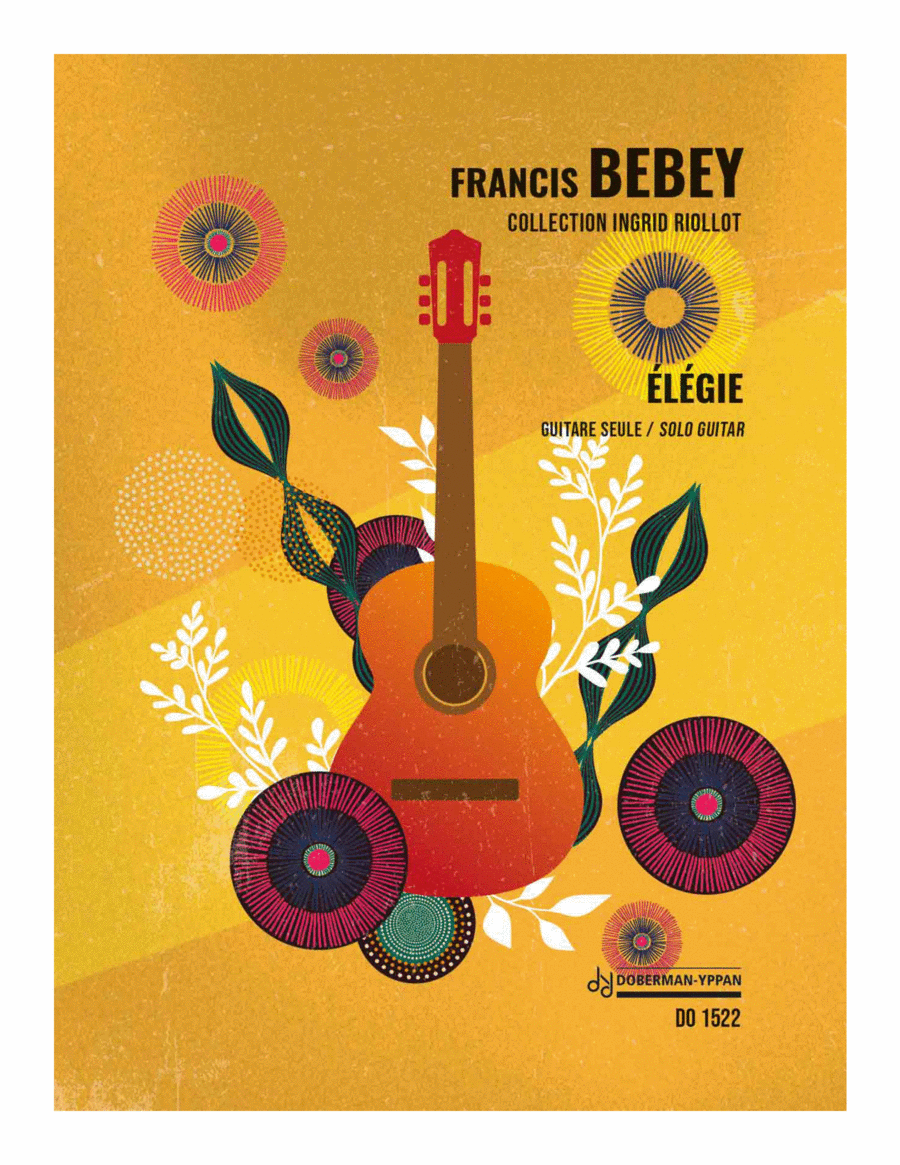
Élégie
Guitare

$3.95 3.34 € Guitare PDF SheetMusicPlus

Guitar - Level 2 - Digital Download SKU: A0.1102371 Composed by Johann Sebastian Bach. Arranged by Simon James. Baroque,Chamber,Christmas,Classical,Instructional. 10 pages. DML #705777. Published by DML (A0.1102371). In dulci jubilo (Latin for In sweet rejoicing) is a traditional Christmas Carol which has become a mainstay of the Christmas Nine Lessons and Carols repertoire. Johann Sebastian Bach set this melody several times: as a chorale in BWV 368; and then for organ in BWV 608 as a double canon in his Orgelbüchlein. Clearly he was fond of the tune and who can blame him. This arrangement of BWW 608 follows almost exactly the four original voices from the canon. It is not difficult to play technically but the rhythm is challenging.
In Dulci Jubilo, J S Bach, BWV 608 for Guitar Quartet
Guitare

$5.99 5.07 € Guitare PDF SheetMusicPlus

Solo Guitar - Level 2 - Digital Download SKU: A0.1264075 By The Police. By Sting. Arranged by Pablo Alcázar. Pop,Rock,Singer/Songwriter. Individual part. 3 pages. Pablo Alcázar #856983. Published by Pablo Alcázar (A0.1264075). This arrangement of Every Breath you Take (for solo guitar) fits perfectly for Classical (spanish) and acoustic guitars because every chord sounds fully along with the melody and the bass gives a unique feeling of the rhythm. It's made for solo guitar and it's appropiate for begginers that look for a challenge or intermediate guitarist that want something fresh and new to play. Also is a very good arrangement for professional players that need repertoire for wedding events.Every Breath You Take is a song by the English rock band the Police from their album Synchronicity (1983). Written by Sting, the single was the biggest US and Canadian hit of 1983, topping the Billboard Hot 100 singles chart for eight weeks (the band's only No. 1 hit on that chart), and the Canadian RPM Chart for four weeks. Their fifth UK No. 1, it topped the UK Singles Chart for four weeks. The song also reached the Top 10 in numerous other countries.Sting wrote the song in 1982 in the aftermath of his separation from Frances Tomelty and the beginning of his relationship with Trudie Styler. Their split was controversial. As The Independent reported in 2006, The problem was, he was already married – to actress Frances Tomelty, who just happened to be Trudie's best friend. Sting and Frances lived next door to Trudie in Bayswater, West London, for several years before the two of them became lovers. The affair was widely condemned.To escape the public eye, Sting retreated to the Caribbean. He started writing the song at Ian Fleming's writing desk on the Goldeneye estate in Oracabessa, Jamaica. The lyrics are the words of a possessive lover who is watching every breath you take; every move you make. Sting recalled:I woke up in the middle of the night with that line in my head, sat down at the piano and had written it in half an hour. The tune itself is generic, an aggregate of hundreds of others, but the words are interesting. It sounds like a comforting love song. I didn't realise at the time how sinister it is. I think I was thinking of Big Brother, surveillance and control..
Every Breath You Take
Guitare
The Police
$4.99 4.22 € Guitare PDF SheetMusicPlus


Partitions Gratuites
Acheter des Partitions Musicales
Acheter des Partitions Digitales à Imprimer
Acheter des Instruments de Musique

© 2000 - 2026

Accueil - Version intégrale





