EUROPE
8896 articles
USA
17510 articles
DIGITAL
11801 articles (à imprimer)
Partitions Digitales
Partitions à imprimer
11801 partitions trouvées


String Ensemble Cello - Level 5 - Digital Download SKU: A0.876551 Composed by Ludwig van Beethoven. Arranged by Joe Procopio. Classical,Romantic Period. Score and parts. 31 pages. JoeCopio Music LLC #2101597. Published by JoeCopio Music LLC (A0.876551). THE BEETHOVEN DUETS FOR VIOLONCELLO By Joe Procopio The Beethoven Duets by Joe Procopio is a collection of duets that artist -composer Joe Procopio has adapted and arranged from the 9 Scherzi found in Ludwig van Beethoven’s 9 Symphonies. These duets are unique. They can be performed as a duet for Cello I and Cello II and as a Cello ensemble in groups of 2, 4, 6, 8, etc. Each Scherzo is published for many other orchestral instruments. They are published individually for each instrument; in a Three Volume Collection with 3 Scherzi in each volume; and in a Complete Collection containing all three volumes. Volume One has Scherzo No.1, Scherzo No. 2 and Scherzo No.3. Volume Two has Scherzo No.4, Scherzo No 5 and Scherzo No.6. Volume Three has Scherzo No.7, Scherzo No.8 and Scherzo No.9. The Complete Collection has all 3 Volumes for each instrument with all 9 Scherzi. What’s more they will soon be published in the Procopio PlayAlong Music Program. This is an exclusive MP3 music audio program personally designed and developed in which Player 1 plays along with a music audio track for Player 2. To be sure, The Beethoven Scherzi Duets for Violoncello are a marvel of Beethoven’s skill with sections reaching the sublime. It is my deep felt personal belief that these Scherzi will bring you great pleasure and long lasting satisfaction. Joe Procopio AN INTRODUCTION TO THE BEETHOVEN DUETS By Joe Procopio Because of the complexities, range and sonorities inherent in all of the Beethoven Symphonies, it may seem impossible to transcribe any one movement as a duet that is true to the composer. Nevertheless, I believe these duets contain the heart, soul and essence of Beethoven’s melodies, rhythms and expressions; even though these works are tiny when they are compared to the Master’s great musical creations which have no equal. In fact, there is no comparison. However, my sincere hope is that since I have rendered some of Beethoven’s music as duets, his music is now more readily available to all permitting a greater number of musicians and all the people who hear their performances to come to know and love a bit of the world’s most valuable, breathtaking and beautiful music. In truth, Beethoven’s music has stood the test of time. He astonished people in his day whenever he performed his music or had his music played. He still does today. To be sure, his music has enhanced and enriched the lives of many of us for over 200 years. In performing and listening to these Scherzi you will find the whole of each work a marvel of Beethoven’s skill with sections reaching the sublime. Few composers have been able to write down on paper music of such incredible beauty that it reflects the awesome splendor of God’s creation. What comes to mind immediately is Beethoven’s Pastoral Symphony No. 6. It has been said, that much of his music mirrors not only the magnificence of God’s creation but also the radiance of God the Creator himself. In any event, this music is simply amazing and awe-inspiring. A joy to listen to and to play. I know and can safely say without any hesitation or reservations that this collection will bring you much enjoyment.
THE BEETHOVEN DUETS FOR CELLO SCHERZO NO 7
Joe Procopio The Beethoven Duets by Joe Procopio is a collection of duets that artist -composer Joe Procopio has adapted and arranged from the 9 Scherzi found in Ludwig van Beethoven’s 9 Symphonies These duets are unique
$9.99 8.45 € PDF SheetMusicPlus

Bassoon Solo - Level 5 - Digital Download SKU: A0.876512 Composed by Ludwig van Beethoven. Arranged by Joe Procopio. Classical,Romantic Period. Individual part. 23 pages. JoeCopio Music LLC #1920683. Published by JoeCopio Music LLC (A0.876512). THE BEETHOVEN DUETS By Joe Procopio The Beethoven Duets by Joe Procopio is a collection of duets that artist -composer Joe Procopio has adapted and arranged from the 9 Scherzi found in Ludwig van Beethoven’s 9 Symphonies. These duets are the first of their kind in history making them noteworthy, unique and valuable. Each Scherzo is published not only for Bassoon but also for many other orchestral instruments. They are published individually for each instrument; in a Three Volume Collection with 3 Scherzi in each volume; and in a Complete Collection containing all three volumes. They are also available as a CD. Volume One has Scherzo No.1, Scherzo No. 2 and Scherzo No.3. Volume Two has Scherzo No.4, Scherzo No 5 and Scherzo No.6. Volume Three has Scherzo No.7, Scherzo No.8 and Scherzo No.9. The Complete Collection has all 3 Volumes for each instrument with all 9 Scherzi. What’s more they will soon be published in the Procopio PlayAlong Music Program. This is an exclusive MP3 music audio program personally designed and developed in which Player 1 plays along with a music audio track for Player 2. To be sure, The Beethoven Scherzi Duets for Bassoon are a marvel of Beethoven’s skill with sections reaching the sublime. It is my deep felt personal belief that these Scherzi will bring you great pleasure and long lasting satisfaction. Joe Procopio AN INTRODUCTION TO THE BEETHOVEN DUETS By Joe Procopio Because of the complexities, range and sonorities inherent in all of the Beethoven Symphonies, it may seem impossible to transcribe any one movement as a duet that is true to the composer. Nevertheless, I believe these duets contain the heart, soul and essence of Beethoven’s melodies, rhythms and expressions; even though these works are tiny when they are compared to the Master’s great musical creations which have no equal. In fact, there is no comparison. However, my sincere hope is that since I have rendered some of Beethoven’s music as duets, his music is now more readily available to all permitting a greater number of musicians and all the people who hear their performances to come to know and love a bit of the world’s most valuable, breathtaking and beautiful music. In truth, Beethoven’s music has stood the test of time. He astonished people in his day whenever he performed his music or had his music played. He still does today. To be sure, his music has enhanced and enriched the lives of many of us for over 200 years. In performing and listening to these Scherzi you will find the whole of each work a marvel of Beethoven’s skill with sections reaching the sublime. Few composers have been able to write down on paper music of such incredible beauty that it reflects the awesome splendor of God’s creation. What comes to mind immediately is Beethoven’s Pastoral Symphony No. 6. It has been said, that much of his music mirrors not only the magnificence of God’s creation but also the radiance of God the Creator himself. In any event, this music is simply amazing and awe-inspiring. A joy to listen to and to play. I know and can safely say without any hesitation or reservations that this collection will bring you much enjoyment.
The Beethoven Duets For Bassoon Scherzo No. 7
Basson
Joe Procopio The Beethoven Duets by Joe Procopio is a collection of duets that artist -composer Joe Procopio has adapted and arranged from the 9 Scherzi found in Ludwig van Beethoven’s 9 Symphonies These duets are the first of their kind in history making them noteworthy, unique and valuable
$9.99 8.45 € Basson PDF SheetMusicPlus

Flute Solo - Level 5 - Digital Download SKU: A0.876487 Composed by Ludwig van Beethoven. Arranged by Joe Procopio. Classical,Romantic Period. Individual part. 25 pages. JoeCopio Music LLC #1910135. Published by JoeCopio Music LLC (A0.876487). THE BEETHOVEN DUETS By Joe Procopio The Beethoven Duets by Joe Procopio is a collection of duets that artist -composer Joe Procopio has adapted and arranged from the 9 Scherzi found in Ludwig van Beethoven’s 9 Symphonies. These duets are the first of their kind in history making them noteworthy, unique and valuable. Each Scherzo is published not only for Flute but also for many other orchestral instruments. They are published individually for each instrument; in a Three Volume Collection with 3 Scherzi in each volume; and in a Complete Collection containing all three volumes. They are also available as a CD. Volume One has Scherzo No.1, Scherzo No. 2 and Scherzo No.3. Volume Two has Scherzo No.4, Scherzo No 5 and Scherzo No.6. Volume Three has Scherzo No.7, Scherzo No.8 and Scherzo No.9. The Complete Collection has all 3 Volumes for each instrument with all 9 Scherzi. What’s more they will soon be published in the Procopio PlayAlong Music Program. This is an exclusive MP3 music audio program personally designed and developed in which Player 1 plays along with a music audio track for Player 2. To be sure, The Beethoven Scherzi Duets for Flute are a marvel of Beethoven’s skill with sections reaching the sublime. It is my deep felt personal belief that these Scherzi will bring you great pleasure and long lasting satisfaction. Joe Procopio AN INTRODUCTION TO THE BEETHOVEN DUETS By Joe Procopio Because of the complexities, range and sonorities inherent in all of the Beethoven Symphonies, it may seem impossible to transcribe any one movement as a duet that is true to the composer. Nevertheless, I believe these duets contain the heart, soul and essence of Beethoven’s melodies, rhythms and expressions; even though these works are tiny when they are compared to the Master’s great musical creations which have no equal. In fact, there is no comparison. However, my sincere hope is that since I have rendered some of Beethoven’s music as duets, his music is now more readily available to all permitting a greater number of musicians and all the people who hear their performances to come to know and love a bit of the world’s most valuable, breathtaking and beautiful music. In truth, Beethoven’s music has stood the test of time. He astonished people in his day whenever he performed his music or had his music played. He still does today. To be sure, his music has enhanced and enriched the lives of many of us for over 200 years. In performing and listening to these Scherzi you will find the whole of each work a marvel of Beethoven’s skill with sections reaching the sublime. Few composers have been able to write down on paper music of such incredible beauty that it reflects the awesome splendor of God’s creation. What comes to mind immediately is Beethoven’s Pastoral Symphony No. 6. It has been said, that much of his music mirrors not only the magnificence of God’s creation but also the radiance of God the Creator himself. In any event, this music is simply amazing and awe-inspiring. A joy to listen to and to play. I know and can safely say without any hesitation or reservations that this collection will bring you much enjoyment.
The Beethoven Duets For Flute Scherzo No. 7
2 Flûtes traversières (duo)
Joe Procopio The Beethoven Duets by Joe Procopio is a collection of duets that artist -composer Joe Procopio has adapted and arranged from the 9 Scherzi found in Ludwig van Beethoven’s 9 Symphonies These duets are the first of their kind in history making them noteworthy, unique and valuable
$9.99 8.45 € 2 Flûtes traversières (duo) PDF SheetMusicPlus

String Quartet String Quartet - Level 3 - Digital Download SKU: A0.1231675 Composed by Ludwig van Beethoven. Arranged by James M. Guthrie, ASCAP. 19th Century,Chamber,Classical,Contest,Festival,Romantic Period. 9 pages. Jmsgu3 #827373. Published by jmsgu3 (A0.1231675). Beethoven’s Eleven Bagatelles Op. 119 are known for their expressive melodies and harmonies, and their innovative approach to form and tonality. The bagatelles were written during a period of time when Beethoven was undergoing a difficult phase in his life; he was struggling with hearing loss, family problems, and depression. Despite these challenges, he managed to produce a set of musical gems that are deeply moving and uplifting. The bagatelles show a remarkable range and depth of emotion, from playful and humorous to introspective and melancholic. These pieces serve as a testament to his resilience and creative genius in the face of personal adversity. More than two centuries after their composition, the bagatelles continue to inspire music enthusiasts around the world. The Bagatelles Op. 119 is a combination of old and new pieces that were not originally planned as a cycle. No. 1. Allegretto.No. 2. Andante con moto.No. 3. à l’ Allemande.No. 4. Andante cantabile.No. 5. Risoluto.No. 6. Andante – Allegretto.No. 7. Tranquillo.No. 8. Moderato cantabile.No. 9. Vivace moderato.No. 10. Allegramente.No. 11. Andante ma non troppo.
Beethoven: Bagatelle Op. 119 No. 7 for String Quartet
Quatuor à cordes: 2 violons, alto, violoncelle

$24.95 21.1 € Quatuor à cordes: 2 violons, alto, violoncelle PDF SheetMusicPlus

Full Orchestra - Level 4 - Digital Download SKU: A0.869183 Composed by Thomas Oboe Lee. 20th Century,Baroque,Classical,Contemporary,Romantic Period. Score and parts. With 2 Flutes, piccolo 2 Oboes 2 Clarinets in Bb 2 Bassoons. 153 pages. Thomas Oboe Lee #3895. Published by Thomas Oboe Lee (A0.869183). Instrumentation: 2 Flutes, piccolo 2 Oboes 2 Clarinets in Bb 2 Bassoons 2 French Horns in F 2 Trumpets in Bb 3 Trombones Tuba TimpaniPercussion 1: triangle, claves, tom-toms, cow-bells Percussion 2: snare drum, bass drum 1st Violin 2nd Violin Viola Cello Double bass This is a transposed score. Program note: My love affair with the city of Rome dates back to the year 1986-87 when I spent just under eleven months at the American Academy in Rome on a Rome Prize Fellowship. During that Fellowship year I was very much inspired by the beauty and culture of the Eternal City, which resulted in a number of works that continue to resonate with me: Twenty-nine Fireflies Book II for solo piano; Concertino for trumpet, timpani and strings; Apples … six dreams by Richard Kenney; String Quartet No 5 … Four Birthdays; and Chôrinhos … opus 38. Since 1997 my wife, Kristin Beckwith, and I have returned to the American Academy in Rome almost every year. I would compose in the morning and then my wife and I would go to our usual haunt at Bar G. for cappuccini and cornetti. And then we’d go to the local bakery and street markets and buy stuff for lunch. In the afternoon we would wander into the city to go shopping and sight-seeing. In the evenings we would dine at one of our favorite local trattorias. Life could not be better in Rome. Musically speaking, several important works in my portfolio had their beginnings during these sojourns at the Academy , among them Yo Picasso, Flauta Carioca, Mass for the Holy Year 2000, Symphony No. 5 … Utopia Parkway, Twenty-nine Fireflies Books IV & V, and Piano Concerto … Mozartiana. Just before the 2008 recession, clarinetist extraordinaire Jonathan Cohler asked me to write a symphony for the inaugural concert of a new orchestra he was planning to create. I came up with Symphony No. 7 … Roman Holidays, my give back to the city of Rome – a compendium of favorite places that continue to live in my thoughts and musings. Although the work is heard in four movements, it is actually divided into seven sections, as in the seven hills of Rome. 1. Prelude: Fontana Paola and the panoramic view of the city of Rome from that vantage point. 2. First interlude: La Befana festivities at Piazza Navona. The Protestant Cemetery in Testaccio at night under a full moon. 3. Second interlude: Fontana delle Tartughe in the Jewish Ghetto. Bernini’s Apollo and Daphne at the Galleria Borghese. 4. Third interlude: Bernini’s Beata Ludovica Albertoni in Trastevere. The Spanish Steps and the view of Rome from the French Academy at Villa Medici. NB: Unfortunately, thanks to the recession, Roman Holidays never saw the light of day. This year (2013) I decided to revisit the work, which lay dormant for 5 five years, and saw that it could use a little tweaking. The new version is essentially the same, musically speaking. I reduced the orchestration a bit (two horns instead of four, and two trumpets instead of three) and added more heft to the lower brass. I completely rewrote the tune for the floating foreign ghosts at the Protestant Cemetery. I also shortened the work by about three minutes by cutting some repeats. Enjoy!!!Audio link: https://thomasoboelee.bandcamp.com/album/symphony-no-7-roman-holidays-2008-rev-2013Video link: https://youtu.be/1DlzEOUmH54
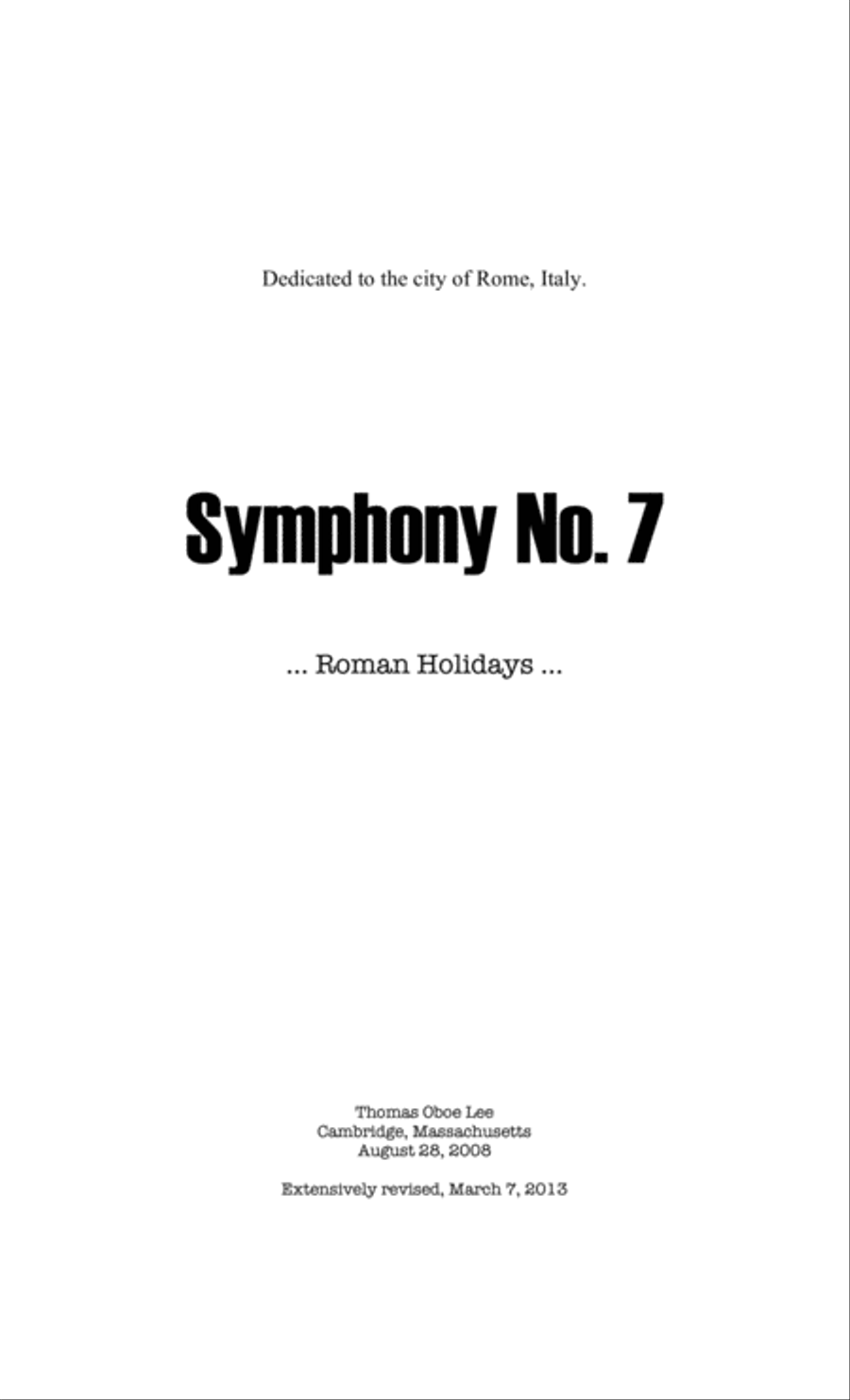
Symphony No. 7 ... Roman Holidays (2008, rev. 2013)
Orchestre

$9.99 8.45 € Orchestre PDF SheetMusicPlus

B-Flat Clarinet,Piano - Level 1 - Digital Download SKU: A0.1158449 Composed by Ludwig van Beethoven. Arranged by Ander. Classical,Film/TV,Instructional,Romantic Period,Traditional. Score and part. 7 pages. Woods Only, Arrangements #758735. Published by Woods Only, Arrangements (A0.1158449). This arrangement adapted for clarinet e piano was written keeping the characteristics of the original work, in order to be performed by young music students who want to enter the symphonic music. Besides, it can also be used by professional musicians, for recitals, repertoire, academic presentations and didactic material. As much as it is a funeral march, it is well suited for any musical performance occasion. The transcription is faithful to the structure, with only one change of key, so that it is comfortable for all the instruments in the formation, as well as for use in ensemble practice between musicians of different traditions. Ludwig van Beethoven began concentrated work on his Symphony No. 7 in A major Op. 92 in 1811, it was completed in 1812, and was dedicated to Count Moritz von Fries, and premiered in Vienna on December 8, 1813. It is considered a remarkable example of the more ebullient side of Beethoven's compositional personality and evidence that even after the onset of deafness, he still found cause for musical optimism. The second movement Allegretto is a funeral march in everything but name. Often several contrasting melodic ideas are made to coexist, as if Beethoven were imagining several processions converging on the cemetery at the same time. As he was working on this symphony during the years of the Napoleonic Wars, this experience was probably within his experience. It was also used as the soundtrack to the film Knowing, by director Alex Proyas and starring Nicolas Cage, where it is used in the final scene of the film. Beethoven called Symphony No. 7 his most excellent symphony, and a music critic of the time reported, this symphony is the most melodically rich and the most pleasing and comprehensible of all Beethoven's symphonies..
Symphony No. 7 by Beethoven for Clarinet
Clarinette et Piano

$1.99 1.68 € Clarinette et Piano PDF SheetMusicPlus

String Quartet Cello,String Quartet,Viola,Violin - Level 4 - Digital Download SKU: A0.1208553 Composed by Ludwig van Beethoven (1770 – 1827). Arranged by James M. Guthrie, ASCAP. 19th Century,Chamber,Classical,Contest,Festival,Wedding. 17 pages. Jmsgu3 #806663. Published by jmsgu3 (A0.1208553). 7.  Presto.Beethoven's Bagatelles Op. 33 are quite typical of his early style, retaining many compositional features of the early Classical period.  The first bagatelle in particular is arguably one of Beethoven's most well-known pieces. While they may seem light-hearted and not to be taken too seriously, they are still well-crafted works that embody the younger Beethoven's style. The Bagatelles Op. 33 were composed by Beethoven in 1801-02 and published in 1803. Bagatelles are shorter and less complex than sonatas, often consisting of a single movement. They were intended to be played as light entertainment or as encores at the end of a concert.Bagatelle No. 7 of Beethoven's Op. 33 is a charming and playful piece, typical of Beethoven's early style. The piece is in A-flat major and marked Presto, which means fast. The main theme is catchy, fragmentary, and light, with a playful character that is maintained throughout the piece. The middle section is more lyrical and expressive, providing a sostenuto contrast to the playful character of the main theme. The piece is well-crafted and attractive. Overall, Bagatelle No. 7 is a delightful example of Beethoven's early style and a testament to his skill as a composer.
Beethoven: Bagatelle Op. 33 No. 7 for String Quartet
Quatuor à cordes: 2 violons, alto, violoncelle

$24.95 21.1 € Quatuor à cordes: 2 violons, alto, violoncelle PDF SheetMusicPlus

Baritone Recorder,Recorder Solo - Level 1 - Digital Download SKU: A0.1158456 Composed by Ludwig van Beethoven. Arranged by Ander. Classical,Film/TV,Instructional,Romantic Period,Traditional. Individual part. 7 pages. Woods Only, Arrangements #758742. Published by Woods Only, Arrangements (A0.1158456). This arrangement adapted for bass recorder e piano was written keeping the characteristics of the original work, in order to be performed by young music students who want to enter the symphonic music. Besides, it can also be used by professional musicians, for recitals, repertoire, academic presentations and didactic material. As much as it is a funeral march, it is well suited for any musical performance occasion. The transcription is faithful to the structure, with only one change of key, so that it is comfortable for all the instruments in the formation, as well as for use in ensemble practice between musicians of different traditions. Ludwig van Beethoven began concentrated work on his Symphony No. 7 in A major Op. 92 in 1811, it was completed in 1812, and was dedicated to Count Moritz von Fries, and premiered in Vienna on December 8, 1813. It is considered a remarkable example of the more ebullient side of Beethoven's compositional personality and evidence that even after the onset of deafness, he still found cause for musical optimism. The second movement Allegretto is a funeral march in everything but name. Often several contrasting melodic ideas are made to coexist, as if Beethoven were imagining several processions converging on the cemetery at the same time. As he was working on this symphony during the years of the Napoleonic Wars, this experience was probably within his experience. It was also used as the soundtrack to the film Knowing, by director Alex Proyas and starring Nicolas Cage, where it is used in the final scene of the film. Beethoven called Symphony No. 7 his most excellent symphony, and a music critic of the time reported, this symphony is the most melodically rich and the most pleasing and comprehensible of all Beethoven's symphonies..
Symphony No. 7 by Beethoven for Bass Recorder

$1.99 1.68 € PDF SheetMusicPlus

Alto Flute,Instrumental Solo,Piano - Level 1 - Digital Download SKU: A0.1158444 Composed by Ludwig van Beethoven. Arranged by Ander. Classical,Film/TV,Instructional,Romantic Period,Traditional. Score and individual part. 7 pages. Woods Only, Arrangements #758730. Published by Woods Only, Arrangements (A0.1158444). This arrangement adapted for alto flute e piano was written keeping the characteristics of the original work, in order to be performed by young music students who want to enter the symphonic music. Besides, it can also be used by professional musicians, for recitals, repertoire, academic presentations and didactic material. As much as it is a funeral march, it is well suited for any musical performance occasion. The transcription is faithful to the structure, with only one change of key, so that it is comfortable for all the instruments in the formation, as well as for use in ensemble practice between musicians of different traditions. Ludwig van Beethoven began concentrated work on his Symphony No. 7 in A major Op. 92 in 1811, it was completed in 1812, and was dedicated to Count Moritz von Fries, and premiered in Vienna on December 8, 1813. It is considered a remarkable example of the more ebullient side of Beethoven's compositional personality and evidence that even after the onset of deafness, he still found cause for musical optimism. The second movement Allegretto is a funeral march in everything but name. Often several contrasting melodic ideas are made to coexist, as if Beethoven were imagining several processions converging on the cemetery at the same time. As he was working on this symphony during the years of the Napoleonic Wars, this experience was probably within his experience. It was also used as the soundtrack to the film Knowing, by director Alex Proyas and starring Nicolas Cage, where it is used in the final scene of the film. Beethoven called Symphony No. 7 his most excellent symphony, and a music critic of the time reported, this symphony is the most melodically rich and the most pleasing and comprehensible of all Beethoven's symphonies..
Symphony No. 7 by Beethoven for Alto Flute

$1.99 1.68 € PDF SheetMusicPlus

Oboe,Piano - Level 1 - Digital Download SKU: A0.1158447 Composed by Ludwig van Beethoven. Arranged by Ander. Classical,Film/TV,Instructional,Romantic Period,Traditional. Score and part. 7 pages. Woods Only, Arrangements #758733. Published by Woods Only, Arrangements (A0.1158447). This arrangement adapted for oboe e piano was written keeping the characteristics of the original work, in order to be performed by young music students who want to enter the symphonic music. Besides, it can also be used by professional musicians, for recitals, repertoire, academic presentations and didactic material. As much as it is a funeral march, it is well suited for any musical performance occasion. The transcription is faithful to the structure, with only one change of key, so that it is comfortable for all the instruments in the formation, as well as for use in ensemble practice between musicians of different traditions. Ludwig van Beethoven began concentrated work on his Symphony No. 7 in A major Op. 92 in 1811, it was completed in 1812, and was dedicated to Count Moritz von Fries, and premiered in Vienna on December 8, 1813. It is considered a remarkable example of the more ebullient side of Beethoven's compositional personality and evidence that even after the onset of deafness, he still found cause for musical optimism. The second movement Allegretto is a funeral march in everything but name. Often several contrasting melodic ideas are made to coexist, as if Beethoven were imagining several processions converging on the cemetery at the same time. As he was working on this symphony during the years of the Napoleonic Wars, this experience was probably within his experience. It was also used as the soundtrack to the film Knowing, by director Alex Proyas and starring Nicolas Cage, where it is used in the final scene of the film. Beethoven called Symphony No. 7 his most excellent symphony, and a music critic of the time reported, this symphony is the most melodically rich and the most pleasing and comprehensible of all Beethoven's symphonies..
Symphony No. 7 by Beethoven for Oboe
Hautbois, Piano (duo)

$1.99 1.68 € Hautbois, Piano (duo) PDF SheetMusicPlus

Bassoon,Piano - Level 1 - Digital Download SKU: A0.1158452 Composed by Ludwig van Beethoven. Arranged by Ander. Classical,Film/TV,Instructional,Romantic Period,Traditional. Score and part. 7 pages. Woods Only, Arrangements #758738. Published by Woods Only, Arrangements (A0.1158452). This arrangement adapted for bassoon e piano was written keeping the characteristics of the original work, in order to be performed by young music students who want to enter the symphonic music. Besides, it can also be used by professional musicians, for recitals, repertoire, academic presentations and didactic material. As much as it is a funeral march, it is well suited for any musical performance occasion. The transcription is faithful to the structure, with only one change of key, so that it is comfortable for all the instruments in the formation, as well as for use in ensemble practice between musicians of different traditions. Ludwig van Beethoven began concentrated work on his Symphony No. 7 in A major Op. 92 in 1811, it was completed in 1812, and was dedicated to Count Moritz von Fries, and premiered in Vienna on December 8, 1813. It is considered a remarkable example of the more ebullient side of Beethoven's compositional personality and evidence that even after the onset of deafness, he still found cause for musical optimism. The second movement Allegretto is a funeral march in everything but name. Often several contrasting melodic ideas are made to coexist, as if Beethoven were imagining several processions converging on the cemetery at the same time. As he was working on this symphony during the years of the Napoleonic Wars, this experience was probably within his experience. It was also used as the soundtrack to the film Knowing, by director Alex Proyas and starring Nicolas Cage, where it is used in the final scene of the film. Beethoven called Symphony No. 7 his most excellent symphony, and a music critic of the time reported, this symphony is the most melodically rich and the most pleasing and comprehensible of all Beethoven's symphonies..
Symphony No. 7 by Beethoven for Bassoon
Basson, Piano (duo)

$1.99 1.68 € Basson, Piano (duo) PDF SheetMusicPlus

Piano Solo - Level 3 - Digital Download SKU: A0.1089864 Composed by Thomas Augustine Arne. Arranged by Piacere Music Sheets. Baroque,Classical,Instructional,Standards. Score. 4 pages. Piacere Music Sheets #694078. Published by Piacere Music Sheets (A0.1089864). Opus/Catalog Number: RISM A/I: A 2160, No. 7, movement 1Key/Tone: A MajorMovements/Sections: PrestoYear/Date of Composition: 1756Difficulty: Grade 7/12 (Intermediate)Obs.: This piece is the first movement of the Sonata No. 7, part of the VIII Sonatas or Lessons for the Harpsichord.Performance suggestions for the ornaments are in accordance with the performance practice of the Classical period. Also, in measure 18, some editions show in D natural on the fourth beat of the right hand. Furthermore, in measure 33, it's suggested to add a cadential trill, as this was common practice in Arne's time.
Arne - Presto from Sonata No. 7 in A Major - Intermediate
Piano seul

$3.95 3.34 € Piano seul PDF SheetMusicPlus

A Clarinet,Piano - Level 1 - Digital Download SKU: A0.1158451 Composed by Ludwig van Beethoven. Arranged by Ander. Classical,Film/TV,Instructional,Romantic Period,Traditional. Score and part. 7 pages. Woods Only, Arrangements #758737. Published by Woods Only, Arrangements (A0.1158451). This arrangement adapted for clarinet in A e piano was written keeping the characteristics of the original work, in order to be performed by young music students who want to enter the symphonic music. Besides, it can also be used by professional musicians, for recitals, repertoire, academic presentations and didactic material. As much as it is a funeral march, it is well suited for any musical performance occasion. The transcription is faithful to the structure, with only one change of key, so that it is comfortable for all the instruments in the formation, as well as for use in ensemble practice between musicians of different traditions. Ludwig van Beethoven began concentrated work on his Symphony No. 7 in A major Op. 92 in 1811, it was completed in 1812, and was dedicated to Count Moritz von Fries, and premiered in Vienna on December 8, 1813. It is considered a remarkable example of the more ebullient side of Beethoven's compositional personality and evidence that even after the onset of deafness, he still found cause for musical optimism. The second movement Allegretto is a funeral march in everything but name. Often several contrasting melodic ideas are made to coexist, as if Beethoven were imagining several processions converging on the cemetery at the same time. As he was working on this symphony during the years of the Napoleonic Wars, this experience was probably within his experience. It was also used as the soundtrack to the film Knowing, by director Alex Proyas and starring Nicolas Cage, where it is used in the final scene of the film. Beethoven called Symphony No. 7 his most excellent symphony, and a music critic of the time reported, this symphony is the most melodically rich and the most pleasing and comprehensible of all Beethoven's symphonies..
Symphony No. 7 by Beethoven for Clarinet in A
Clarinette et Piano

$1.99 1.68 € Clarinette et Piano PDF SheetMusicPlus

String Orchestra - Level 4 - Digital Download SKU: A0.1209299 Composed by Ludwig van Beethoven (1770 – 1827). Arranged by James M. Guthrie, ASCAP. 19th Century,Classical,Contest,Festival,Instructional,Traditional. Score and Parts. 23 pages. Jmsgu3 #807414. Published by jmsgu3 (A0.1209299). 7. Presto.Beethoven's Bagatelles Op. 33 are pretty typical of his early style, retaining many compositional features of the early Classical period.  The first bagatelle is arguably one of Beethoven's most well-known pieces. While they may seem light-hearted and not to be taken too seriously, they are still well-crafted works that embody the younger Beethoven's style. The Bagatelles Op. 33 were composed by Beethoven in 1801-02 and published in 1803. Bagatelles are shorter and less complex than sonatas, often consisting of a single movement. They were intended to be played as light entertainment or as encores at the end of a concert.Bagatelle No. 7 of Beethoven's Op. 33 is a charming and playful piece, typical of Beethoven's early style. The piece is in A-flat major and marked Presto, which means fast. The main theme is catchy, fragmentary, and light, with a playful character that is maintained throughout the piece. The middle section is more lyrical and expressive, providing a sostenuto contrast to the playful character of the main theme. The piece is well-crafted and attractive. Overall, Bagatelle No. 7 is a delightful example of Beethoven's early style and a testament to his skill as a composer.
Beethoven: Bagatelle Op. 33 No.7 for String Orchestra
Orchestre à Cordes

$42.95 36.32 € Orchestre à Cordes PDF SheetMusicPlus


Partitions Gratuites
Acheter des Partitions Musicales
Acheter des Partitions Digitales à Imprimer
Acheter des Instruments de Musique

© 2000 - 2026

Accueil - Version intégrale





