EUROPE
9040 articles
USA
0 articles
DIGITAL
11803 articles (à imprimer)
Partitions Digitales
Partitions à imprimer
11803 partitions trouvées


Voice and piano (2 songs with violoncello; 1 vocal duet) - Medium - Digital Download SKU: MQ.8491-05E Composed by MeeAe Cecilia Nam and Theodore Gouvy. 7 pages. E. C. Schirmer Music Company - Digital #8491-05E. Published by E. C. Schirmer Music Company - Digital (MQ.8491-05E). French.A French composer, Théodore Gouvy (1819-1898) was one of the most significant composers of 19th Century in Europe. The movement of rediscovering his instrumental music has been increasingly successful in Europe since the 1990s, especially following the birth of L’Institut Gouvy in France. However, his solo vocal music has been waiting to be unveiled to the public. Volume One includes 52 songs of Gouvy.Gouvy traveled widely throughout Europe. He was also a lover of nature. Generally, he spent his winters in Leipzig, but in the summertime, he always returned to Hombourg-Haut, France, to stroll through the woods, to hunt, and to relax. Gouvy was fluent in several languages and had a great appreciation of the Renaissance French Poetry of Pierre de Ronsard whose poetry he had set to music. The fifty-two songs in this volume are largely by Ronsard and other Renaissance poets of La Pléiade.Although Ronsard is approximately 300 years older than Gouvy, they both seem to have the same interest in classical literature, though, admittedly, for different reasons. Celebrated by the French and English courts, Ronsard (1525-1585) was the leader of La Pléiade: a group of seven poets (Joachim Du Bellay (1522-1560), Rémy Belleau (1528-1577), Étienne Jodelle (1532-1573), Pontus de Tyard (1521-1603), Jean–Antoine Baïf (1532-1589), and Jean Daurat (1508-1588), who dedicated their efforts to writing poetry in French rather than in Latin (or Greek) as most of the Romantic poets did. They wished to enrich the French language, and establish a new literature which would be the equal of the other literature of their period, and the equal to poets of the past. French Romantic poetry featured the closeness of the poet to nature, and his ability to communicate with nature by personifying (anthropomorphizing) all of nature’s elements: flowers, the planets, the moon, the breeze, and even the sand upon the shore. As a significant melodist, Gouvy’s treatment of the vocal solo line and his treatment and development of the piano accompaniment places him in the upper echelons as a composer of songs. His diverse cultural life led a rich and significant musical life, interacting with his contemporaries who admired his work, and whom Gouvy knew well, such as Liszt, Brahms, Schumann, Mendelssohn, Berlioz and Gounod. Contents:Six Odes de Ronsard pour ténor et piano, Op. 37 (No. 3 et No. 5 avec violoncelle) Neuf Poésies de Ronsard pour soprano ou ténor et piano, Op. 41 Six Poésies de Ronsard pour soprano ou ténor et piano, Op. 42 Quatre Odes de Ronsard pour baryton et piano, Op. 43 Huit Poésies de Ronsard pour ténor ou soprano et piano, Op. 44 Sept Poésies de Ronsard pour ténor ou soprano et piano, Op. 47.
Op. 37, No. 5: À Cassandre from Songs of Gouvy, V1 (Downloadable)
Piano, Voix

$3.00 2.61 € Piano, Voix PDF SheetMusicPlus

Piano Solo - Level 3 - Digital Download SKU: A0.578627 By Wolfgang Amadeus Mozart. By Wolfgang Amadeus Mozart. Arranged by Ygor Nunes. Children,Classical,Film/TV,Standards. Score. 7 pages. Ygor Nunes #187940. Published by Ygor Nunes (A0.578627). Mozart: Piano Sonata No. 16 in C Major, Mozart: Piano Sonata, Mozart: Piano Sonata No. 16, Mozart: Piano Sonata in C Major,Mozart: Piano sonata C Major, Mozart: C Major Piano Sonata , Mozart 545, mozart kv 545, mozart sonata kv 545, mozart 545, kv 545, mozart piano sonata 545, mozart piano, mozart piano easy, mozart, Wolfgang Amadeus Mozart, mozart tiktok, mozart tik-tok, mozart tik tok, mozart trend, classical, classical piano, easy classical piano, easy classical, easy piano, easy mozart, mozart easy, easy sonata,.
Mozart: Piano Sonata No. 16 in C Major - KV 545
Piano seul
Wolfgang Amadeus Mozart
$4.99 4.34 € Piano seul PDF SheetMusicPlus

Saxophone Quartet,Woodwind Ensemble Alto Saxophone,Baritone Saxophone,Soprano Saxophone,Tenor Saxophone - Level 4 - Digital Download SKU: A0.1294757 Composed by Gabriel Faure. Arranged by Wendolien Krul. 19th Century,Classical,Romantic Period. 25 pages. Wendolien Krul #885112. Published by Wendolien Krul (A0.1294757). Discover the captivating allure of Gabriel Fauré's Nocturne No. 4 in E♭ major, Op. 36, in this exquisite arrangement crafted for saxophone quartet (SATB). Showcasing the seamless transition of Fauré's timeless elegance from the piano to the rich, resonant tones of the saxophones, this adaptation offers both players and audiences a musical journey of rare beauty.This arrangement is rated at Grade 5 (advanced level), making it an ideal choice for experienced quartets seeking a rewarding challenge. The warm, velvety timbres of thesaxophones expertly capture the essence of Fauré's romanticism, creating an enchanting atmosphere suitable for both intimate settings and grand performances.Whether you're a seasoned quartet performer or an avid listener, this rendition of Fauré's Nocturne No. 4 promises to lead you through its evocative passages, evoking the sametimeless beauty and emotion that have charmed audiences for generations. Embrace the elegance and sophistication of this saxophone quartet adaptation, a testament to the enduring allure of Fauré's music.Duration: 7:19.
Nocturne No. 4 in Eâ™­ major, Op. 36
Quatuor de Saxophones: 4 saxophones

$15.99 13.91 € Quatuor de Saxophones: 4 saxophones PDF SheetMusicPlus

Concert Band - Level 2 - Digital Download SKU: A0.1517374 Composed by Ludwig van Beethoven. Arranged by Lorenzo Bocci. Classical,March,Patriotic,Traditional. 36 pages. Lorenzo Bocci #1091512. Published by Lorenzo Bocci (A0.1517374). ODE TO JOY - From Symphony no. 9for Concert Band - Grade 3 - Digital Download Composed by Ludwig Van Beethoven. Arranged by Lorenzo Bocci. March/Patriotic/Traditonal/Hymn. Concert Band - Blasorchester - Harmonie. Score A4 (21 x 29,7 cm) and card size parts A5 (19,5 x 14,2 cm). Duration 2'12''. Published by Lorenzo Bocci.Instrumentation:Full Score, Flute (Piccolo), Oboe, Bassoon, Eb Clarinet, Bb Clarinet 1, 2, Bb Bass Clarinet, Eb Alto Saxophone, Bb Tenor Saxophone, Eb Baritone Saxophone, Bb Trumpet 1, 2, F Horn 1, 2, Trombone 1, 2, Euphonium, Bass, Glockenspiel, Snare Drum, Cymbals, Bass Drum.Additional Parts:Bb Soprano Saxophone, Eb Cornet, Bb Flugelhorn 1, 2, Eb Horn 1, 2, Bb Trombone 1, 2 T.C., B.C., Bb Euphonium T.C., B.C., Bb Bass T.C., B.C., Eb Bass T.C., B.C.The melody used to represent the EU is taken from the Ninth Symphony, composed in 1823 by Ludwig van Beethoven, who set to music the Ode to Joy, written by Friedrich von Schiller in 1785. The anthem symbolises not only the European Union, but also Europe in general. The Ode to Joy expresses Schiller's idealistic vision of the development of brotherhood among men, a vision shared by Beethoven. In 1972, the Council of Europe adopted the theme of Beethoven's Ode to Joy as its anthem. In 1985, it was adopted by the heads of state and government of the member countries as the official anthem of the European Union. The anthem has no lyrics and consists only of music. In the universal language of music, this anthem expresses the ideals of freedom, peace and solidarity that Europe pursues.The European anthem is not intended to replace the national anthems of the member countries, but rather to celebrate the values ??they share. The anthem is performed at official ceremonies involving the European Union and in general at all types of events of a European nature.Subscribe to my YouTube Channel to stay updated on new releases.
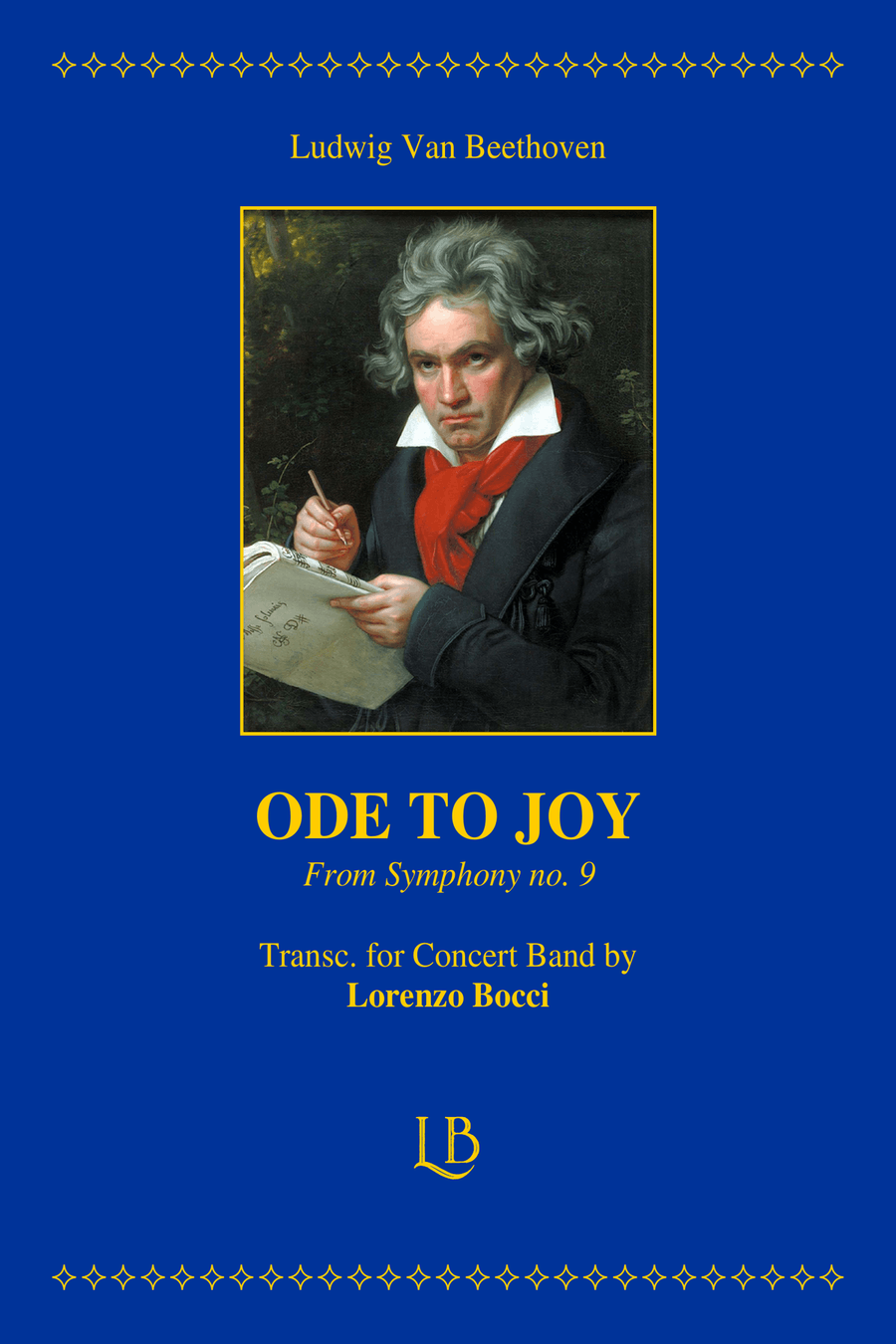
Ode To Joy - From Symphony no. 9
Orchestre d'harmonie

$33.00 28.7 € Orchestre d'harmonie PDF SheetMusicPlus

Bass Trombone,Piano - Level 3 - Digital Download SKU: A0.1476138 Composed by Frederic Chopin. Arranged by James M. Guthrie. 19th Century,Chamber,Historic,Romantic Period,Standards. Score and part. 7 pages. Jmsgu3 #1053662. Published by jmsgu3 (A0.1476138). Chopin's Prelude in B minor, Op. 28 No. 6, is significant for its sad and expressive nature, often described as reflecting pure sadness and depression. This Prelude is renowned for its cello-like left-hand melody, evoking the rich tones of a cello and creating a somber atmosphere. The piece is known for its duality of voices, with the right hand providing an echo effect that should be skillfully managed to avoid monotony. George Sand described this prelude as plunging the soul into frightful depression, emphasizing its emotional depth. This intro was played at Chopin's funeral, adding to its historical and emotional significance. The left hand in this prelude carries the melody, resembling the full tones of a cello, while the right-hand plays an accompaniment with repeated upper notes that are integral to the piece. Overall, Chopin's Prelude in B minor, Op. 28 No. 6, stands out for its emotional depth, melancholy melody, and unique cello-like qualities.
Chopin: Prelude Op. 28 No. 6 for Bass Trombone & Piano
Trombone basse et Piano

$32.95 28.66 € Trombone basse et Piano PDF SheetMusicPlus

Cello,Piano - Level 2 - Digital Download SKU: A0.1399669 Composed by Frederic Chopin. Arranged by James M. Guthrie. 19th Century,Chamber,Contest,Festival,Historic,Romantic Period. Score and part. 7 pages. Jmsgu3 #982944. Published by jmsgu3 (A0.1399669). Chopin's Prelude in B minor, Op. 28 No. 6, is significant for its sad and expressive nature, often described as reflecting pure sadness and depression. This prelude is renowned for its cello-like left-hand melody, evoking the rich tones of a cello and creating a somber atmosphere. The piece is known for its duality of voices, with the right hand providing an echo effect that should be skillfully managed to avoid monotony. George Sand described this prelude as plunging the soul into frightful depression, emphasizing its emotional depth. Notably, this prelude was played at Chopin's funeral, adding to its historical and emotional significance. The left hand in this prelude carries the melody, resembling the full tones of a cello, while the right-hand plays an accompaniment with repeated upper notes that are integral to the piece. Overall, Chopin's Prelude in B minor, Op. 28 No. 6, stands out for its emotional depth, melancholy melody, and unique cello-like qualities.
Chopin: Prelude Op. 28 No. 6 for Cello & Piano
Violoncelle, Piano

$28.95 25.18 € Violoncelle, Piano PDF SheetMusicPlus

Piano and voice (duet) - Digital Download SKU: LV.20515 Composed by Victor Herbert. Portraits, Angels, Courtship & love. Lester S. Levy Collection. 7 pages. Published by Johns Hopkins University Sheridan Libraries (LV.20515). Prince Ananias. An Original Comic Opera. It Needs No Poet. Libretto by Harry B. Smith. Music by Victor Herbert. Published 1897 by Edward Schuberth & Co. in New York. Composition of through-composed with piano and voice (duet) instrumentation. Subject headings for this piece include Portraits, Angels, Courtship & love. First line reads It needs no poet, gentle maid, to eulogize your charms.. About The Lester S. Levy CollectionThe Lester S. Levy Collection of Sheet Music consists of over 29,000 pieces of American popular music. Donated to Johns Hopkins University Sheridan Libraries, the collection's strength is its thorough documentation of nineteenth-century American through popular music. This sheet music has been provided by Project Gado, a San Francisco Bay Area startup whose mission is to digitize and share the world's visual history.WARNING: These titles are provided as historical documents. Language and concepts within reflect the opinions and values of the time and may be offensive to some.
Prince Ananias. An Original Comic Opera. It Needs No Poet

$5.99 5.21 € PDF SheetMusicPlus

Voice and piano (2 songs with violoncello; 1 vocal duet) - Medium - Digital Download SKU: MQ.8491-50E Composed by MeeAe Cecilia Nam and Theodore Gouvy. 7 pages. E. C. Schirmer Music Company - Digital #8491-50E. Published by E. C. Schirmer Music Company - Digital (MQ.8491-50E). French.A French composer, Théodore Gouvy (1819-1898) was one of the most significant composers of 19th Century in Europe. The movement of rediscovering his instrumental music has been increasingly successful in Europe since the 1990s, especially following the birth of L’Institut Gouvy in France. However, his solo vocal music has been waiting to be unveiled to the public. Volume One includes 52 songs of Gouvy.Gouvy traveled widely throughout Europe. He was also a lover of nature. Generally, he spent his winters in Leipzig, but in the summertime, he always returned to Hombourg-Haut, France, to stroll through the woods, to hunt, and to relax. Gouvy was fluent in several languages and had a great appreciation of the Renaissance French Poetry of Pierre de Ronsard whose poetry he had set to music. The fifty-two songs in this volume are largely by Ronsard and other Renaissance poets of La Pléiade.Although Ronsard is approximately 300 years older than Gouvy, they both seem to have the same interest in classical literature, though, admittedly, for different reasons. Celebrated by the French and English courts, Ronsard (1525-1585) was the leader of La Pléiade: a group of seven poets (Joachim Du Bellay (1522-1560), Rémy Belleau (1528-1577), Étienne Jodelle (1532-1573), Pontus de Tyard (1521-1603), Jean–Antoine Baïf (1532-1589), and Jean Daurat (1508-1588), who dedicated their efforts to writing poetry in French rather than in Latin (or Greek) as most of the Romantic poets did. They wished to enrich the French language, and establish a new literature which would be the equal of the other literature of their period, and the equal to poets of the past. French Romantic poetry featured the closeness of the poet to nature, and his ability to communicate with nature by personifying (anthropomorphizing) all of nature’s elements: flowers, the planets, the moon, the breeze, and even the sand upon the shore. As a significant melodist, Gouvy’s treatment of the vocal solo line and his treatment and development of the piano accompaniment places him in the upper echelons as a composer of songs. His diverse cultural life led a rich and significant musical life, interacting with his contemporaries who admired his work, and whom Gouvy knew well, such as Liszt, Brahms, Schumann, Mendelssohn, Berlioz and Gounod. Contents:Six Odes de Ronsard pour ténor et piano, Op. 37 (No. 3 et No. 5 avec violoncelle) Neuf Poésies de Ronsard pour soprano ou ténor et piano, Op. 41 Six Poésies de Ronsard pour soprano ou ténor et piano, Op. 42 Quatre Odes de Ronsard pour baryton et piano, Op. 43 Huit Poésies de Ronsard pour ténor ou soprano et piano, Op. 44 Sept Poésies de Ronsard pour ténor ou soprano et piano, Op. 47.
Op. 48, No. 10: La Belle matineuse from Songs of Gouvy, V1 (Downloadable)
Piano, Voix

$3.00 2.61 € Piano, Voix PDF SheetMusicPlus

Piano Solo - Level 4 - Digital Download SKU: A0.790098 Composed by Ludwig van Beethoven. Arranged by Diamond S Music. Classical,Concert. Score. 7 pages. Diamond S Music #3618865. Published by Diamond S Music (A0.790098). Beethoven Sonata No. 8 2nd Movement Adagio cantabile for PIANO SOLO. This highly beloved movement (Adagio cantabile) from Beethoven’s Sonata No. 8 (Pathetique) exemplifies the expressive Adagio style of many slow movements in the classical period. The cantabile from this movement was used as the theme music for radio's most widely listened-to classical music program hosted by Karl Haas, Adventures in Good Music, which aired nationally in the United States and in many other countries from 1970 to 2007. This edition also includes a short biography of Beethoven.Other similar arrangements and selections from DIAMOND S MUSIC available at:https://www.sheetmusicplus.com/publishers/diamond-s-music/6940
ADAGIO CANTABILE - Sonata No.8 "Pathetique". 2nd Movement by Beethoven. PIANO SOLO
Piano seul

$4.95 4.31 € Piano seul PDF SheetMusicPlus

Piano - Digital Download SKU: LV.17838 Composed by M. P. Gilles. Lester S. Levy Collection. 7 pages. Published by Johns Hopkins University Sheridan Libraries (LV.17838). Introduction and Variations on the Favourite Air O no we never mention her, for the Harp or Piano forte. Composed By M.P. Gilles. Published 1829 by John Cole, No. 137 Market Street in Baltimore. Composition of theme and variation with piano instrumentation. About The Lester S. Levy CollectionThe Lester S. Levy Collection of Sheet Music consists of over 29,000 pieces of American popular music. Donated to Johns Hopkins University Sheridan Libraries, the collection's strength is its thorough documentation of nineteenth-century American through popular music. This sheet music has been provided by Project Gado, a San Francisco Bay Area startup whose mission is to digitize and share the world's visual history.WARNING: These titles are provided as historical documents. Language and concepts within reflect the opinions and values of the time and may be offensive to some.
Introduction and Variations on the Favourite Air "O no we never mention her"
Piano seul
M P
$5.99 5.21 € Piano seul PDF SheetMusicPlus

B-Flat Clarinet,Piano - Level 3 - Digital Download SKU: A0.1401553 Composed by Alexander Scriabin. Arranged by James M. Guthrie. 20th Century,Chamber,Contemporary,Contest,Festival,Historic. Score and part. 7 pages. Jmsgu3 #984737. Published by jmsgu3 (A0.1401553). The historical context of Scriabin's Prelude, Op. 51 No. 2 is rooted in the broader tradition of preludes as improvisatory pieces that precede performances on keyboard instruments. Scriabin's composition, part of his Quatre Morceaux (Four Pieces) Op. 51, published in 1906, reflects his innovative approach to piano music within the musical landscape of the early 20th century. This piece, along with others by Scriabin, demonstrates a blend of traditional influences and his quest to develop a distinctive and original style in his compositions. The meaning behind Scriabin's Prelude, Op. 51 No. 2 is characterized by its emotional depth and expressive qualities, reflecting the composer's unique musical language and style. This piece, along with others by Scriabin, delves into themes of fatigue, exhaustion, eternity, and millions of years, as described by the composer. In this prelude, Scriabin's use of dissonance, tonal centers, and harmonic language conveys a sense of obsessively seeking out pain or grief. The composition captures a range of emotions, from fatigue to a cry in the night, showcasing Scriabin's ability to evoke intense feelings through his music.
Scriabin: Prelude, Op. 51, No. 2 for Clarinet & Harp
Clarinette et Piano

$32.95 28.66 € Clarinette et Piano PDF SheetMusicPlus

Concert Band - Level 5 - Digital Download SKU: A0.1207831 Composed by Georges Bizet (1838–1875). Arranged by Shinji Kasama. Classical,Contest,Festival. Score and Parts. 476 pages. Kasama Music Corporation #805952. Published by Kasama Music Corporation (A0.1207831). [This Publication is in A4 size. Letter size (8/5 x 11) is also available.]Carmen Suite No. 2    6.   Marche des contrebandiers (Introduction to Act III)    7.   Habañera (Act I)    8.   Nocturne (Michaela’a Aria, Act III)    9.   Chanson du Toréador (Act II)    10. La Garde Montante (Children’s Chorus, Act I)    11. Danse Bohême (Chanson Bohème, Act II)Carmen Suite No. 2, from the famous opera by Georges Bizet (1838–1875), consists of vocal numbers in the opera. The voice parts are given to various orchestral instruments in the suite. This transcription is in the original keys, except (#11) Danse Bohême, which is transposed up a half step from the original key.This publication is for concert band with full score (pp. 1–83), piccolo–harp (pp. 85–341), and transposed parts (pp. 342–476).A printed score and the parts on CD-ROM are available for purchase at www.kasamamusic.com.
Carmen Suite No. 2 (A4)
Orchestre d'harmonie

$28.00 24.35 € Orchestre d'harmonie PDF SheetMusicPlus

Piano,Soprano Saxophone - Level 3 - Digital Download SKU: A0.1401579 Composed by Alexander Scriabin. Arranged by James M. Guthrie. 20th Century,Chamber,Contemporary,Contest,Festival,Historic. Score and part. 7 pages. Jmsgu3 #984760. Published by jmsgu3 (A0.1401579). The historical context of Scriabin's Prelude, Op. 51 No. 2 is rooted in the broader tradition of preludes as improvisatory pieces that precede performances on keyboard instruments. Scriabin's composition, part of his Quatre Morceaux (Four Pieces) Op. 51, published in 1906, reflects his innovative approach to piano music within the musical landscape of the early 20th century. This piece, along with others by Scriabin, demonstrates a blend of traditional influences and his quest to develop a distinctive and original style in his compositions. The meaning behind Scriabin's Prelude, Op. 51 No. 2 is characterized by its emotional depth and expressive qualities, reflecting the composer's unique musical language and style. This piece, along with others by Scriabin, delves into themes of fatigue, exhaustion, eternity, and millions of years, as described by the composer. In this prelude, Scriabin's use of dissonance, tonal centers, and harmonic language conveys a sense of obsessively seeking out pain or grief. The composition captures a range of emotions, from fatigue to a cry in the night, showcasing Scriabin's ability to evoke intense feelings through his music.
Scriabin: Prelude, Op. 51, No. 2, for Soprano Saxophone & Piano
Saxophone Soprano et Piano

$32.95 28.66 € Saxophone Soprano et Piano PDF SheetMusicPlus

Woodwind Ensemble,Woodwind Trio Clarinet - Level 3 - Digital Download SKU: A0.552156 Composed by Franz Joseph Haydn. Arranged by James M. Guthrie. Classical,Instructional,Standards,Wedding. 20 pages. Jmsgu3 #6237639. Published by jmsgu3 (A0.552156). Divertimento No. 30 Hob. XI No. 30 in three movements for 2 Bb Clarinets & Bass Clarinet. Originally scored for Baryton, Viola & CelloI. Adagio cantabileII. Minuett - AllegrettoIII. Fine - Allegro assaiScore: 11 pages. Duration: 7:40Franz Josef Haydn was an Austrian composer who is best known for his work in the field of chamber music. He composed in a variety of musical forms, including divertimenti, trios and string quartets. He was a prolific composer who wrote over 100 pieces of chamber music and is believed to have been a major influence on the music of his students and contemporaries, including Mozart and Beethoven. Haydn's music is known for its balance and clarity in structure. His chamber works were known for their accessibility and elegance, with melodies that were often lighthearted and charming. His symphonies were well-crafted and often featured balanced melodic elements. Haydn composed many well-known divertimenti and trios, but his string quartets are what he is most celebrated for. He wrote some sixty to eighty string quartets, and these works were historically significant for expanding the limits of the genre and for their influence on the composers and musicians who followed him.
Haydn: Divertimento No. 30 for Clarinet Trio
3 Clarinettes (trio)

$32.95 28.66 € 3 Clarinettes (trio) PDF SheetMusicPlus


Partitions Gratuites
Acheter des Partitions Musicales
Acheter des Partitions Digitales à Imprimer
Acheter des Instruments de Musique

© 2000 - 2026

Accueil - Version intégrale





