EUROPE
437 articles
USA
0 articles
DIGITAL
596 articles (à imprimer)
Partitions Digitales
Partitions à imprimer
596 partitions trouvées

1 ....271 286 301 316 331 ....586

Instrumental Duet B-Flat Clarinet,Harp,Instrumental Duet - Level 3 - Digital Download SKU: A0.552207 Composed by Johann Sebastian Bach. Arranged by James M. Guthrie. Baroque,Concert,Easter,Wedding. Score and parts. 11 pages. Jmsgu3 #6265915. Published by jmsgu3 (A0.552207). Wachet auf, ruft uns die Stimme(Awake, the Voice is calling us) also known as: Sleepers AwakeBach composed his church cantata Wachet auf (BWV 140) as part of his second annual cantata cycle covering the entire annual church calendar. It is based on the hymn of the same name by Philipp Nicolai (1599). The hymn text covers the readings for the 27th Sunday after Trinity. Bach designed the cantata in seven movements, setting the stanzas in various forms. Among these forms are the chorale fantasia, the chorale prelude, and a four-part chorale. He casts the new lyrics as recitatives – in a manner similar to the opera.Fourth MovementBach writes the fourth movement, Zion hört die Wächter singen (Zion hears the watchmen singing), in the style of a chorale prelude with the chorale phrases performed as a strict cantus firmus. The phrases seem to enter at times erratically against the famous lyrical melody. The violins play this melody in unison as a foil against the cantus phrases. The violin melody is so independent and complete that when the cantus melody appears it catches the listener at times totally off-guard. Bach later transcribed this movement for organ (BWV 645). This transcription became No. 1 of the Six Schübler Chorales.
BACH: Wachet Auf BWV 140 for Clarinet & Harp
Clarinette, Harpe (duo)

$24.95 21.5 € Clarinette, Harpe (duo) PDF SheetMusicPlus

Oboe,Piano - Level 2 - Digital Download SKU: A0.549840 Composed by Johann Sebastian Bach. Arranged by James M. Guthrie, ASCAP. Baroque,Christmas,Concert,Sacred,Standards. Score and part. 12 pages. Jmsgu3 #3554807. Published by jmsgu3 (A0.549840). Wachet auf, ruft uns die Stimme (Awake, the voice is calling us) from Cantata BWV 140. Duration: ca. 4:00, Score: 6 pages, solo part 1 page, piano part: 4 pages. Program this for church services during the Easter season, weddings, or as a recital encore.Wachet auf, ruft uns die Stimme (Awake, the Voice is calling us) also known as: Sleepers Awake Bach composed his church cantata Wachet auf (BWV 140) as part of his second annual cantata cycle covering the entire annual church calendar. It is based on the hymn of the same name by Philipp Nicolai (1599). The hymn text covers the readings for the 27th Sunday after Trinity. Bach designed the cantata in seven movements, setting the stanzas in various forms. Among these forms are the chorale fantasia, the chorale prelude, and a four-part chorale. He casts the new lyrics as recitatives – in a manner similar to the opera. Fourth Movement Bach writes the fourth movement, Zion hört die Wächter singen (Zion hears the watchmen singing), in the style of a chorale prelude with the chorale phrases performed as a strict cantus firmus. The phrases seem to enter at times erratically against the famous lyrical melody. The violins play this melody in unison as a foil against the cantus phrases. The violin melody is so independent and complete that when the cantus melody appears it catches the listener at times totally off-guard. Bach later transcribed this movement for organ (BWV 645). This transcription became No. 1 of the Six Schübler Chorales. Bach Overview First of all, Johann Sebastian Bach is maybe the greatest composer in music history. Certainly, he was prolific. As a result, everyone has heard of his works. Furthermore, these works number well over a thousand. It seems like people are probably most familiar with the instrumental works such as the Brandenburg Concertos, and the Goldberg Variations. But, similarly famous are such noteworthy works as the Well-Tempered Clavier, the Musical Offering, and certainly the Art of Fugue. Seems like his most famous vocal works include the most noteworthy Mass in B Minor. Also, most noteworthy, though, are the St. John Passion, and certainly the Christmas Oratorio.  History Bach came from a long line of musicians and above all, composers. Consequently, he, first of all, pursued a career as a church organist. So as a result, he gained employment in various Protestant churches in Germany. For a while, he worked as a court musician in Weimar and Köthen. Here he probably developed his organ style and likewise his chamber music style. Eventually, he, therefore, gained an appointment as Cantor of St. Thomas in Leipzig. Here he worked until difficulties with his employer ultimately drove him away. The King of Poland finally appointed him as court composer.  Style It seems like Bach created a fascinating new international style. He synthesized elements of the most noteworthy European music ideas into his new style. Even more, this new style was probably his synthesis of European musical rhythm and form. Furthermore, he demonstrated a complete mastery of counterpoint and motivic development. His sense of harmonic organization probably propelled him to the top. Revival               Mendelssohn conducted a Bach revival in the nineteenth century. His effort probably helped to re-familiarize the public with the magnitude of Bach’s works. During this period, scholars published many noteworthy Bach biographies. Moreover, Wolfgang Schmieder published the BWV (Bach Werke Verzeichnis). As a result, this is now the official catalog of his entire artistic output. The BWV number allows us to locate a work in the catalog. Sometimes scholars will simply use an S (Schmieder) as an abbreviation for BWV. &n.
Bach: Wachet auf for Oboe & Piano
Hautbois, Piano (duo)

$24.95 21.5 € Hautbois, Piano (duo) PDF SheetMusicPlus

Tenor sax solo - Grade 3.5 - Digital Download SKU: DX.126112 Composed by Lidie H. Edmunds. Arranged by Dana F. Everson. Traditional. Sacred instrumental music. Score and parts. 6 pages. David E. Smith - Digital Sheet Music #126112. Published by David E. Smith - Digital Sheet Music (DX.126112). This tenor sax solo begins with a brief piano introduction and presents the tune in a gently embellished manner that creates interest. After a brief intermission the soloist presents the tune with even more melodic embellishment and ryhthmic activity. Another intermission coupled with a modulation where the piano now carries the tune while the soloist offsets it with a countermelody, The solo line now captures the tune and carries it to the end where it makes a final, restful statement.
My Faith Has Found A Resting Place

$5.50 4.74 € PDF SheetMusicPlus

Bassoon,Flute,Instrumental Duet - Level 2 - Digital Download SKU: A0.1497546 Composed by Germaine Tailleferre. 20th Century,Chamber,Classical,Film/TV. 5 pages. Musik Fabrik Music Publishing #1073959. Published by Musik Fabrik Music Publishing (A0.1497546). Born on February 23, 1924, in La Flèche, Jacques Bouillault was 21 years old when, in 1945, he met the Marquise Hélène Rola de Rosycki, who settled him in a forest lodge located southeast of the town, on the Tertre-Rouge hill. Initially, he established himself there as a naturalist-taxidermist. His preserved animals were joined by live ones: birds, foxes, reptiles, rodents... In 1955, the filmmaker Marco de Gastyne made a short film about Bouillault and his zoological park entitled Homme, Notre Ami (Man, Our Friend), with music by Germaine Tailleferre, who was particularly drawn to animals.The « Singes » (Monkeys) sequence is intended to illustrate the capers and other playful activities of these primates in a rather humorous manner.
Singes (Monkeys) for flute and bassoon
Flûte, Basson (duo)

$8.95 7.71 € Flûte, Basson (duo) PDF SheetMusicPlus

B-Flat Clarinet,Piano - Level 2 - Digital Download SKU: A0.549841 Composed by Johann Sebastian Bach. Arranged by James M. Guthrie, ASCAP. Baroque,Concert,Easter,Sacred,Standards. Score and part. 12 pages. Jmsgu3 #3554817. Published by jmsgu3 (A0.549841). Wachet auf, ruft uns die Stimme (Awake, the voice is calling us) from Cantata BWV 140. Duration: ca. 4:00, Score: 6 pages, solo part 1 page, piano part: 4 pages. Program this for church services during the Easter season, weddings, or as a recital encore.Wachet auf, ruft uns die Stimme (Awake, the Voice is calling us) also known as: Sleepers Awake Bach composed his church cantata Wachet auf (BWV 140) as part of his second annual cantata cycle covering the entire annual church calendar. It is based on the hymn of the same name by Philipp Nicolai (1599). The hymn text covers the readings for the 27th Sunday after Trinity. Bach designed the cantata in seven movements, setting the stanzas in various forms. Among these forms are the chorale fantasia, the chorale prelude, and a four-part chorale. He casts the new lyrics as recitatives – in a manner similar to the opera. Fourth Movement Bach writes the fourth movement, Zion hört die Wächter singen (Zion hears the watchmen singing), in the style of a chorale prelude with the chorale phrases performed as a strict cantus firmus. The phrases seem to enter at times erratically against the famous lyrical melody. The violins play this melody in unison as a foil against the cantus phrases. The violin melody is so independent and complete that when the cantus melody appears it catches the listener at times totally off-guard. Bach later transcribed this movement for organ (BWV 645). This transcription became No. 1 of the Six Schübler Chorales. Bach Overview First of all, Johann Sebastian Bach is maybe the greatest composer in music history. Certainly, he was prolific. As a result, everyone has heard of his works. Furthermore, these works number well over a thousand. It seems like people are probably most familiar with the instrumental works such as the Brandenburg Concertos, and the Goldberg Variations. But, similarly famous are such noteworthy works as the Well-Tempered Clavier, the Musical Offering, and certainly the Art of Fugue. Seems like his most famous vocal works include the most noteworthy Mass in B Minor. Also, most noteworthy, though, are the St. John Passion, and certainly the Christmas Oratorio.  History Bach came from a long line of musicians and above all, composers. Consequently, he, first of all, pursued a career as a church organist. So as a result, he gained employment in various Protestant churches in Germany. For a while, he worked as a court musician in Weimar and Köthen. Here he probably developed his organ style and likewise his chamber music style. Eventually, he, therefore, gained an appointment as Cantor of St. Thomas in Leipzig. Here he worked until difficulties with his employer ultimately drove him away. The King of Poland finally appointed him as court composer.  Style It seems like Bach created a fascinating new international style. He synthesized elements of the most noteworthy European music ideas into his new style. Even more, this new style was probably his synthesis of European musical rhythm and form. Furthermore, he demonstrated a complete mastery of counterpoint and motivic development. His sense of harmonic organization probably propelled him to the top. Revival               Mendelssohn conducted a Bach revival in the nineteenth century. His effort probably helped to re-familiarize the public with the magnitude of Bach’s works. During this period, scholars published many noteworthy Bach biographies. Moreover, Wolfgang Schmieder published the BWV (Bach Werke Verzeichnis). As a result, this is now the official catalog of his entire artistic output. The BWV number allows us to locate a work in the catalog. Sometimes scholars will simply use an S (Schmieder) as an abbreviation for BWV. &n.
Bach: Wachet auf for Clarinet & Piano
Clarinette et Piano

$24.95 21.5 € Clarinette et Piano PDF SheetMusicPlus

2 pianos and percussion - difficult - Digital Download SKU: S9.Q7125 Dance Toward Death. Composed by Enjott Schneider. This edition: score and parts. Downloadable, Score and parts. Duration 10 minutes. Schott Music - Digital #Q7125. Published by Schott Music - Digital (S9.Q7125). With Granica, Enjott Schneider presents a work in which three instruments play alongside each other in a concertante manner on an equal basis. As in most of his pieces, he makes careful use of contemporary playing techniques and combines turbulent passages with quiet, narrative phases. The one-part work starts with a 'dance of life', so called by Enjott Schneider. In the course of the piece, this lively, dynamic dance changes and eventually disappears in the 'depths of death'. Granica comes from the Slavonic and means 'border'. The work was commissioned by the Embassy of Cyprus.2 Klaviere · S. (Vibraphon, auch mit Kontrabassbogen gestrichen · Crotales, auch mit Kontrabassbogen gestrichen, ad lib. Vibraphon, hohe Lage · Triangel, am Ständer · hängendes Becken, tief · Bell tree · Tamtam · Tamburin, auf Ständer · Tomtoms, ad lib. Rototoms · Holzplatten, hell klingend, ad lib. auf Fell liegend · Große Trommel) (1 Spieler).
Granica

$42.99 37.04 € PDF SheetMusicPlus

Saxophone Quintet,Woodwind Ensemble Alto Saxophone,Baritone Saxophone,Tenor Saxophone - Level 2 - Digital Download SKU: A0.1213887 By Thomas Graf. By Traditional. Arranged by Thomas Graf. Classical,Instructional,Multicultural,Pop,Traditional,World. 18 pages. Thomas Graf - the-hit-factory.com #811085. Published by Thomas Graf - the-hit-factory.com (A0.1213887). Some of the most famous German folk songs presented in a manner full of humor and surprises. As played by the ORIGINAL DRACHENFELSERMUSIKANTEN. Big fun to play! Not difficult.About this arrangement: Composed by: traditionalArranged by: Thomas H. GrafInstrumentation: Full Score and Parts as listed below:Alto Saxophone 1Alto Saxophone 2Tenor Saxophone 1Tenor Saxophone 2Baritone SaxophoneAny individual arrangement and substitute parts are available on request.Call +49 (0) 172 2515987  E-Mail: info@the-hit-factory.com.  www.the-hit-factory.comfacebook: https://www.facebook.com/hitfactorymusic
Spring Songs - Frühlingslieder - Part 2 - German Folk Songs - Saxophone Quintet
Quintette de Saxophone: 5 saxophones
Thomas Graf
$15.00 12.93 € Quintette de Saxophone: 5 saxophones PDF SheetMusicPlus

Horn,Trombone,Trumpet,Tuba - Level 1 - Interactive Download SKU: A0.1362257 By ... By Albert Bejamin Simpson and J. H. Burke. Arranged by J. Randolph Hall. This edition: Interactive Download. Christian,Classical,Holiday,Pop,Praise & Worship,Standards,World. 13 pages. Duration 99. J. Randolph Hall #5d6EIf4A0ddzICvL2isu6M. Published by J. Randolph Hall (A0.1362257). Key: Ab major.Simpson was a Canadian pastor and writer from the 19th/20th centuries. He was also the founder of the Chrsitian & Missionary Alliance. Burke was an 19th Century Irish choir master, teacher, evangelist, and hymnist. The hymn is based on Hebrews 13:8. Sections A and c are the verse.Sections B and D are the refrain. A modulation to a new key occurs at the end of section B with the help of a French augmented sixth chord. This piece should be performed gioiosamente or in a cheerful manner.
Yesterday, Today, Forever
Quatuor de Cuivres

$4.00 3.45 € Quatuor de Cuivres PDF SheetMusicPlus

Flute,Piano - Level 2 - Digital Download SKU: A0.549839 Composed by Johann Sebastian Bach. Arranged by James M. Guthrie, ASCAP. Baroque,Easter,Sacred,Standards. Score and part. 12 pages. Jmsgu3 #3554485. Published by jmsgu3 (A0.549839). Wachet auf, ruft uns die Stimme (Awake, the voice is calling us) from Cantata BWV 140. Duration: ca. 4:00, Score: 6 pages, solo part 1 page, piano part: 4 pages. Program this for church services during the Easter season, weddings,or as a recital encore.Wachet auf, ruft uns die Stimme (Awake, the Voice is calling us) also known as: Sleepers Awake Bach composed his church cantata Wachet auf (BWV 140) as part of his second annual cantata cycle covering the entire annual church calendar. It is based on the hymn of the same name by Philipp Nicolai (1599). The hymn text covers the readings for the 27th Sunday after Trinity. Bach designed the cantata in seven movements, setting the stanzas in various forms. Among these forms are the chorale fantasia, the chorale prelude, and a four-part chorale. He casts the new lyrics as recitatives – in a manner similar to the opera. Fourth Movement Bach writes the fourth movement, Zion hört die Wächter singen (Zion hears the watchmen singing), in the style of a chorale prelude with the chorale phrases performed as a strict cantus firmus. The phrases seem to enter at times erratically against the famous lyrical melody. The violins play this melody in unison as a foil against the cantus phrases. The violin melody is so independent and complete that when the cantus melody appears it catches the listener at times totally off-guard. Bach later transcribed this movement for organ (BWV 645). This transcription became No. 1 of the Six Schübler Chorales. Bach Overview First of all, Johann Sebastian Bach is maybe the greatest composer in music history. Certainly, he was prolific. As a result, everyone has heard of his works. Furthermore, these works number well over a thousand. It seems like people are probably most familiar with the instrumental works such as the Brandenburg Concertos, and the Goldberg Variations. But, similarly famous are such noteworthy works as the Well-Tempered Clavier, the Musical Offering, and certainly the Art of Fugue. Seems like his most famous vocal works include the most noteworthy Mass in B Minor. Also, most noteworthy, though, are the St. John Passion, and certainly the Christmas Oratorio.  History Bach came from a long line of musicians and above all, composers. Consequently, he, first of all, pursued a career as a church organist. So as a result, he gained employment in various Protestant churches in Germany. For a while, he worked as a court musician in Weimar and Köthen. Here he probably developed his organ style and likewise his chamber music style. Eventually, he, therefore, gained an appointment as Cantor of St. Thomas in Leipzig. Here he worked until difficulties with his employer ultimately drove him away. The King of Poland finally appointed him as court composer.  Style It seems like Bach created a fascinating new international style. He synthesized elements of the most noteworthy European music ideas into his new style. Even more, this new style was probably his synthesis of European musical rhythm and form. Furthermore, he demonstrated a complete mastery of counterpoint and motivic development. His sense of harmonic organization probably propelled him to the top. Revival               Mendelssohn conducted a Bach revival in the nineteenth century. His effort probably helped to re-familiarize the public with the magnitude of Bach’s works. During this period, scholars published many noteworthy Bach biographies. Moreover, Wolfgang Schmieder published the BWV (Bach Werke Verzeichnis). As a result, this is now the official catalog of his entire artistic output. The BWV number allows us to locate a work in the catalog. Sometimes scholars will simply use an S (Schmieder) as an abbreviation for BWV. &nb.
Bach: Wachet auf BWV 140 for Flute & Piano
Flûte traversière et Piano

$26.95 23.22 € Flûte traversière et Piano PDF SheetMusicPlus

B-Flat Trumpet,Instrumental Duet,Trombone - Level 2 - Digital Download SKU: A0.1497612 Composed by Germaine Tailleferre. 20th Century,Chamber,Classical,Film/TV. 6 pages. Musik Fabrik Music Publishing #1074025. Published by Musik Fabrik Music Publishing (A0.1497612). Born on February 23, 1924, in La Flèche, Jacques Bouillault was 21 years old when, in 1945, he met the Marquise Hélène Rola de Rosycki, who settled him in a forest lodge located southeast of the town, on the Tertre-Rouge hill. Initially, he established himself there as a naturalist-taxidermist. His preserved animals were joined by live ones: birds, foxes, reptiles, rodents... In 1955, the filmmaker Marco de Gastyne made a short film about Bouillault and his zoological park entitled Homme, Notre Ami (Man, Our Friend), with music by Germaine Tailleferre, who was particularly drawn to animals.The « Singes » (Monkeys) sequence is intended to illustrate the capers and other playful activities of these primates in a rather humorous manner.
Singes (Monkeys) for trumpet and trombone
Trompette, Trombone (duo)

$8.95 7.71 € Trompette, Trombone (duo) PDF SheetMusicPlus

Alto Saxophone,Tenor Saxophone - Level 2 - Digital Download SKU: A0.1497575 Composed by Germaine Tailleferre. 20th Century,Chamber,Classical,Film/TV. Saxophone Duet. 5 pages. Musik Fabrik Music Publishing #1073989. Published by Musik Fabrik Music Publishing (A0.1497575). Born on February 23, 1924, in La Flèche, Jacques Bouillault was 21 years old when, in 1945, he met the Marquise Hélène Rola de Rosycki, who settled him in a forest lodge located southeast of the town, on the Tertre-Rouge hill. Initially, he established himself there as a naturalist-taxidermist. His preserved animals were joined by live ones: birds, foxes, reptiles, rodents... In 1955, the filmmaker Marco de Gastyne made a short film about Bouillault and his zoological park entitled Homme, Notre Ami (Man, Our Friend), with music by Germaine Tailleferre, who was particularly drawn to animals.The « Singes » (Monkeys) sequence is intended to illustrate the capers and other playful activities of these primates in a rather humorous manner.
Singes (Monkeys) for alto saxophone and tenor saxophone
2 Saxophones (duo)

$8.95 7.71 € 2 Saxophones (duo) PDF SheetMusicPlus

Oboe solo - Grade 3.5 - Digital Download SKU: DX.112120 Composed by Lidie H. Edmunds. Arranged by Dana F. Everson. Traditional. Sacred instrumental music. Score and parts. 6 pages. David E. Smith - Digital Sheet Music #112120. Published by David E. Smith - Digital Sheet Music (DX.112120). This oboe solo begins with a brief piano introduction and presents the tune in a gently embellished manner that creates interest. After a brief intermission the soloist presents the tune with even more melodic embellishment and ryhthmic activity. Another intermission coupled with a modulation where the piano now carries the tune while the soloist offsets it with a countermelody, The solo line now captures the tune and carries it to the end where it makes a final, restful statement.
My Faith Has Found A Resting Place
Hautbois

$5.50 4.74 € Hautbois PDF SheetMusicPlus

French Horn,Piano - Level 2 - Digital Download SKU: A0.549855 Composed by Johann Sebastian Bach. Arranged by James M. Guthrie, ASCAP. Baroque,Concert,Easter,Sacred,Standards. Score and part. 12 pages. Jmsgu3 #3555101. Published by jmsgu3 (A0.549855). Wachet auf, ruft uns die Stimme (Awake, the voice is calling us) from Cantata BWV 140. Duration: ca. 4:00, Score: 6 pages, solo part 1 page, piano part: 4 pages. Program this for church services during the Easter season, weddings, or as a recital encore.Wachet auf, ruft uns die Stimme (Awake, the Voice is calling us) also known as: Sleepers Awake Bach composed his church cantata Wachet auf (BWV 140) as part of his second annual cantata cycle covering the entire annual church calendar. It is based on the hymn of the same name by Philipp Nicolai (1599). The hymn text covers the readings for the 27th Sunday after Trinity. Bach designed the cantata in seven movements, setting the stanzas in various forms. Among these forms are the chorale fantasia, the chorale prelude, and a four-part chorale. He casts the new lyrics as recitatives – in a manner similar to the opera. Fourth Movement Bach writes the fourth movement, Zion hört die Wächter singen (Zion hears the watchmen singing), in the style of a chorale prelude with the chorale phrases performed as a strict cantus firmus. The phrases seem to enter at times erratically against the famous lyrical melody. The violins play this melody in unison as a foil against the cantus phrases. The violin melody is so independent and complete that when the cantus melody appears it catches the listener at times totally off-guard. Bach later transcribed this movement for organ (BWV 645). This transcription became No. 1 of the Six Schübler Chorales. Bach Overview First of all, Johann Sebastian Bach is maybe the greatest composer in music history. Certainly, he was prolific. As a result, everyone has heard of his works. Furthermore, these works number well over a thousand. It seems like people are probably most familiar with the instrumental works such as the Brandenburg Concertos, and the Goldberg Variations. But, similarly famous are such noteworthy works as the Well-Tempered Clavier, the Musical Offering, and certainly the Art of Fugue. Seems like his most famous vocal works include the most noteworthy Mass in B Minor. Also, most noteworthy, though, are the St. John Passion, and certainly the Christmas Oratorio.  History Bach came from a long line of musicians and above all, composers. Consequently, he, first of all, pursued a career as a church organist. So as a result, he gained employment in various Protestant churches in Germany. For a while, he worked as a court musician in Weimar and Köthen. Here he probably developed his organ style and likewise his chamber music style. Eventually, he, therefore, gained an appointment as Cantor of St. Thomas in Leipzig. Here he worked until difficulties with his employer ultimately drove him away. The King of Poland finally appointed him as court composer.  Style It seems like Bach created a fascinating new international style. He synthesized elements of the most noteworthy European music ideas into his new style. Even more, this new style was probably his synthesis of European musical rhythm and form. Furthermore, he demonstrated a complete mastery of counterpoint and motivic development. His sense of harmonic organization probably propelled him to the top. Revival               Mendelssohn conducted a Bach revival in the nineteenth century. His effort probably helped to re-familiarize the public with the magnitude of Bach’s works. During this period, scholars published many noteworthy Bach biographies. Moreover, Wolfgang Schmieder published the BWV (Bach Werke Verzeichnis). As a result, this is now the official catalog of his entire artistic output. The BWV number allows us to locate a work in the catalog. Sometimes scholars will simply use an S (Schmieder) as an abbreviation for BWV. &n.
Bach: Wachet auf for French Horn & Piano
Cor et Piano

$24.95 21.5 € Cor et Piano PDF SheetMusicPlus

String Ensemble,String Trio - Level 3 - Digital Download SKU: A0.549856 Composed by Johann Sebastian Bach. Arranged by James M. Guthrie, ASCAP. Baroque,Concert,Easter,Sacred,Standards. Score and parts. 12 pages. Jmsgu3 #3555135. Published by jmsgu3 (A0.549856). Wachet auf, ruft uns die Stimme (Awake, the Voice is calling us) from Cantata BWV 140. Duration: ca. 4:00, Score: 6 pages, Program this for church services during the Easter season, weddings, or as a recital encore.Wachet auf, ruft uns die Stimme (Awake, the Voice is calling us) also known as: Sleepers Awake Bach composed his church cantata Wachet auf (BWV 140) as part of his second annual cantata cycle covering the entire annual church calendar. It is based on the hymn of the same name by Philipp Nicolai (1599). The hymn text covers the readings for the 27th Sunday after Trinity. Bach designed the cantata in seven movements, setting the stanzas in various forms. Among these forms are the chorale fantasia, the chorale prelude, and a four-part chorale. He casts the new lyrics as recitatives – in a manner similar to the opera. Fourth Movement Bach writes the fourth movement, Zion hört die Wächter singen (Zion hears the watchmen singing), in the style of a chorale prelude with the chorale phrases performed as a strict cantus firmus. The phrases seem to enter at times erratically against the famous lyrical melody. The violins play this melody in unison as a foil against the cantus phrases. The violin melody is so independent and complete that when the cantus melody appears it catches the listener at times totally off-guard. Bach later transcribed this movement for organ (BWV 645). This transcription became No. 1 of the Six Schübler Chorales. Bach Overview First of all, Johann Sebastian Bach is maybe the greatest composer in music history. Certainly, he was prolific. As a result, everyone has heard of his works. Furthermore, these works number well over a thousand. It seems like people are probably most familiar with the instrumental works such as the Brandenburg Concertos, and the Goldberg Variations. But, similarly famous are such noteworthy works as the Well-Tempered Clavier, the Musical Offering, and certainly the Art of Fugue. Seems like his most famous vocal works include the most noteworthy Mass in B Minor. Also, most noteworthy, though, are the St. John Passion, and certainly the Christmas Oratorio.  History Bach came from a long line of musicians and above all, composers. Consequently, he, first of all, pursued a career as a church organist. So as a result, he gained employment in various Protestant churches in Germany. For a while, he worked as a court musician in Weimar and Köthen. Here he probably developed his organ style and likewise his chamber music style. Eventually, he, therefore, gained an appointment as Cantor of St. Thomas in Leipzig. Here he worked until difficulties with his employer ultimately drove him away. The King of Poland finally appointed him as court composer.  Style It seems like Bach created a fascinating new international style. He synthesized elements of the most noteworthy European music ideas into his new style. Even more, this new style was probably his synthesis of European musical rhythm and form. Furthermore, he demonstrated a complete mastery of counterpoint and motivic development. His sense of harmonic organization probably propelled him to the top. Revival               Mendelssohn conducted a Bach revival in the nineteenth century. His effort probably helped to re-familiarize the public with the magnitude of Bach’s works. During this period, scholars published many noteworthy Bach biographies. Moreover, Wolfgang Schmieder published the BWV (Bach Werke Verzeichnis). As a result, this is now the official catalog of his entire artistic output. The BWV number allows us to locate a work in the catalog. Sometimes scholars will simply use an S (Schmieder) as an abbreviation for BWV.  Voyager      
Bach: Wachet auf for String Trio
Trio à Cordes: violon, alto, violoncelle

$27.95 24.08 € Trio à Cordes: violon, alto, violoncelle PDF SheetMusicPlus

Woodwind Ensemble,Woodwind Quartet Clarinet - Level 3 - Digital Download SKU: A0.549861 Composed by Johann Sebastian Bach. Arranged by James M. Guthrie, ASCAP. Baroque,Concert,Easter,Sacred,Wedding. 18 pages. Jmsgu3 #3557469. Published by jmsgu3 (A0.549861). Wachet auf, ruft uns die Stimme (Awake, the Voice is calling us) from Cantata BWV 140. Duration: ca. 4:00, Score: 10 pages, Program this for church services during the Easter season, weddings, or as a recital encore. Instrumentation: 2 Bb clarinets, 1 alto clarinet, 1 bass clarinet.Wachet auf, ruft uns die Stimme (Awake, the Voice is calling us) also known as: Sleepers Awake Bach composed his church cantata Wachet auf (BWV 140) as part of his second annual cantata cycle covering the entire annual church calendar. It is based on the hymn of the same name by Philipp Nicolai (1599). The hymn text covers the readings for the 27th Sunday after Trinity. Bach designed the cantata in seven movements, setting the stanzas in various forms. Among these forms are the chorale fantasia, the chorale prelude, and a four-part chorale. He casts the new lyrics as recitatives – in a manner similar to the opera. Fourth Movement Bach writes the fourth movement, Zion hört die Wächter singen (Zion hears the watchmen singing), in the style of a chorale prelude with the chorale phrases performed as a strict cantus firmus. The phrases seem to enter at times erratically against the famous lyrical melody. The violins play this melody in unison as a foil against the cantus phrases. The violin melody is so independent and complete that when the cantus melody appears it catches the listener at times totally off-guard. Bach later transcribed this movement for organ (BWV 645). This transcription became No. 1 of the Six Schübler Chorales. Bach Overview First of all, Johann Sebastian Bach is maybe the greatest composer in music history. Certainly, he was prolific. As a result, everyone has heard of his works. Furthermore, these works number well over a thousand. It seems like people are probably most familiar with the instrumental works such as the Brandenburg Concertos, and the Goldberg Variations. But, similarly famous are such noteworthy works as the Well-Tempered Clavier, the Musical Offering, and certainly the Art of Fugue. Seems like his most famous vocal works include the most noteworthy Mass in B Minor. Also, most noteworthy, though, are the St. John Passion, and certainly the Christmas Oratorio.  History Bach came from a long line of musicians and above all, composers. Consequently, he, first of all, pursued a career as a church organist. So as a result, he gained employment in various Protestant churches in Germany. For a while, he worked as a court musician in Weimar and Köthen. Here he probably developed his organ style and likewise his chamber music style. Eventually, he, therefore, gained an appointment as Cantor of St. Thomas in Leipzig. Here he worked until difficulties with his employer ultimately drove him away. The King of Poland finally appointed him as court composer.  Style It seems like Bach created a fascinating new international style. He synthesized elements of the most noteworthy European music ideas into his new style. Even more, this new style was probably his synthesis of European musical rhythm and form. Furthermore, he demonstrated a complete mastery of counterpoint and motivic development. His sense of harmonic organization probably propelled him to the top. Revival               Mendelssohn conducted a Bach revival in the nineteenth century. His effort probably helped to re-familiarize the public with the magnitude of Bach’s works. During this period, scholars published many noteworthy Bach biographies. Moreover, Wolfgang Schmieder published the BWV (Bach Werke Verzeichnis). As a result, this is now the official catalog of his entire artistic output. The BWV number allows us to locate a work in the catalog. Sometimes scholars will simply use an S (Schmieder) as an abbrevia.
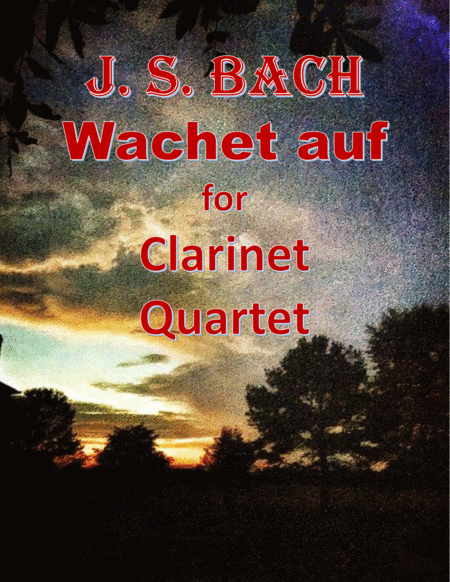
Bach: Wachet auf for Clarinet Quartet
Quatuor de Clarinettes: 4 clarinettes

$39.95 34.42 € Quatuor de Clarinettes: 4 clarinettes PDF SheetMusicPlus


1 ....271 286 301 316 331 ....586


Partitions Gratuites
Acheter des Partitions Musicales
Acheter des Partitions Digitales à Imprimer
Acheter des Instruments de Musique

© 2000 - 2026

Accueil - Version intégrale





