EUROPE
38949 articles
USA
0 articles
DIGITAL
6697 articles ( imprimer)
Partitions Digitales
Partitions à imprimer
6697 partitions trouvées


C Instrument - Level 1 - Digital Download SKU: A0.1206098 By Beba Selimovic. By bosnian folk song. Arranged by Zoran Radanovic. Folk,Multicultural,Patriotic,Traditional,Wedding,World. Lead Sheet / Fake Book. 2 pages. Zoran Radanovic #804292. Published by Zoran Radanovic (A0.1206098). This is famous bosnian folk song (sevdalinka). The arrangement is for accordion with chords and fingering( with bigger chords and fingering for easy reading). Das ist berühmte bosnische Volkslied. Der Arrangement ist für Akkordeon mit Akkorde und Fingersatz(mit grössere Fingersatz und SAkkorde für leichtere Ablesen). Ovo je bosanska narodna pjesma (sevdalinka). Aranzman je za harmoniku sa akordima i prstometom( sa vecim prstometom i akordima za lakse citanje).
Moj beharu - for accordion
Piano Facile
Beba Selimovic
$2.19 1.89 € Piano Facile PDF SheetMusicPlus

Choral Choir,Choral (SATB Chorus) - Level 3 - Digital Download SKU: A0.1518393 Composed by Montenegrin folk song. Arranged by Zoran Radanovic. Folk,Multicultural,Patriotic,Traditional,Wedding,World. 15 pages. Zoran Radanovic #1092493. Published by Zoran Radanovic (A0.1518393). This is very famous montenegrin folk song arrangement for SATB with accordion (with bigger fingering, chords and lyrics for easy reading).Diese sehr berhmte montenegrische Volkslied Arrangement fr SATB mit Akkordeon (mit grssere Fingersatz, Akkorde und Text fr leichtere Ablesung).Ova jako poznata crnogorska narodna pesma aranzman je za SATB sa harmonikom (sa vecim prstometom, akordima i tekstom za lakse citanje).
Još ne svi?e rujna zora - for SATB with accordion
Chorale SATB

$2.99 2.58 € Chorale SATB PDF SheetMusicPlus

Full Orchestra - Level 3 - Digital Download SKU: A0.1000803 Composed by Traditional. Arranged by Zoran Radanovic. Folk,Latin,World. Score and parts. 28 pages. Zoran Radanovic #6425023. Published by Zoran Radanovic (A0.1000803). The arrangement is made for a brass orchestra( 2 C trumpets, 1 Bb cornet, 1 horn in F, 1 Bb trumpet, 4 trombones, 2 alto trombones and 1 tuba). The musicians need very good concentration because of the music score (solo, accompaniment, dynamics, gradually adding instruments to the score).Das Arrangement ist für ein Blechbläserorchester (2 C-Trompeten, 1 B-Kornett, 1 Horn in F, 1 B-Trompete, 4 Posaunen, 2 Altposaunen und 1 Tuba). Die Musiker brauchen aufgrund der Musikpartitur eine sehr gute Konzentration (Solo, Begleitung, Dynamik, schrittweise Hinzufügen von Instrumenten zur Partitur). Aranžman je napravljen za limeni puhački orkestar (2 C trube, 1 Bb kornet, 1 rog u F, 1 Bb truba, 4 trombona, 2 alt trombuna i 1 tuba). Glazbenicima je potrebna vrlo dobra koncentracija zbog glazbene partiture (solo, pratnja, dinamika, postupno dodavanje instrumenata u partituru). A hangszerelés rézfúvós zenekarra készült (2 C trombita, 1 Bb korona, 1 F kürt, 1 Bb trombita, 4 harsona, 2 alt harsona és 1 tuba). A zenészeknek nagyon jó koncentrációra van szükségük a kották miatt (szóló, kíséret, dinamika, fokozatosan csatlakoznak a hangszerek).
La cucaracha - brass orchestra
Orchestre

$9.99 8.62 € Orchestre PDF SheetMusicPlus

Drum Set,Trumpet,Tuba,Viola - Level 3 - Digital Download SKU: A0.1349551 Composed by serbian folk song. Arranged by Zoran Radanovic. Contest,Festival,Film/TV,Folk,Patriotic,Wedding. 9 pages. Zoran Radanovic #934310. Published by Zoran Radanovic (A0.1349551). This famous serbian folk song is for quartet (Bb trumpet, tuba, viola and drumset) with set of parts.The March on (or to) the Drina (Serbian Cyrillic: Марш на Дрину, romanized: Marš na Drinu, pronounced [mârʃ na drǐːnu]) is a Serbian patriotic march which was composed to commemorate the Serbian victory in Battle of Cer during World War I and came to be seen as a symbol of Serbian resistance and victory in the World War I. Along with the other World War I song, Tamo daleko, it became a powerful symbol of Serbian culture and national identity and remains popular amongst Serbs in the Balkans and the diaspora.[1][2]Der Marsch auf die Drina (serbisch Марш на Дрину Marš na Drinu) ist ein Lied aus Serbien, das im Ersten Weltkrieg entstand. Der Komponist war Stanislav Binički (1872–1942). Geschichte Vom 16. August bis zum 19. August 1914 fand am bosnischen Grenzfluss Drina die sogenannte Schlacht von Cer statt. Die serbische Armee konnte diese für sich entscheiden. Der Sieg der Serben über die zahlenmäßig überlegenen österreichisch-ungarischen Gegner war der erste Sieg der Alliierten über die Mittelmächte im Ersten Weltkrieg. Zu Ehren der Gefallenen komponierte Stanislav Binički den „Marsch auf die Drina“, ein Lied, das zu einem Symbol der Tapferkeit der Serben während des Ersten Weltkriegs wurde. Er widmete den Marsch Oberst Milivoje Stojanović, der in der Schlacht von Cer gekämpft hatte und der einige Monate später in einer anderen Schlacht fiel.Marš na Drinu (izvorno: Na Drinu), je srbijanski domoljubni marš. Napisao ga je za vrijeme Prvoga svjetskog rata skladatelj i dirigent Stanislav Binički, u čast pobjedi srpske protiv austrougarske vojske u Cerskoj bitci, u Prvom svjetskom ratu, vođenoj od 16. do 19. kolovoza 1914. godine. Stanislav Binički bio je sudionikom te bitke kao vojni kapelnik. Pjesma je 50 godina bila bez riječi, a 1964. godine stihove je napisao srbijanski književnik Miloje Popović.[1][2] Pjesma Marš na Drinu dobila je najviše glasova za srbijansku himnu na referendumu o državnim simbolima Republike Srbije 1992. godine, ali je referendum poništen zbog nedovoljnog odaziva glasača, tako da je pjesma ostala neslužbena himna Republike Srbije sve do 2004. godine i proglašenja pjesme Bože pravde himnom Repubilke Srbije
Marš na Drinu

$5.99 5.17 € PDF SheetMusicPlus

Small Ensemble Flute,Harp,Violin - Level 3 - Digital Download SKU: A0.797341 Arranged by Beth Kolle. Concert,Folk,World. Score and parts. 40 pages. Afghan Press Music for the Harp #4808447. Published by Afghan Press Music for the Harp (A0.797341). Songs for the Midnight Sun comprises fifteen Nordic folk melodies, dance tunes, songs and ballads that have captured the arranger's imagination over the years. For Beth Kolle, Scandinavian music is the expression of the unparalleled beauty of the Nordic countries. The exotically different modes and harmonies evoke wild nature, and unseen beings of the ancient folk beliefs. This is music meant to be sung, danced to, or crooned to sleepy children, preferably in an age-old log cabin redolent of sweet, mellow resin and many years of comforting fires. As with all her other books, these arrangements are meant to be adjusted to your own playing style. Use them as a stepping-off point for making the arrangement your own, or use some of my ideas in a different song. Consider yourself warned: many Scandinavian tunes are addictive and tend to roll around in your head. The cure for that, of course, is to find another tune to replace the one in your head. And so on....good luck with that.Contains:  Song from Venjan, Traditional Song, Dalarna, Sweden, The Dream, Göran ‘Freddy’ Fredriksson, Sweden (also has flute/fiddle part), Polska from Hälleforsnäs, Traditional Polska, Sweden, Ball Polska, Traditional Polska, Sweden, Funk Fars Polska, Traditional Polska, Rättvik, Sweden, Marjankukka (Berry Flower), Lauri Keskinen, Finland (Flute or Fiddle part included), Springtime Waltz, Traditional Waltz, Sweden (Flute or Fiddle included), Walking Tune (Gånglåt efter Hamare), Traditional Gånglåt, Sweden, The Lost Sheep, Traditional Melody, Telemark, Norway, Waltz from Denmark, Traditional Waltz, Denmark, Amanda, Roger Tallroth, Sweden ,Waltz from Folldal, Traditional Waltz, Norway (Flute or Fiddle part included), Bridal March from Äppelbo, Traditional Wedding March, Sweden, Griffenfeldt, Traditional Reinlender, Norway, La Folia, Traditional Polska, Sweden (Flute or Fiddle part included)
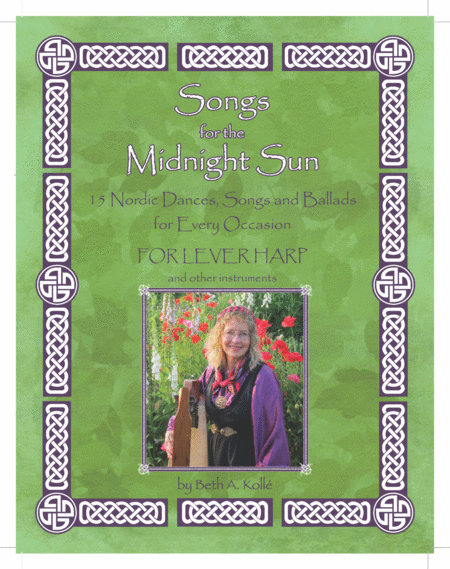
Songs for the Midnight Sun
Flute, harpe et violon

$20.00 17.25 € Flute, harpe et violon PDF SheetMusicPlus

Recorder quartet (SATB) - easy to intermediate - Digital Download SKU: S9.Q11339 Folk song variations. Composed by Hermann Schroeder. This edition: score and parts. Original Music for Recorder. Downloadable, Score and parts. Duration 5 minutes. Schott Music - Digital #Q11339. Published by Schott Music - Digital (S9.Q11339). Apart from his numerous church music works and organ compositions, the composer Hermann Schroeder (1904-1984) from Cologne also wrote a large number of chamber music works. His recorder quartet 'Kommt, ihr G'spielen' was created for the competition 'Jugend musiziert' and performed for the first time at an award winners' concert in Münster. The classical instrumentation of SATB recorders can be changed by having the bass played by the great bass flute or the violoncello. The well-known dancing tune from the Renaissance period inspired Schroeder to write a series of lively variations full of brio: Var. 1 turns the head motif into a free fantasia, Var. 2 puts the melody as fugato, Var. 3 is an agitated, polyphonic trio (SAT) with lively semiquaver figures, Var. 4 is a cheerful gigue, Var. 5 concludes the entire cycle in a virtuoso manner. A rewarding piece for tuition and concert, with a duration of about 5 minutes.Kommt, ihr G'spielen entstand für den Wettbewerb Jugend musiziert. Die klassische Besetzung mit SATB-Blockflöten kann auch abgewandelt werden, indem der Bass von der Großbassflöte oder dem Cello gespielt wird. Das bekannte Tanzlied aus der Renaissance inspirierte Schroeder zu einer Reihe von musikantisch-beschwingten Variationen. Ein dankbares Stück für Unterricht und Konzert.
Kommt, ihr G'spielen
Quatuor de Fltes bec

$18.99 16.38 € Quatuor de Fltes bec PDF SheetMusicPlus


Partitions Gratuites
Acheter des Partitions Musicales
Acheter des Partitions Digitales à Imprimer
Acheter des Instruments de Musique

© 2000 - 2026

Accueil - Version intégrale





