EUROPE
2603 articles
USA
0 articles
DIGITAL
16050 articles (à imprimer)
Partitions Digitales
Partitions à imprimer
16050 partitions trouvées

1 ....31 46 61 76 91 ....9991

Easy Piano - Level 1 - Digital Download SKU: A0.517906 Composed by Jolea Jensen. Arranged by Arr. Jolea Jensen. Children,Folk,Instructional,Multicultural,Traditional,World. Score. 106 pages. Jolea Jensen #128632. Published by Jolea Jensen (A0.517906). Learn folk songs and singing games from around the world in this early elementary book. This series features a solo melody line accompanied by I, IV, and V7 chords, making it perfect for a general classroom setting or for private lessons. Level One (Book 1, Part 1) begins with basic rhythms (quarter, half, dotted half, and whole) in the keys of C, G, D. Each key begins with several songs in the basic five-finger position, then adds either one note above or one note below, then adds 3/4 time, then adds songs in which the hand is not in the basic five-finger position for that key. Level One (Book 1, Part 2) continues with the keys of A, E, B. Eighth notes are introduced in the key of E. Level One (Book 1, Part 3) contains the keys of F#, Db, and Ab. Level One (Book 1, Part 4) contains the keys of Eb, Bb, and F. I have been teaching several of my students with this book, and they are often eager to begin their lessons by playing their assignment out of this book. The feedback I've received from parents is that their child loves the songs because they are fun and easy to understand. Children often love coloring in the black and white pictures on each page. I hope your students also enjoy these songs. Scope and Sequence for Level One songs: Introduction to I and V Simple with LH thumb melody note I and V More leaps I and V I and IV and V extend pinky I IV V extend thumb I IV V three four time simple move hand Alphabetical Song Index with Key and Pg Number: A Ram Sam Sam Ab 67 AijÄ, Žūžū, LÄÄa BÄ“rni E 32 Ainsi Font Bb 82 Alle Meine Entchen C 5 Ambos a Dos B 37 Ang Pato Ko Eb 70 Arroz con Leche F# 47-48 Au Clair de la Lune E 34 Bells in the Steeple Bb 83 Bill Grogan's Goat Bb 84 Björnen Sover Bb 81 Boil Them Cabbage Down C 4 Brinca la Tablita F 88 Buttercup G 8 Button, You Must Wander Ab 64 Chase the Squirrel C 1 Chopsticks C 6 Clap, Clap, Clap Your Hands D 15 Closet Key F# 42 Cobbler, Cobbler F 85 Cradle Hymn Db 52 Down by the Station F 86 Down in the Valley G 12 Five Fat Turkeys F# 45 Five Little Chickadees G 11 Frog in the Meadow Ab 59 Frogs in the Pond C 2 Go Tell Aunt Rhody D 14 Goodbye, Old Paint F 91 Grandma Grunts F 87 Ha' Sukkah Mah Yafah Ab 60 Hob Ich a Por Oksn Ab 61-62 Hop, Old Squirrel B 35 Hush-A-Bye G 10 Hush, Little Baby G 9 I'm a Nut Eb 75 Johnny's Hammer E 30 Journey of the Leaves E 33 Juan Pirulero B 40 Kangaroo Skippy Roo Bb 76 King's Land Eb 73 Kolyada A 24 Kuckuck Db 57 Lady Come A 22 Lavender's Blue Eb 74 Lightly Row C 3 Limerick Song D 19 Long-Legged Sailor F# 43 Love Somebody G 10 Mmm, Ahh, Went the Little Green Frog Bb 77-78 Mon Petit Lapin a Bien du Chagrin Ab 63 My Horses Ain't Hungry G 13 Naughty Kitty Cat F# 46 O wie wohl ist mir am Abend Db 58 Old King Cole B 38 On Top of Old Smokey D 20 One, Two, Three, Aleerie F 92 Over in the Meadow F 89-90 Pak Pak Ka-ak A 21 Passa, Passa, Gavião Db 51 Pease Porridge Hot A 25 Piva, Piva l'oli d'uliva Ab 65-66 Promenons-nous dans les Bois Eb 71-72 Sandy McNab A 26 Sasara ang Bulaklak Bb 79-80 Scotland's Burning B 36 Seashell Eb 68 Sleep, Baby, Sleep D 16 Tallis' Canon A 27 Ten in the Bed Eb 69 The Deaf Woman's Courtship A 23 The Elfin Knight Db 55-56 The Frog in the Bog D 17 The Noble Duke of York E 31 The Old Sow Took the Measles Db 53-54 The Sandman Comes D 18 Three Jolly Fishermen E 29 There's a Hole in the Bucket F# 49 Twinkle, Twinkle, Little Star B 41 Ulo Abaga B 39 Vamos a la Mar F# 44 Who's That Tapping at the Window Db 50 Yoo Hoo! E 28 Zhao Peng You C 7.
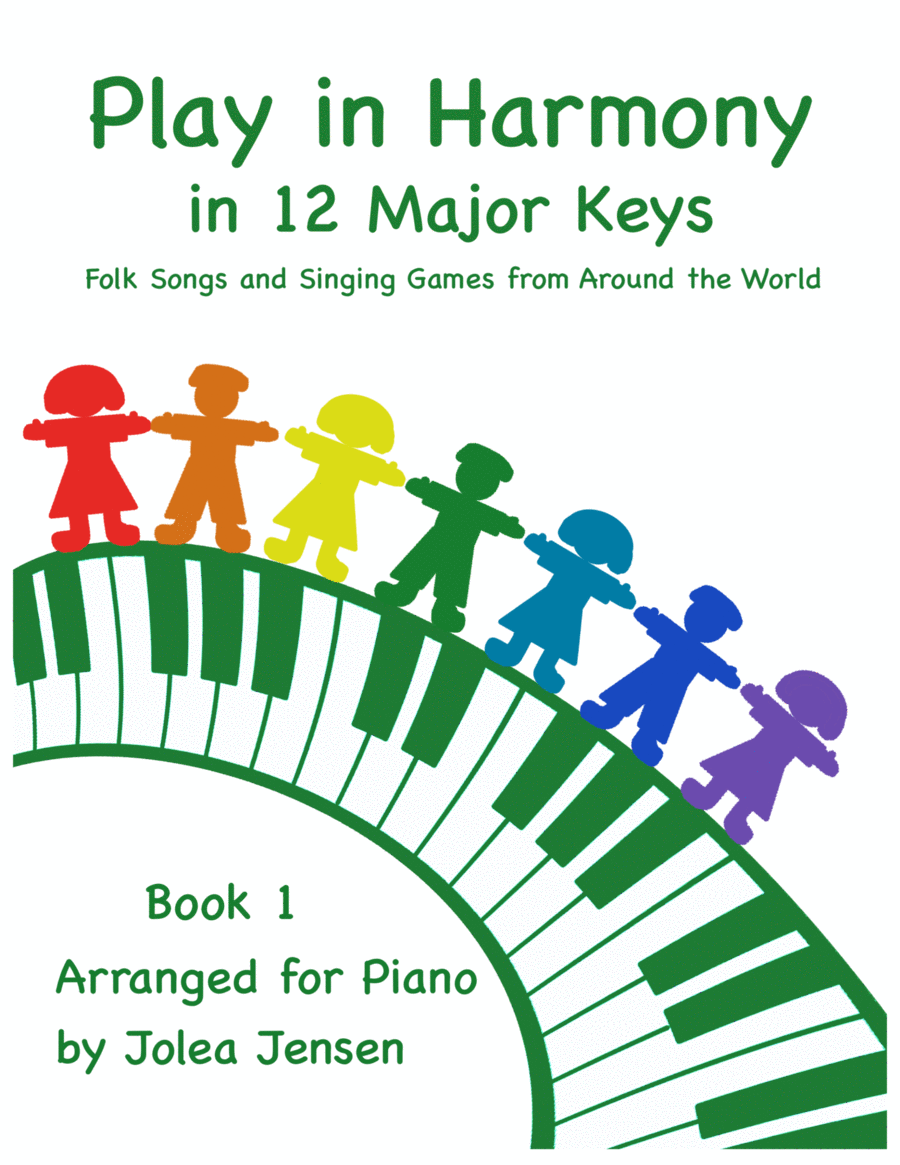
Play in Harmony in 12 Major Keys: Folk Songs and Singing Games from Around the World Book One
Piano Facile

$20.00 17.43 € Piano Facile PDF SheetMusicPlus

Woodwind Ensemble,Woodwind Quartet - Level 5 - Digital Download SKU: A0.912906 Composed by Brandon Nelson. Concert,Contemporary. 93 pages. Brandon Nelson #1954835. Published by Brandon Nelson (A0.912906). Imagine the terrifying prospect of having your fate-indeed, the fate of the entire universe-decided by the fickle whims of seven gods! This was life for all those who dwelled in the ancient society of Sumeria! They Who Decide Fate paints the picture of what living with these gods might have been like for those pitiable mortals. The introduction builds to the dreadful fate theme, which is woven within the rest of the piece. In the first episode, the Eb clarinet is highlighted depicting Enki, the magical, clever Lord of the Earth. Crafty and mischievous, one would not cross this god, so mighty he was said to have created the Tigris and Euphrates rivers between which the entire Sumerian world existed! The full orchestra comes roaring back to represent Shamash, the Lion of Justice. Bringing wrongdoers their just due, he could also be merciful, curing the faithful sick who plead for his mercy. The second episode is gently ushered in by the Basset horn. Featured here is Ninhursag, the mild, nurturing Mother Goddess. It was said that any couple who desired to be fertile would do well to propitiate themselves to herâ?¦ An explosive, percussive jolt fanfares in Inanna, wild, untamed Goddess of Primal Passions! Whether in war or in lust, Inanna stood for all things raw-and ultimately destructive! The low, rumbling voice of the contralto clarinet brings us Anu, Father of the Gods. Ancient and wise, Anu is the manifestation of the heavenly vault. Nanna, the moon god riding on the back of a bull, illuminated the night sky. Sparkling and light colors of the orchestra depict his deft, spry nocturnal motions. The sinuous lines of the Bb clarinet illustrate Enlil, fickle God of Wind and Weather. It is said that it was he who created humans, but lost interest in them and flooded the whole earth. The whole clarinet quartet reprises the fate theme one last time, ending in an exultant flurry, reflecting both the fear and ecstasy that these seven gods inspired in their mortal charges. Learn more about me: bnelsonmusic.wordpress.com.
They Who Decide Fate
Flûte, Hautbois, Clarinette, Basson

$89.99 78.42 € Flûte, Hautbois, Clarinette, Basson PDF SheetMusicPlus

Piano - Digital Download SKU: AX.00-PS-0015327 Super Mareio World 2: Yoshi's Island - Ground Theme. By Nintendo®. By Koji Kondo. Arranged by Sakiko Masuda. Jazz. 2 pages. Alfred Music - Digital Sheet Music #00-PS-0015327. Published by Alfred Music - Digital Sheet Music (AX.00-PS-0015327). ISBN 9780739082980. UPC: 038081427775.The globally beloved musical themes of Nintendo's Super Mario video games sound great when they're played on the piano, and these new jazzy renditions make them more fun than ever! Each arrangement in this collection was crafted under direct supervision by Nintendo and renowned video game composer Koji Kondo, so each theme retains its musical integrity -- but with a unique and lighthearted twist that's guaranteed to entertain. Pianists will enjoy the challenge of these 15 intermediate to early advanced arrangements, and audiences of all ages will be impressed and delighted to hear them.Titles: Super Mario Bros. Ground Theme * Super Mario Bros. Underground Theme * Super Mario Bros. Underwater Theme * Super Mario Bros.: The Lost Levels Ending * Super Mario Bros. 3 Ground Theme * Super Mario World Title * Super Mario World Athletic Theme * Super Mario Kart Mario Circuit * Super Mario World 2 Yoshi's Island Ground Theme * Super Mario 64 Main Theme * New Super Mario Bros. Battle Theme 2 * Mario Kart Wii Rainbow Road * New Super Mario Bros. Wii Title * New Super Mario Bros. Wii Ground Theme * Super Mario Galaxy 2 Yoster.
Super Mareio World 2: Yoshi's Island Ground Theme
Piano seul
Nintendo®
$3.99 3.48 € Piano seul PDF SheetMusicPlus

Euphonium,Piano - Level 3 - Digital Download SKU: A0.549832 Composed by Peter Ilyich Tchaikovsky. Arranged by James M. Guthrie, ASCAP. Children,Christmas,Romantic Period,Standards. Score and part. 48 pages. Jmsgu3 #3550627. Published by jmsgu3 (A0.549832). Duration: 6:12, Score: 29 pages, Solo part: 6 pages, Piano part: 12 pages. This is the grand finale of the Nutcracker Suite. Pyotr Ilyich Tchaikovsky Tchaikovsky is probably the most popular of the great composers in America. His music certainly appeals to musicians. Likewise, it appeals even to folks who don’t normally listen to serious music. This is probably because of his most noteworthy melodies. Above all, he writes with great emotion. This certainly makes a most noteworthy if not an unforgettable impact. Education First of all, He attended classes at the Russian Musical Society. Even more, He also attended the St. Petersburg Conservatory. There he studied music theory with Nikolai Zaremba. He also consequently studied composition with Anton Rubenstein. It seems like Rubenstein came under criticism from a group of Russian composers known as the Five. The Five The Five certainly rejected Western musical influences. They rather sought to use elements from Russian music. They furthermore wanted to use more exotic musical materials. Western Techniques More than other Russian composers, Tchaikovsky studied modern Western music. He certainly develops his music like the European masters. So, rather than repeating a motive, he moves to a new key. He then introduces a different theme in the new key. Hence, he maintained his independence from the Five. Even more, he became the first Russian composer of international stature. Influences Tchaikovsky was probably influenced in his ballet scoring by Léo Delibes. Richard Wagner influenced his symphonic writing. Tchaikovsky’s most famous works include the 1812 Overture, The Nutcracker Suite, and Swan Lake. Also famous are the Violin Concerto in D and the six symphonies. The greatest of the six symphonies may be No. 6, the Pathétique. Nutcracker Suite, Op. 71a The Nutcracker Suite is a ballet that was performed for the first time in December 1892 in St. Petersburg. To begin with, the original ballet failed to attract a positive reception. However, the ballet suite became probably one of the most popular of all of Tchaikovsky’s works. The ballet suite became even more famous in the 1960s. It is now performed all over the world, particularly during the Christmas season.   
Tchaikovsky: Waltz of the Flowers from Nutcracker Suite for Baritone Horn & Piano
Euphonium, Piano (duo)

$32.95 28.71 € Euphonium, Piano (duo) PDF SheetMusicPlus

Instrumental Duet Bassoon,Instrumental Duet - Level 3 - Digital Download SKU: A0.549828 Composed by Peter Ilyich Tchaikovsky. Arranged by James M. Guthrie, ASCAP. Children,Christmas,Romantic Period,Standards. Score and parts. 48 pages. Jmsgu3 #3549777. Published by jmsgu3 (A0.549828). Duration: 6:12, Score: 29 pages, Solo part: 6 pages, Piano part: 12 pages. This is the grand finale of the Nutcracker Suite. Pyotr Ilyich Tchaikovsky Tchaikovsky is probably the most popular of the great composers in America. His music certainly appeals to musicians. Likewise, it appeals even to folks who don’t normally listen to serious music. This is probably because of his most noteworthy melodies. Above all, he writes with great emotion. This certainly makes a most noteworthy if not an unforgettable impact. Education First of all, He attended classes at the Russian Musical Society. Even more, He also attended the St. Petersburg Conservatory. There he studied music theory with Nikolai Zaremba. He also consequently studied composition with Anton Rubenstein. It seems like Rubenstein came under criticism from a group of Russian composers known as the Five. The Five The Five certainly rejected Western musical influences. They rather sought to use elements from Russian music. They furthermore wanted to use more exotic musical materials. Western Techniques More than other Russian composers, Tchaikovsky studied modern Western music. He certainly develops his music like the European masters. So, rather than repeating a motive, he moves to a new key. He then introduces a different theme in the new key. Hence, he maintained his independence from the Five. Even more, he became the first Russian composer of international stature. Influences Tchaikovsky was probably influenced in his ballet scoring by Léo Delibes. Richard Wagner influenced his symphonic writing. Tchaikovsky’s most famous works include the 1812 Overture, The Nutcracker Suite, and Swan Lake. Also famous are the Violin Concerto in D and the six symphonies. The greatest of the six symphonies may be No. 6, the Pathétique. Nutcracker Suite, Op. 71a The Nutcracker Suite is a ballet that was performed for the first time in December 1892 in St. Petersburg. To begin with, the original ballet failed to attract a positive reception. However, the ballet suite became probably one of the most popular of all of Tchaikovsky’s works. The ballet suite became even more famous in the 1960s. It is now performed all over the world, particularly during the Christmas season.  
Tchaikovsky: Waltz of the Flowers from Nutcracker Suite for Bassoon & Piano
2 Bassons (duo)

$32.95 28.71 € 2 Bassons (duo) PDF SheetMusicPlus

Flute,Piano - Level 3 - Digital Download SKU: A0.549823 Composed by Peter Ilyich Tchaikovsky. Arranged by James M. Guthrie, ASCAP. Children,Christmas,Romantic Period,Standards. Score and part. 48 pages. Jmsgu3 #3547897. Published by jmsgu3 (A0.549823). Duration: 6:12, Score: 29 pages, Solo part: 6 pages, Piano part: 12 pages. This is the grand finale of the Nutcracker Suite. Pyotr Ilyich Tchaikovsky Tchaikovsky is probably the most popular of the great composers in America. His music certainly appeals to musicians. Likewise, it appeals even to folks who don’t normally listen to serious music. This is probably because of his most noteworthy melodies. Above all, he writes with great emotion. This certainly makes a most noteworthy if not an unforgettable impact. Education First of all, He attended classes at the Russian Musical Society. Even more, He also attended the St. Petersburg Conservatory. There he studied music theory with Nikolai Zaremba. He also consequently studied composition with Anton Rubenstein. It seems like Rubenstein came under criticism from a group of Russian composers known as the Five. The Five The Five certainly rejected Western musical influences. They rather sought to use elements from Russian music. They furthermore wanted to use more exotic musical materials. Western Techniques More than other Russian composers, Tchaikovsky studied modern Western music. He certainly develops his music like the European masters. So, rather than repeating a motive, he moves to a new key. He then introduces a different theme in the new key. Hence, he maintained his independence from the Five. Even more, he became the first Russian composer of international stature. Influences Tchaikovsky was probably influenced in his ballet scoring by Léo Delibes. Richard Wagner influenced his symphonic writing. Tchaikovsky’s most famous works include the 1812 Overture, The Nutcracker Suite, and Swan Lake. Also famous are the Violin Concerto in D and the six symphonies. The greatest of the six symphonies may be No. 6, the Pathétique. Nutcracker Suite, Op. 71a The Nutcracker Suite is a ballet that was performed for the first time in December 1892 in St. Petersburg. To begin with, the original ballet failed to attract a positive reception. However, the ballet suite became probably one of the most popular of all of Tchaikovsky’s works. The ballet suite became even more famous in the 1960s. It is now performed all over the world, particularly during the Christmas season.
Tchaikovsky: Waltz of the Flowers from Nutcracker Suite for Alto Flute & Piano
Flûte traversière et Piano

$32.95 28.71 € Flûte traversière et Piano PDF SheetMusicPlus

French Horn,Piano - Level 3 - Digital Download SKU: A0.549834 Composed by Peter Ilyich Tchaikovsky. Arranged by James M. Guthrie, ASCAP. Children,Christmas,Romantic Period,Standards. Score and part. 48 pages. Jmsgu3 #3553495. Published by jmsgu3 (A0.549834). Duration: 6:12, Score: 29 pages, Solo part: 6 pages, Piano part: 12 pages. This is the grand finale of the Nutcracker Suite. Pyotr Ilyich Tchaikovsky Tchaikovsky is probably the most popular of the great composers in America. His music certainly appeals to musicians. Likewise, it appeals even to folks who don’t normally listen to serious music. This is probably because of his most noteworthy melodies. Above all, he writes with great emotion. This certainly makes a most noteworthy if not an unforgettable impact. Education First of all, He attended classes at the Russian Musical Society. Even more, He also attended the St. Petersburg Conservatory. There he studied music theory with Nikolai Zaremba. He also consequently studied composition with Anton Rubenstein. It seems like Rubenstein came under criticism from a group of Russian composers known as the Five. The Five The Five certainly rejected Western musical influences. They rather sought to use elements from Russian music. They furthermore wanted to use more exotic musical materials. Western Techniques More than other Russian composers, Tchaikovsky studied modern Western music. He certainly develops his music like the European masters. So, rather than repeating a motive, he moves to a new key. He then introduces a different theme in the new key. Hence, he maintained his independence from the Five. Even more, he became the first Russian composer of international stature. Influences Tchaikovsky was probably influenced in his ballet scoring by Léo Delibes. Richard Wagner influenced his symphonic writing. Tchaikovsky’s most famous works include the 1812 Overture, The Nutcracker Suite, and Swan Lake. Also famous are the Violin Concerto in D and the six symphonies. The greatest of the six symphonies may be No. 6, the Pathétique. Nutcracker Suite, Op. 71a The Nutcracker Suite is a ballet that was performed for the first time in December 1892 in St. Petersburg. To begin with, the original ballet failed to attract a positive reception. However, the ballet suite became probably one of the most popular of all of Tchaikovsky’s works. The ballet suite became even more famous in the 1960s. It is now performed all over the world, particularly during the Christmas season.  
Tchaikovsky: Waltz of the Flowers from Nutcracker Suite for French Horn & Piano
Cor et Piano

$32.95 28.71 € Cor et Piano PDF SheetMusicPlus

B-Flat Clarinet,Piano - Level 3 - Digital Download SKU: A0.549818 Composed by Peter Ilyich Tchaikovsky. Arranged by James M. Guthrie, ASCAP. Children,Christmas,Romantic Period,Standards. Score and part. 48 pages. Jmsgu3 #3546577. Published by jmsgu3 (A0.549818). Duration: 6:12, Score: 29 pages, Solo part: 6 pages, Piano part: 12 pages. This is the grand finale of the Nutcracker Suite. Pyotr Ilyich Tchaikovsky Tchaikovsky is probably the most popular of the great composers in America. His music certainly appeals to musicians. Likewise, it appeals even to folks who don’t normally listen to serious music. This is probably because of his most noteworthy melodies. Above all, he writes with great emotion. This certainly makes a most noteworthy if not an unforgettable impact. Education First of all, He attended classes at the Russian Musical Society. Even more, He also attended the St. Petersburg Conservatory. There he studied music theory with Nikolai Zaremba. He also consequently studied composition with Anton Rubenstein. It seems like Rubenstein came under criticism from a group of Russian composers known as the Five. The Five The Five certainly rejected Western musical influences. They rather sought to use elements from Russian music. They furthermore wanted to use more exotic musical materials. Western Techniques More than other Russian composers, Tchaikovsky studied modern Western music. He certainly develops his music like the European masters. So, rather than repeating a motive, he moves to a new key. He then introduces a different theme in the new key. Hence, he maintained his independence from the Five. Even more, he became the first Russian composer of international stature. Influences Tchaikovsky was probably influenced in his ballet scoring by Léo Delibes. Richard Wagner influenced his symphonic writing. Tchaikovsky’s most famous works include the 1812 Overture, The Nutcracker Suite, and Swan Lake. Also famous are the Violin Concerto in D and the six symphonies. The greatest of the six symphonies may be No. 6, the Pathétique. Nutcracker Suite, Op. 71a The Nutcracker Suite is a ballet that was performed for the first time in December 1892 in St. Petersburg. To begin with, the original ballet failed to attract a positive reception. However, the ballet suite became probably one of the most popular of all of Tchaikovsky’s works. The ballet suite became even more famous in the 1960s. It is now performed all over the world, particularly during the Christmas season.
Tchaikovsky: Waltz of the Flowers from Nutcracker Suite for Clarinet & Piano
Clarinette et Piano

$32.95 28.71 € Clarinette et Piano PDF SheetMusicPlus

Baritone Saxophone,Piano - Level 3 - Digital Download SKU: A0.549820 Composed by Peter Ilyich Tchaikovsky. Arranged by James M. Guthrie, ASCAP. Children,Christmas,Romantic Period,Standards. Score and part. 48 pages. Jmsgu3 #3546585. Published by jmsgu3 (A0.549820). Duration: 6:12, Score: 29 pages, Solo part: 6 pages, Piano part: 12 pages. This is the grand finale of the Nutcracker Suite. Pyotr Ilyich Tchaikovsky Tchaikovsky is probably the most popular of the great composers in America. His music certainly appeals to musicians. Likewise, it appeals even to folks who don’t normally listen to serious music. This is probably because of his most noteworthy melodies. Above all, he writes with great emotion. This certainly makes a most noteworthy if not an unforgettable impact. Education First of all, He attended classes at the Russian Musical Society. Even more, He also attended the St. Petersburg Conservatory. There he studied music theory with Nikolai Zaremba. He also consequently studied composition with Anton Rubenstein. It seems like Rubenstein came under criticism from a group of Russian composers known as the Five. The Five The Five certainly rejected Western musical influences. They rather sought to use elements from Russian music. They furthermore wanted to use more exotic musical materials. Western Techniques More than other Russian composers, Tchaikovsky studied modern Western music. He certainly develops his music like the European masters. So, rather than repeating a motive, he moves to a new key. He then introduces a different theme in the new key. Hence, he maintained his independence from the Five. Even more, he became the first Russian composer of international stature. Influences Tchaikovsky was probably influenced in his ballet scoring by Léo Delibes. Richard Wagner influenced his symphonic writing. Tchaikovsky’s most famous works include the 1812 Overture, The Nutcracker Suite, and Swan Lake. Also famous are the Violin Concerto in D and the six symphonies. The greatest of the six symphonies may be No. 6, the Pathétique. Nutcracker Suite, Op. 71a The Nutcracker Suite is a ballet that was performed for the first time in December 1892 in St. Petersburg. To begin with, the original ballet failed to attract a positive reception. However, the ballet suite became probably one of the most popular of all of Tchaikovsky’s works. The ballet suite became even more famous in the 1960s. It is now performed all over the world, particularly during the Christmas season.
Tchaikovsky: Waltz of the Flowers from Nutcracker Suite for Baritone Sax & Piano
Saxophone Baryton, Piano

$32.95 28.71 € Saxophone Baryton, Piano PDF SheetMusicPlus

Bass Flute,Instrumental Solo,Piano - Level 3 - Digital Download SKU: A0.549824 Composed by Peter Ilyich Tchaikovsky. Arranged by James M. Guthrie, ASCAP. Children,Christmas,Romantic Period,Standards. Score and individual part. 48 pages. Jmsgu3 #3547907. Published by jmsgu3 (A0.549824). Duration: 6:12, Score: 29 pages, Solo part: 6 pages, Piano part: 12 pages. This is the grand finale of the Nutcracker Suite. Pyotr Ilyich Tchaikovsky Tchaikovsky is probably the most popular of the great composers in America. His music certainly appeals to musicians. Likewise, it appeals even to folks who don’t normally listen to serious music. This is probably because of his most noteworthy melodies. Above all, he writes with great emotion. This certainly makes a most noteworthy if not an unforgettable impact. Education First of all, He attended classes at the Russian Musical Society. Even more, He also attended the St. Petersburg Conservatory. There he studied music theory with Nikolai Zaremba. He also consequently studied composition with Anton Rubenstein. It seems like Rubenstein came under criticism from a group of Russian composers known as the Five. The Five The Five certainly rejected Western musical influences. They rather sought to use elements from Russian music. They furthermore wanted to use more exotic musical materials. Western Techniques More than other Russian composers, Tchaikovsky studied modern Western music. He certainly develops his music like the European masters. So, rather than repeating a motive, he moves to a new key. He then introduces a different theme in the new key. Hence, he maintained his independence from the Five. Even more, he became the first Russian composer of international stature. Influences Tchaikovsky was probably influenced in his ballet scoring by Léo Delibes. Richard Wagner influenced his symphonic writing. Tchaikovsky’s most famous works include the 1812 Overture, The Nutcracker Suite, and Swan Lake. Also famous are the Violin Concerto in D and the six symphonies. The greatest of the six symphonies may be No. 6, the Pathétique. Nutcracker Suite, Op. 71a The Nutcracker Suite is a ballet that was performed for the first time in December 1892 in St. Petersburg. To begin with, the original ballet failed to attract a positive reception. However, the ballet suite became probably one of the most popular of all of Tchaikovsky’s works. The ballet suite became even more famous in the 1960s. It is now performed all over the world, particularly during the Christmas season.  
Tchaikovsky: Waltz of the Flowers from Nutcracker Suite for Bass Flute & Piano

$32.95 28.71 € PDF SheetMusicPlus

Instrumental Solo,Oboe d'Amore,Piano - Level 3 - Digital Download SKU: A0.549825 Composed by Peter Ilyich Tchaikovsky. Arranged by James M. Guthrie, ASCAP. Children,Christmas,Romantic Period,Standards. Score and individual part. 48 pages. Jmsgu3 #3547921. Published by jmsgu3 (A0.549825). Duration: 6:12, Score: 29 pages, Solo part: 6 pages, Piano part: 12 pages. This is the grand finale of the Nutcracker Suite. Pyotr Ilyich Tchaikovsky Tchaikovsky is probably the most popular of the great composers in America. His music certainly appeals to musicians. Likewise, it appeals even to folks who don’t normally listen to serious music. This is probably because of his most noteworthy melodies. Above all, he writes with great emotion. This certainly makes a most noteworthy if not an unforgettable impact. Education First of all, He attended classes at the Russian Musical Society. Even more, He also attended the St. Petersburg Conservatory. There he studied music theory with Nikolai Zaremba. He also consequently studied composition with Anton Rubenstein. It seems like Rubenstein came under criticism from a group of Russian composers known as the Five. The Five The Five certainly rejected Western musical influences. They rather sought to use elements from Russian music. They furthermore wanted to use more exotic musical materials. Western Techniques More than other Russian composers, Tchaikovsky studied modern Western music. He certainly develops his music like the European masters. So, rather than repeating a motive, he moves to a new key. He then introduces a different theme in the new key. Hence, he maintained his independence from the Five. Even more, he became the first Russian composer of international stature. Influences Tchaikovsky was probably influenced in his ballet scoring by Léo Delibes. Richard Wagner influenced his symphonic writing. Tchaikovsky’s most famous works include the 1812 Overture, The Nutcracker Suite, and Swan Lake. Also famous are the Violin Concerto in D and the six symphonies. The greatest of the six symphonies may be No. 6, the Pathétique. Nutcracker Suite, Op. 71a The Nutcracker Suite is a ballet that was performed for the first time in December 1892 in St. Petersburg. To begin with, the original ballet failed to attract a positive reception. However, the ballet suite became probably one of the most popular of all of Tchaikovsky’s works. The ballet suite became even more famous in the 1960s. It is now performed all over the world, particularly during the Christmas season.  
Tchaikovsky: Waltz of the Flowers from Nutcracker Suite for Oboe d'Amore & Piano

$32.95 28.71 € PDF SheetMusicPlus

Oboe,Piano - Level 3 - Digital Download SKU: A0.549817 Composed by Peter Ilyich Tchaikovsky. Arranged by James M. Guthrie, ASCAP. Children,Christmas,Romantic Period,Standards. Score and part. 48 pages. Jmsgu3 #3546571. Published by jmsgu3 (A0.549817). Duration: 6:12, Score: 29 pages, Solo part: 6 pages, Piano part: 12 pages. This is the grand finale of the Nutcracker Suite. Pyotr Ilyich Tchaikovsky Tchaikovsky is probably the most popular of the great composers in America. His music certainly appeals to musicians. Likewise, it appeals even to folks who don’t normally listen to serious music. This is probably because of his most noteworthy melodies. Above all, he writes with great emotion. This certainly makes a most noteworthy if not an unforgettable impact. Education First of all, He attended classes at the Russian Musical Society. Even more, He also attended the St. Petersburg Conservatory. There he studied music theory with Nikolai Zaremba. He also consequently studied composition with Anton Rubenstein. It seems like Rubenstein came under criticism from a group of Russian composers known as the Five. The Five The Five certainly rejected Western musical influences. They rather sought to use elements from Russian music. They furthermore wanted to use more exotic musical materials. Western Techniques More than other Russian composers, Tchaikovsky studied modern Western music. He certainly develops his music like the European masters. So, rather than repeating a motive, he moves to a new key. He then introduces a different theme in the new key. Hence, he maintained his independence from the Five. Even more, he became the first Russian composer of international stature. Influences Tchaikovsky was probably influenced in his ballet scoring by Léo Delibes. Richard Wagner influenced his symphonic writing. Tchaikovsky’s most famous works include the 1812 Overture, The Nutcracker Suite, and Swan Lake. Also famous are the Violin Concerto in D and the six symphonies. The greatest of the six symphonies may be No. 6, the Pathétique. Nutcracker Suite, Op. 71a The Nutcracker Suite is a ballet that was performed for the first time in December 1892 in St. Petersburg. To begin with, the original ballet failed to attract a positive reception. However, the ballet suite became probably one of the most popular of all of Tchaikovsky’s works. The ballet suite became even more famous in the 1960s. It is now performed all over the world, particularly during the Christmas season.
Tchaikovsky: Waltz of the Flowers from Nutcracker Suite for Oboe & Piano
Hautbois, Piano (duo)

$32.95 28.71 € Hautbois, Piano (duo) PDF SheetMusicPlus

Piano,Viola - Level 3 - Digital Download SKU: A0.549814 Composed by Peter Ilyich Tchaikovsky. Arranged by James M. Guthrie, ASCAP. Children,Christmas,Romantic Period,Standards. Score and part. 47 pages. Jmsgu3 #3545591. Published by jmsgu3 (A0.549814). Duration: 6:12, Score: 29 pages, Solo part: 5 pages, Piano part: 12 pages. This is the grand finale of the Nutcracker Suite. Pyotr Ilyich Tchaikovsky Tchaikovsky is probably the most popular of the great composers in America. His music certainly appeals to musicians. Likewise, it appeals even to folks who don’t normally listen to serious music. This is probably because of his most noteworthy melodies. Above all, he writes with great emotion. This certainly makes a most noteworthy if not an unforgettable impact. Education First of all, He attended classes at the Russian Musical Society. Even more, He also attended the St. Petersburg Conservatory. There he studied music theory with Nikolai Zaremba. He also consequently studied composition with Anton Rubenstein. It seems like Rubenstein came under criticism from a group of Russian composers known as the Five. The Five The Five certainly rejected Western musical influences. They rather sought to use elements from Russian music. They furthermore wanted to use more exotic musical materials. Western Techniques More than other Russian composers, Tchaikovsky studied modern Western music. He certainly develops his music like the European masters. So, rather than repeating a motive, he moves to a new key. He then introduces a different theme in the new key. Hence, he maintained his independence from the Five. Even more, he became the first Russian composer of international stature. Influences Tchaikovsky was probably influenced in his ballet scoring by Léo Delibes. Richard Wagner influenced his symphonic writing. Tchaikovsky’s most famous works include the 1812 Overture, The Nutcracker Suite, and Swan Lake. Also famous are the Violin Concerto in D and the six symphonies. The greatest of the six symphonies may be No. 6, the Pathétique. Nutcracker Suite, Op. 71a The Nutcracker Suite is a ballet that was performed for the first time in December 1892 in St. Petersburg. To begin with, the original ballet failed to attract a positive reception. However, the ballet suite became probably one of the most popular of all of Tchaikovsky’s works. The ballet suite became even more famous in the 1960s. It is now performed all over the world, particularly during the Christmas season.
Tchaikovsky: Waltz of the Flowers from Nutcracker Suite for Viola & Piano
Alto, Piano

$32.95 28.71 € Alto, Piano PDF SheetMusicPlus

B-Flat Trumpet,Piano - Level 3 - Digital Download SKU: A0.549830 Composed by Peter Ilyich Tchaikovsky. Arranged by James M. Guthrie, ASCAP. Children,Christmas,Romantic Period,Standards. Score and part. 48 pages. Jmsgu3 #3550201. Published by jmsgu3 (A0.549830). Duration: 6:12, Score: 29 pages, Solo part: 6 pages, Piano part: 12 pages. This is the grand finale of the Nutcracker Suite. Pyotr Ilyich Tchaikovsky Tchaikovsky is probably the most popular of the great composers in America. His music certainly appeals to musicians. Likewise, it appeals even to folks who don’t normally listen to serious music. This is probably because of his most noteworthy melodies. Above all, he writes with great emotion. This certainly makes a most noteworthy if not an unforgettable impact. Education First of all, He attended classes at the Russian Musical Society. Even more, He also attended the St. Petersburg Conservatory. There he studied music theory with Nikolai Zaremba. He also consequently studied composition with Anton Rubenstein. It seems like Rubenstein came under criticism from a group of Russian composers known as the Five. The Five The Five certainly rejected Western musical influences. They rather sought to use elements from Russian music. They furthermore wanted to use more exotic musical materials. Western Techniques More than other Russian composers, Tchaikovsky studied modern Western music. He certainly develops his music like the European masters. So, rather than repeating a motive, he moves to a new key. He then introduces a different theme in the new key. Hence, he maintained his independence from the Five. Even more, he became the first Russian composer of international stature. Influences Tchaikovsky was probably influenced in his ballet scoring by Léo Delibes. Richard Wagner influenced his symphonic writing. Tchaikovsky’s most famous works include the 1812 Overture, The Nutcracker Suite, and Swan Lake. Also famous are the Violin Concerto in D and the six symphonies. The greatest of the six symphonies may be No. 6, the Pathétique. Nutcracker Suite, Op. 71a The Nutcracker Suite is a ballet that was performed for the first time in December 1892 in St. Petersburg. To begin with, the original ballet failed to attract a positive reception. However, the ballet suite became probably one of the most popular of all of Tchaikovsky’s works. The ballet suite became even more famous in the 1960s. It is now performed all over the world, particularly during the Christmas season.   
Tchaikovsky: Waltz of the Flowers from Nutcracker Suite for Trumpet & Piano
Trompette

$32.95 28.71 € Trompette PDF SheetMusicPlus


1 ....31 46 61 76 91 ....9991


Partitions Gratuites
Acheter des Partitions Musicales
Acheter des Partitions Digitales à Imprimer
Acheter des Instruments de Musique

© 2000 - 2026

Accueil - Version intégrale





