EUROPE
53124 articles
USA
0 articles
DIGITAL
26728 articles (à imprimer)
Partitions Digitales
Partitions à imprimer
26728 partitions trouvées


Percussion Ensemble,Percussion Trio Percussion - Level 4 - Digital Download SKU: A0.1504784 By Francois Du Bois. By Francois Du Bois. 21st Century,Contemporary,Multicultural,New Age,Spiritual,World. 58 pages. D-Project Co., Ltd. #1080204. Published by D-Project Co., Ltd. (A0.1504784). Bleu : (morceau de l’album “dive into silence”), est un morceau de Musique Médita (musique conçue pour la méditation).Il représente les reins dans la technique de méditation chinoise : Le Liu Zi Jue.– Le morceau débute par une longue cadence de marimba, ce dernier installe finalement une paterne répétitive sur laquelle des percussions diverses et variées s’agencent pour raconter une histoire.Pour un marimbiste et deux percussionnistes.Instruments : Marimba/Gong/Tom/Slit Drum/Bell/Sleigh Bells/Triangle/Castanets/2 Temple Blocks/2 Wood Blockshttps://youtu.be/iYloxxaK8mo?feature=sharedBleu??????Dive into Silence??????????Medita Music??????????????????????????????????????????????????????????????????????????????????????????????????????????????????????1???????2?????????????????????????????????????????????????????????????2???????????2?????????https://youtu.be/iYloxxaK8mo?feature=sharedBleu: (track from the album Dive into Silence), is a piece of “Medita Music” (music designed for meditation).It represents the kidneys in the Chinese meditation technique: Liu Zi Jue.- The piece begins with a long marimba cadence, which eventually establishes a repetitive pattern upon which various percussion instruments arrange themselves to tell a story.For one marimbist and two percussionists.Instruments:Marimba/Gong/Tom/Slit Drum/Bell/Sleigh Bells/Triangle/Castanets/2 Temple Blocks/2 Wood Blockshttps://youtu.be/iYloxxaK8mo?feature=shared
Bleu
Francois Du Bois
$24.00 20.9 € PDF SheetMusicPlus

Chamber Orchestra - Level 5 - Digital Download SKU: A0.742472 Composed by Jean Phillipe Rameau. Arranged by Arte Nova Music Lab. Baroque,Concert,Standards,World. Score and parts. 15 pages. Arte Nova Music Lab #4600759. Published by Arte Nova Music Lab (A0.742472). Les Indes galantes (French: The Amorous Indies) Opéra-ballet with a prologue and two entrées. Choreography: Louis Dupré. Music: Jean-Philippe Rameau. Libretto: Louis Fuzelier. Sets: Giovanni-Niccolò Servandoni. First performance: 23 August 1735, Théâtre de l'Académie de Musique, Paris. Principals: David Dumoulin, Louis Dupré, M. le Breton, M. Javellier, Marie Sallé. The premiere, including only the prologue and the first two of its four entrées (acts), was staged by the Académie Royale de Musique at itstheatre in the Palais-Royal in Paris on 23 August 1735, starring the leading singers of the Opéra, Marie Antier, Marie Pélissier, Mlle Errémans, Mlle Petitpas, Denis-François Tribou, Pierre Jélyotte, and Claude-Louis-Dominique Chassé de Chinais, and the dancers Marie Sallé and Louis Dupré. Michel Blondy provided the choreography. The ballet's Premier Menuet was used in the soundtrack of the 2006 film Marie Antoinette. Prologue: The palace of Hebe in the background and her gardens in the wings Hebe, goddess of youth, summons her followers to take part in a festival (Air: Vous, qui d'Hébé suivez les lois). Young French, Spanish, Italians and Poles rush to celebrate with a series of dances, including a musette. The ballet is interrupted by the noise of drums and trumpets. It is Bellona, goddess of war, who arrives on the stage accompanied by warriors bearing flags. Bellona calls on the youths to seek out military glory (Air and chorus: La Gloire vous appelle). Hebe prays to Cupid (L'Amour) to use his power to hold them back. Cupid descends on a cloud with his followers. He decides to abandon Europe in favour of the Indies, where love is more welcome. Taken from https://en.wikipedia.org/wiki/Les_Indes_galantes
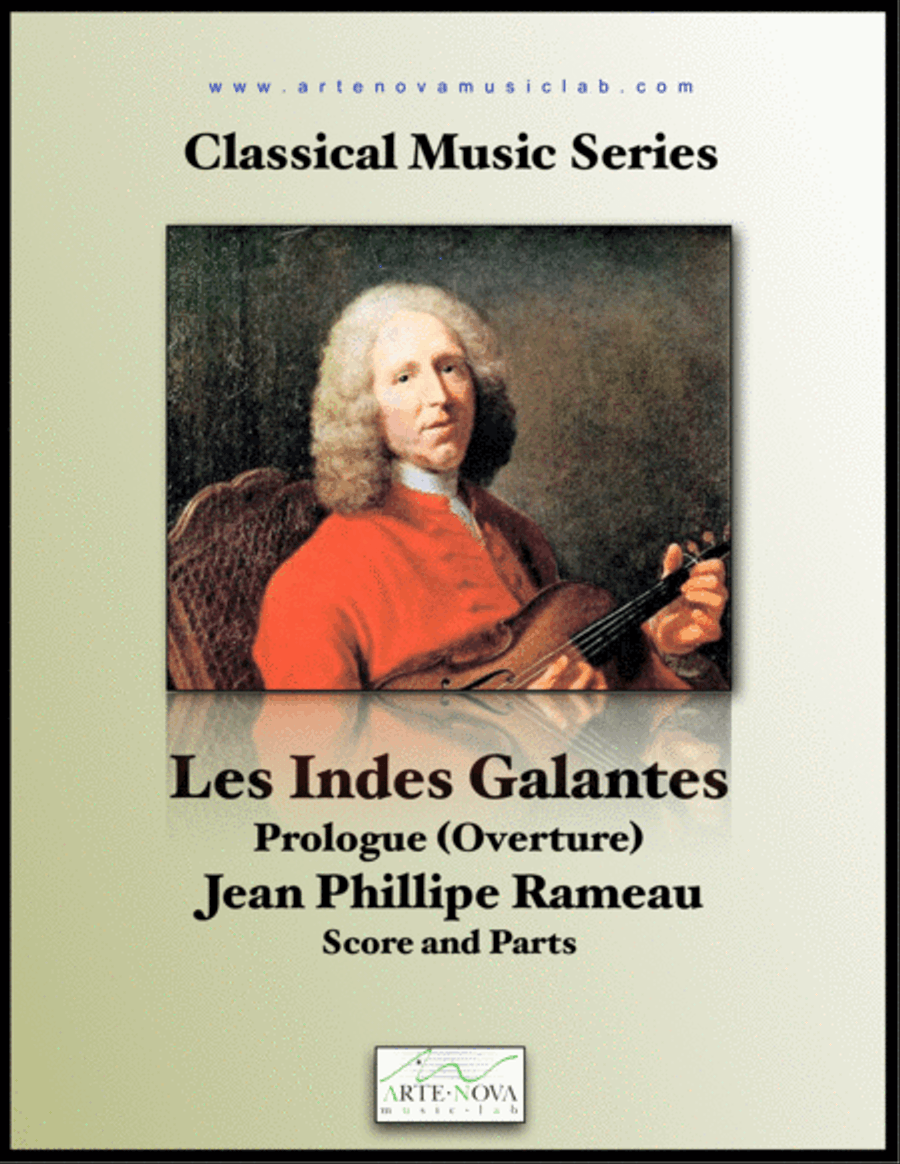
Les Indes Galantes - Prologue (Overture)
Orchestre de chambre

$20.00 17.42 € Orchestre de chambre PDF SheetMusicPlus

Guitar and voice - Intermediate - Digital Download SKU: ZY.DO-1538 Composed by David Leisner. Score. 23 pages. Les Editions Doberman-Yppan (digital) #DO 1538. Published by Les Editions Doberman-Yppan (digital) (ZY.DO-1538). When guitarist John Olson and soprano Gioia De Cari commissioned me to write a piece for them, I envi- sioned writing something theatrical that might especially suit Gioia, who is both a singer and an actress. Eventually, I thought of Mark Twain. The great American writer and humorist of substance wrote a short, little-known book called The Diary of Adam and Eve, which is, of course, about the first days of human life on this earth, in Twain’s witty, but touching take on the Bible story. Adam and Eve each write diary entries. I chose several passages from Eve’s diary that convey the sense of constant wonder that she felt because absolutely everything in her world was new.Setting prose, rather than poetry, is a challenge for a composer because it has neither the innate rhythm nor the lyricism of poetry. On some intuitive level, this challenge led me to a process that allowed the music to evolve mostly from the guitar part. Whereas normally the vocal melody might emerge first, motivated by the text and with the accompaniment then added for support, here the guitar part was the prime mover. An example of this is the last song, which is a passacaglia played by the guitar, providing the ground over which the vocal line can soar. Eve’s Diary was composed in 2015.Lorsque le guitariste John Olson et la soprano Gioia De Cari m'ont commandé une pièce pour eux, j'ai imaginé écrire quelque chose de théâtral qui pourrait particulièrement convenir à Gioia, qui est à la fois chanteuse et actrice. Finalement, j'ai pensé à Mark Twain. Le grand écrivain et humoriste américain a écrit un petit livre peu connu intitulé Le Journal d'Adam et Ève, qui raconte les premiers jours de la vie humaine sur terre selon l'interprétation spirituelle et espiègle de Twain de l'histoire biblique. Adam et Ève tiennent chacun un journal. J'ai choisi plusieurs passages du journal d'Ève qui expriment ce sentiment d'émerveillement constant qu'elle ressentait, car absolument tout dans son monde était nouveau.Mettre en musique de la prose, plutôt que de la poésie, est un défi pour un compositeur car elle n'a ni le rythme inné ni le lyrisme de la poésie. Intuitivement, ce défi m'a conduit à un processus qui a permis à la musique d'évoluer principalement à partir de la partie de guitare. Alors que normalement la mélodie vocale pourrait émerger en premier, motivée par le texte et avec l'accompagnement ajouté ensuite pour le soutien, ici la partie de guitare était le moteur principal. Un exemple en est la dernière chanson, qui est une passacaille jouée à la guitare, fournissant le fond sur lequel la ligne vocale peut s'élever. Le Journal d'Ève a été composé en 2015.
Eve’s Diary

$10.95 9.54 € PDF SheetMusicPlus


Partitions Gratuites
Acheter des Partitions Musicales
Acheter des Partitions Digitales à Imprimer
Acheter des Instruments de Musique

© 2000 - 2026

Accueil - Version intégrale





