EUROPE
4761 articles
USA
14264 articles
DIGITAL
52803 articles (à imprimer)
Partitions Digitales
Partitions à imprimer
52803 partitions trouvées


Soprano voice,Vocal Solo - Level 1 - Digital Download SKU: A0.1492613 Composed by Thomas Moore. Arranged by Alex Nunes Rodrigues. Folk. 2 pages. Alex Rodrigues #1069291. Published by Alex Rodrigues (A0.1492613). The Last Rose of Summer is a work deeply rooted in Irish culture, originally penned as a poem by the renowned poet and composer Thomas Moore in 1805. Moore, regarded as Ireland’s national poet, was inspired by an 'Old Blush' rose while staying at Jenkinstown Castle in County Kilkenny, Ireland. The poem was published as part of his Irish Melodies collection between 1807 and 1834, and later set to music by fellow Irishman John Stevenson. The song gained widespread popularity and was incorporated into the opera Martha by the German composer Friedrich von Flotow, which premiered in 1847 in Vienna.This sheet music has been adapted for voice and piano, preserving the original melody true to the composition by Moore and Stevenson. The piano arrangement has been simplified to provide an accessible experience for music teachers who, even without extensive piano skills, wish to accompany their students. This arrangement maintains the melodic and emotional essence of the piece, offering a version that honors its traditional nuances while making it approachable for beginner to intermediate musicians.The Last Rose of Summer captures the essence of melancholy and the passage of time—universal themes reflected in the farewell to the last vestige of a vibrant summer. The melody, paired with Moore’s poetry, evokes a profound sense of loss and longing, with the solitary rose serving as a metaphor for the fleeting nature of life and the seasons. The simplicity and beauty of this piece have made it a classic, both in literature and music, perpetuating Irish tradition and touching the hearts of listeners worldwide.
The Last Rose of Summer - Soprano with piano in C
Voix Soprano, Piano

$4.99 4.21 € Voix Soprano, Piano PDF SheetMusicPlus

Mixed Percussion B-Flat Tuba,B-Flat trombone,Baritone Horn TC/Euphonium,Bass Trombone,E-Flat Cornet,E-Flat Tenor Horn,E-Flat Tuba TC,Flugelhorn,Percussion 1,Percussion 2,Tenor Trombone - Level 2 - Digital Download SKU: A0.1112190 Composed by William Boyce. Arranged by Colin G Dance. March. Brass Band. 24 pages. Dance is With Music #714349. Published by Dance is With Music (A0.1112190). Heart of Oak is the official march of the Royal Navy. It is also the official march of several Commonwealth navies, including the Royal Canadian Navy and the Royal New Zealand Navy. It was also the official march of the Royal Australian Navy, but has now been replaced by the new march, Royal Australian Navy. The music of Heart of Oak was written in 1759 by composer William Boyce, the lyrics by actor David Garrick, for Garrick's pantomime Harlequin's Invasion, to which others contributed as well. The pantomime was first performed on New Year's Eve of that year at the Theatre Royal, Drury Lane, London, with Handel soloist Samuel Thomas Champnes singing Heart of Oak. The wonderful year referenced in the first verse was the Annus Mirabilis of 1759, during which British forces were victorious in several significant battles: the Battle of Minden on 1 August 1759; the Battle of Lagos on 19 August 1759; the Battle of the Plains of Abraham (outside Quebec City) on 13 September 1759; and the Battle of Quiberon Bay on 20 November 1759. The last battle foiled a French invasion project planned by the Duc de Choiseul to defeat Britain during the Seven Years' War, hence the reference in the song to 'flat-bottom' invasion barges. These victories were followed a few months later by the Battle of Wandiwash in India on 22 January 1760. Britain's continued success in the war boosted the song's popularity. The oak in the song's title refers to the wood from which British warships were generally made during the age of sail. The Heart of oak is the strongest central wood of the tree. The reference to freemen not slaves echoes the refrain (Britons never will be slaves!) of Rule, Britannia!, written and composed two decades earlier.
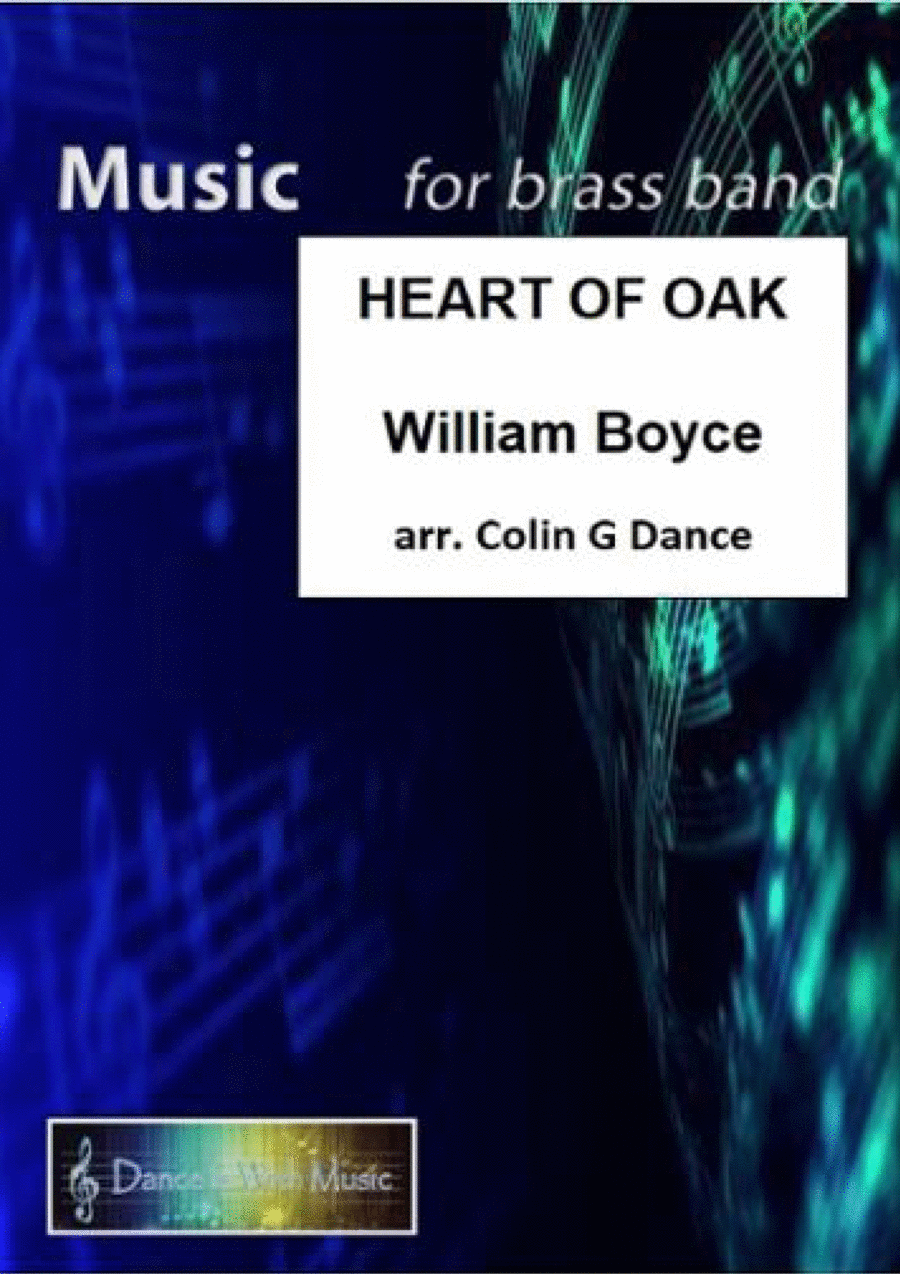
Heart of Oak

$50.00 42.15 € PDF SheetMusicPlus

Trombone Quartet Bass Trombone - Level 4 - Digital Download SKU: A0.792328 Composed by Traditional. Arranged by Kempton, Jeremy. Folk,Hanukkah,Jewish,Multicultural,World. 15 pages. Gordon Cherry #4804623. Published by Gordon Cherry (A0.792328). Hava Nagila is one of the most well known and beloved folk songs. Let Us Rejoice (translation from Hebrew) is a traditional Jewish song that has become a staple at all Jewish celebrations. Since being introduced to the rest of the world in April 1959 by Harry Balafonte at Carnegie Hall it has grown in popularity to be a mega-hit, played everywhere, by everyone! The song's origins are from the Ukraine and words were added in 1918 by Israeli musicologist Abraham Idelsohn. Jeremy Kempton has now arranged this iconic song for Trombone Quartet .... and ... it is kosher for it to be played at occasions other than weddings and Bar Mitzvahs!! About 3 minutes in length it is scored for moderately advanced performers.
Hava Nagila Israeli Folk Song for Trombone Quartet
Quatuor de cuivres: 4 trombones

$20.00 16.86 € Quatuor de cuivres: 4 trombones PDF SheetMusicPlus

String Quartet Cello,String Quartet,Viola,Violin - Level 4 - Digital Download SKU: A0.1211539 Composed by Gioachino Rossini. Arranged by César Madeira. 19th Century,Chamber,March,Opera,Romantic Period. 26 pages. Sheet Music To Play Editions #809151. Published by Sheet Music To Play Editions (A0.1211539). William Tell Overture by Rossini. Arrangement for String Quartet - Violin 1, 2, Viola and Violoncello. With Full Score and Individual Parts. Enjoy it!Gioachino Antonio Rossini (1792 – 1868) was an Italian composer who gained fame for his 39 operas, although he also wrote many songs, some chamber music and piano pieces, and some sacred music. He set new standards for both comic and serious opera before retiring from large-scale composition while still in his thirties, at the height of his popularity.For Tutorials, Play Alongs or request New Arrangements, visit the YouTube Channel: Sheet Music To Play
William Tell Overture - String Quartet (Full Score and Parts)
Quatuor à cordes: 2 violons, alto, violoncelle

$13.99 11.79 € Quatuor à cordes: 2 violons, alto, violoncelle PDF SheetMusicPlus

Piano Solo - Level 3 - Digital Download SKU: A0.1378651 Composed by Charles Francois Gounod. Arranged by Thomas Ling of Sibu. 19th Century,Instructional,Romantic Period. Score. 9 pages. Thomas Swee Chin #963311. Published by Thomas Swee Chin (A0.1378651). 3 versions included- from simple to the full version. Gounod's Funeral March of a Marionette for piano is a haunting and evocative piece that tells a macabre story through music. Originally composed as a short orchestral work, it gained popularity when it was adapted for piano. The piece opens with a solemn and ominous melody, characterized by its melancholic and mournful tone. As the music progresses, the mood shifts, alternating between moments of tension and release. Gounod's use of chromaticism and dissonance adds to the eerie atmosphere, creating a sense of unease and foreboding. The piece builds to a dramatic climax before fading away into silence, leaving listeners with a lingering sense of mystery and intrigue. Despite its brevity, Funeral March of a Marionette is a powerful and emotive composition that showcases Gounod's mastery of musical storytelling.
Funeral March of a Marionette (Puppet) / Theme from “Alfred Hitchcock Presents”
Piano seul

$8.00 6.74 € Piano seul PDF SheetMusicPlus

Woodwind Ensemble - Level 5 - Digital Download SKU: A0.956663 Composed by Felix Bartholdy Mendelssohn. Arranged by Catriona Melville-Mason. Romantic Period. 91 pages. C Melville-Mason #6735339. Published by C Melville-Mason (A0.956663). This is an arrangement of Mendelssohn’s overture The Hebrides (Fingal’s Cave), intended for a medium-sized saxophone orchestra.  It has been categorised as ‘advanced’, as the length and tempo of the work make it quite challenging.  However, provided the main parts are covered by competent players, those with less experience can either double, judiciously omitting any problem sections, or in some cases opt for the appropriate ‘easier’ add-on part. Essential Parts: Part 1: Sopranino Saxophone Part 2: Soprano Saxophone Part 3: Alto Saxophone Part 4: Alto Saxophone Part 5: Alto Saxophone Part 6: Tenor Saxophone Part 7: Tenor Saxophone Part 8: Baritone Saxophone Part 9: Bass Saxophone   Optional Parts:   Easier Alto Saxophone Easier Tenor Saxophone Contrabass Saxophone   Mendelssohn visited Scotland in 1829 and, after a tour of the Highlands, travelled by steamer from Fort William to Oban and thence to the Hebridean island of Mull.  From there, he made the short boat trip to the small island of Staffa, to visit Fingal’s Cave – a sea cave formed of hexagonal basalt columns, with a highly intriguing natural acoustic. The Hebrides overture was inspired by this segment of Mendelssohn’s Scottish travels.  The work is an early example of a tone poem: a musical representation of the scenery, wind and weather of the Scottish Hebridean islands, reflecting their sudden and infinite changeability. After some revisions, the overture received its first performance in May 1832 and remains a favourite with audiences to this day.  It has been central in establishing – and sustaining – the popularity of Fingal’s Cave as a tourist destination. This is an adaptation of an arrangement that was originally created for a woodwind course held on another Scottish island – Skye, which is the largest and most northerly of the Inner Hebrides.
The Hebrides Overture (Fingal's Cave) for Saxophone Orchestra

$45.00 37.94 € PDF SheetMusicPlus

Easy Piano - Level 2 - Digital Download SKU: A0.1368919 By Nathan Evans. By Alexander Oriet, David Phelan, and Nathan Evans. Arranged by Dr. Yuway Chan-Basel. 21st Century,Folk,New Age,Pop,Singer/Songwriter. Score. 3 pages. Yuway Chan-Basel #953258. Published by Yuway Chan-Basel (A0.1368919). The Wellerman is a folk ballad first published in New Zealand during the 1970s. The song recounts the story of the wellermen, referring to supply ships owned by the Weller brothers, early European settlers in the region.The lyrics of the song narrate the journey of a whaling ship named the Billy o' Tea as it pursues a right whale. Crew members express their anticipation for a wellerman to deliver supplies and indulgences. In early 2021, a rendition by Scottish singer Nathan Evans gained viral popularity on TikTok, sparking a social media trend centered around sea shanties.This piano arrangement incorporates 16th notes, inverted chords, and octave jumps. It is well-suited for intermediate-level players, such as those at the Piano Adventure/Faber Level 3a or 3b.Video performance is provided.
Wellerman
Piano Facile
Nathan Evans
$4.99 4.21 € Piano Facile PDF SheetMusicPlus

Instrumental Duet Alto Saxophone,Instrumental Duet,Trumpet - Level 3 - Digital Download SKU: A0.587548 Composed by Richard Wagner. Arranged by David McKeown. Concert,Instructional,Romantic Period,Standards,Wedding. Score and parts. 3 pages. David McKeown #4359315. Published by David McKeown (A0.587548). The Bridal March was written by Richard Wagner in 1850, scored for orchestra and chorus, and opening the third act of his opera, Lohingren. It is best known in the English-speaking world as Here Comes the Bride. Queen Victoria’s daughter used the music for her marriage in 1858, and its popularity has endured ever since. This version is arranged as a duet for Alto Saxophone and Trumpet.Musicians at an intermediate level and above will find this ideal for formal and informal performances, especially at weddings. The melody is mainly in the first part. The performance time is a little more than one minute. Follow the links above to hear a short audio sample or a complete performance on youtube. The samples come from the Clarinet Duet version of this arrangement.Teachers will enjoy using this arrangement as a fun way to help with phrasing and expressive playing. The rhythms are straightforward though there are unexpected accidentals in the middle section which might pose a challenge for finger coordination and reading.There are many more top quality arrangements and compositions by David McKeown for you to browse at http://www.sheetmusicplus.com/publishers/david-mckeown/6203 
Bridal March, "Here Comes The Bride", Alto Saxophone and Trumpet Duet
Trompette, Saxophone (duo)

$4.60 3.88 € Trompette, Saxophone (duo) PDF SheetMusicPlus

Instrumental Duet Alto Flute,Instrumental Duet - Level 3 - Digital Download SKU: A0.589388 Composed by Adolphe-Charles Adam. Arranged by David McKeown. Christmas,Praise & Worship,Sacred. Score and parts. 4 pages. David McKeown #6065769. Published by David McKeown (A0.589388). O Holy Night, was written to celebrate the renovation of the church organ in the French village of Roquemaure. The words were written by a local wine merchant and the music shortly after by composer Adolphe Adam. The popularity of this carol has spread far beyond France in recent times, with well-known versions recorded by artists as diverse as Nat King Cole, Andrea Bocelli and Mariah Carey.This version is arranged as a duet for Flute and Alto Flute. The linked youtube performance is the clarinet version of this duet.Musicians at an intermediate level and above will find this ideal for formal and informal performances. The melody is expressive and legato; both parts require dynamic contrast and the lower part in particular explores a wide range of the instrument. The overall performance time is around four and a half minutes.There are many more top quality arrangements and compositions by David McKeown for you to browse at http://www.sheetmusicplus.com/publishers/david-mckeown/6203
O Holy Night, (Cantique de Noel), Flute and Alto Flute Duet
2 Flûtes traversières (duo)

$4.60 3.88 € 2 Flûtes traversières (duo) PDF SheetMusicPlus

Concert Band - Digital Download SKU: AX.00-PC-0015638_BCBC B-flat Contrabass Clarinet. Composed by Joseph Kreines. Instructional. Part. 4 pages. Alfred Music - Digital Sheet Music #00-PC-0015638_BCBC. Published by Alfred Music - Digital Sheet Music (AX.00-PC-0015638_BCBC). UPC: 038081233987.Leo Delibes composed his ballet, Sylvia, in 1876. It achieved considerable popularity, and several of the individual numbers were grouped into a suite which orchestras all over the world have played. The March and the Cortege of Bacchus appears in Act III of the ballet, describing the arrival of Bacchus and his followers. The music is martial, lyric, grand and brilliant, building to an exciting conclusion.
March and Cortege of Bacchus: B-flat Contrabass Clarinet
Orchestre d'harmonie

$3.00 2.53 € Orchestre d'harmonie PDF SheetMusicPlus

Piano,Viola - Level 3 - Digital Download SKU: A0.1455626 Composed by Gioachino Rossini. Arranged by César Madeira. 19th Century,Classical,Comedy,Opera,Romantic Period. Score and part. 16 pages. Sheet Music To Play Editions #1034720. Published by Sheet Music To Play Editions (A0.1455626). Largo al Factotum from Barbieri di Seviglia by Rossini. Arrangement for Viola and Piano. With Individual Parts. Enjoy it!This file DOES NOT contain Full Score. Individual Parts only.Gioachino Antonio Rossini (1792 – 1868) was an Italian composer who gained fame for his 39 operas, although he also wrote many songs, some chamber music and piano pieces, and some sacred music. He set new standards for both comic and serious opera before retiring from large-scale composition while still in his thirties, at the height of his popularity.For Tutorials, Play Alongs or request New Arrangements, visit the YouTube Channel: Sheet Music To Play
Largo al Factotum - Viola and Piano (Individual Parts)
Alto, Piano

$5.99 5.05 € Alto, Piano PDF SheetMusicPlus

Woodwind Ensemble,Woodwind Quartet Alto Saxophone,Baritone Saxophone,Soprano Saxophone,Tenor Saxophone - Level 3 - Digital Download SKU: A0.527785 Composed by Johann Strauss Jr. Arranged by Diego Marani. Classical,Holiday,Instructional,Romantic Period,Standards. 14 pages. Diego Marani #3462131. Published by Diego Marani (A0.527785). The Gypsy Baron (Der Zigeunerbaron) is an operetta in three acts by Johann Strauss II which premiered at the Theater an der Wien on 24 October 1885. During the composer's lifetime, the operetta enjoyed great success, second only to the popularity of Die Fledermaus.In this arrangement for sax quartet (Bb Soprano, Eb Alto, Bb Tenor, Eb Baritone) we have the famous and brilliant entry march (Einzugsmarsch) of act III.
Entrance March from "The Gypsy Baron" for Saxophone Quartet
Quatuor de Saxophones: 4 saxophones

$12.99 10.95 € Quatuor de Saxophones: 4 saxophones PDF SheetMusicPlus


Partitions Gratuites
Acheter des Partitions Musicales
Acheter des Partitions Digitales à Imprimer
Acheter des Instruments de Musique

© 2000 - 2026

Accueil - Version intégrale





