EUROPE
2205 articles
USA
0 articles
DIGITAL
6377 articles (à imprimer)
Partitions Digitales
Partitions à imprimer
6377 partitions trouvées


C Instrument - Level 2 - Digital Download SKU: A0.1137543 By Bruno Mars. By Andrew Wyatt, Ari Levine, Bruno Mars, and Philip Lawrence. Arranged by Sabrina Khuzaimi. Hip-Hop,Pop,R & B,Singer/Songwriter,Wedding. Lead Sheet / Fake Book. 2 pages. Sabrina Khuzaimi #737730. Published by Sabrina Khuzaimi (A0.1137543). This arrangement is actually a lead sheet for the vocals. It could also be use for any other instruments that wanted to use the melody part only for your show. I didn't follow the exact melody as it could be hard for the beginners to play it. I hope this piece could help you play the song that you always wanted to play! Copyright © 2012 BMG Gold Songs, Mars Force Music, Northside Independent Music Publishing, Thou Art The Hunger, Warner Geo Met Ric Music, Hipgnosis Side G, Universal Music Corp., Music Famamanem LP, Roc Nation Music and Concord Road c/o Concord Music Publishing All Rights for BMG Gold Songs and Mars Force Music Administered by BMG Rights Management (US) LLC All Rights for Thou Art The Hunger Administered by Northside Independent Music Publishing All Rights for Hipgnosis Side G Administered by Hipgnosis Songs Group All Rights for Music Famamanem LP and Roc Nation Music Administered by Universal Music Corp. All Rights Reserved Used by Permission.
When I Was Your Man
Instruments en Do
Bruno Mars
$5.00 4.34 € Instruments en Do PDF SheetMusicPlus

Guitar - Intermediate - Digital Download SKU: ZY.DO-1522 Composed by Francis Bebey. Arranged by Ingrid Riollot. Score. 5 pages. Les Editions Doberman-Yppan (digital) #DO 1522. Published by Les Editions Doberman-Yppan (digital) (ZY.DO-1522). Francis Bebey est né à Douala en juillet 1929, dans une grande famille où son père, pasteur, luttait pour nourrir ses enfants. Mais Francis a eu l'opportunité d'aller à l'école. Admirant son frère aîné, Marcel Eyidi Bebey, il s'est éduqué, s'est distingué, et a finalement reçu une bourse pour passer son baccalauréat en France.Nous approchions de la fin des années 1950 lorsqu'il est arrivé à La Rochelle. Plus que jamais, dans cette France où les Africains étaient regardés avec curiosité, condescendance ou dédain, Francis s'appuyait sur ses ressources intellectuelles. Travailleur assidu, il a obtenu son baccalauréat, puis s'est installé à Paris où il a commencé des études d'anglais à la Sorbonne. Un jour, il a su ce qui l'attirait vraiment : il voulait faire de la radio. Francis a appris son métier en France et aux Ã?tats-Unis.Après avoir travaillé quelques années comme reporter, il a été embauché en 1961 en tant que fonctionnaire international au Département de l'information de l'UNESCO.Parallèlement, Francis a toujours été attiré par la création musicale. Son activité diurne très sérieuse ne l'empêchait pas de fréquenter les clubs de jazz le soir. Ã? Paris, le jazz, la musique à la mode à cette époque, mais aussi la rumba et la salsa l'attiraient. Il collectionnait les disques et assistait à de nombreux concerts. Avec son complice Manu Dibango, Francis montait sur scène et jouait de la musique.Francis aimait la musique classique depuis son enfance. Il avait grandi en écoutant les cantates et les oratorios de Bach ou Handel que son père chantait au temple. Il s'est passionné pour la guitare, impressionné par les maîtres espagnols et sud-américains, et a décidé d'apprendre à jouer de l'instrument lui-même.Il a commencé à composer des pièces pour guitare, mêlant les diverses influences qui le traversaient avec la musique traditionnelle africaine qu'il portait en lui depuis son enfance. Son approche a captivé le directeur du Centre culturel américain (alors situé dans le quartier de Saint-Germain à Paris), qui lui a offert l'opportunité de se produire devant un public. Francis y a donné son premier récital de guitare (1963) devant un public hypnotisé. Son premier album solo est sorti peu de temps après.Progressivement, Francis est devenu reconnu comme musicien et compositeur. Plusieurs albums de l'ambassadeur africain de la guitare, comme le décrivait la presse, sont sortis. Il a également écrit des livres, au point que sa carrière artistique est devenue difficile à concilier avec sa carrière de fonctionnaire. En 1974, même s'il était devenu le directeur général chargé de la musique à l'UNESCO, il a fait le saut audacieux et a démissionné de cette prestigieuse institution pour se consacrer aux trois activités qui l'intéressaient : la musique, la littérature et le journalisme.Il a exploré le patrimoine musical traditionnel du continent africain, notamment à travers le piano à pouce sanza et la musique polyphonique des pygmées d'Afrique centrale, ou en chantant dans sa langue maternelle et en composant des chansons humoristiques en français !Le succès a suivi. Francis Bebey a parcouru le monde : de la France au Brésil, du Cameroun à la Suède, de l'Allemagne aux Caraïbes, ou du Maroc au Japon... la liste des pays où il a été invité à se produire, à donner des conférences ou à rencontrer des lecteurs est très longue. En plus de la reconnaissance publique, il bénéficiait de la reconnaissance de ses collègues musiciens, tels que le guitariste John Williams ou le Vénézuélien Antonio Lauro, qui l'ont invité à faire partie du jury d'un concours de guitare classique à Caracas.Sa vie était le voyage d'un pionnier africain, un homme enraciné dans son patrimoine culturel et portant un message de partage et d'espoir pour le monde. Son originalité continue de résonner dans le monde entier depuis son décès à la fin du mois de mai 2001.Francis Bebey was born in Douala in July 1929, into a large family where his father, a pastor, struggled to feed his children. But Francis had the opportunity to go to school. Admiring his elder brother, Marcel Eyidi Bebey, he educated himself, distinguished himself, and eventually received a scholarship to go and take his baccalaureate in France.We approached the end of the 1950s when he arrived in La Rochelle. More than ever, in this France where Africans were looked at with curiosity, condescension, or disdain, Francis relied on his intellectual resources. A diligent worker, he obtained his Baccalaureate, then moved to Paris where he started English studies at the Sorbonne. One day, he knew what truly attracted him: he wanted to do radio. Francis learned his craft in France and in the USA.After working for a few years as a reporter, he was hired in 1961 as an international civil servant in the UNESCO Information Department.In parallel, Francis had always been drawn to musical creation. His very serious daytime activity didnâ??t prevent him from frequenting jazz clubs in the evenings. In Paris, the Jazz, the trendy music of that time, but also rumba and salsa attracted him. He collected records and attended numerous concerts. With his accomplice Manu Dibango, Francis took the stage and played music.Francis liked classical music since his childhood. He grew up listening to the cantatas and oratorios of Bach or Handel that his father had sung in the temple. He became passionate about the guitar, impressed by the Spanish and South American masters, and decided to learn to strum the instrument himself.He started composing guitar pieces, blending the various influences that flow through him with the traditional African music he had carried within since childhood. His approach captivated the director of the American Cultural Center (then located in the Saint-Germain neighborhood of Paris), who offered him the opportunity to perform in front of an audience. Francis gave his first guitar recital there (1963) in front of a mesmerized audience. His first solo album was released shortly thereafter.Gradually, Francis became recognized as a musician and composer. Several albums of the African guitar ambassador, as described by the press, were released. He also wrote books, to the point that his artistic career became challenging to reconcile with his career as a civil servant. In 1974, even though he had become the General Manager in charge of music at UNESCO, he took the bold leap and resigned from this prestigious institution to dedicated himself to the three activities that interested him: music, literature, and journalism. He explored the traditional musical heritage of the African continent, notably through the thumb piano sanza, and the polyphonic music of the Central African pygmies, or singing in his native language and composing humoristic songs in French!Success followed. Francis Bebey traveled the world: from France to Brazil, Cameroon to Sweden, Germany to the Carribean, or Morocco to Japan... the list of countries where he was invited to perform, gives lectures, or meets readers is very long. In addition to public recognition, he enjoyed the recognition of his fellow musicians, such as guitarist John Williams or Venezuelan Antonio Lauro, who invited him to be a part of the jury for a classical guitar competition in Caracas.His life was the journey of an African pioneer, a man rooted in his cultural heritage and carrying a message of sharing and hope for the world. His originality continues to vibrate around the world since his passing at the end of May 2001.
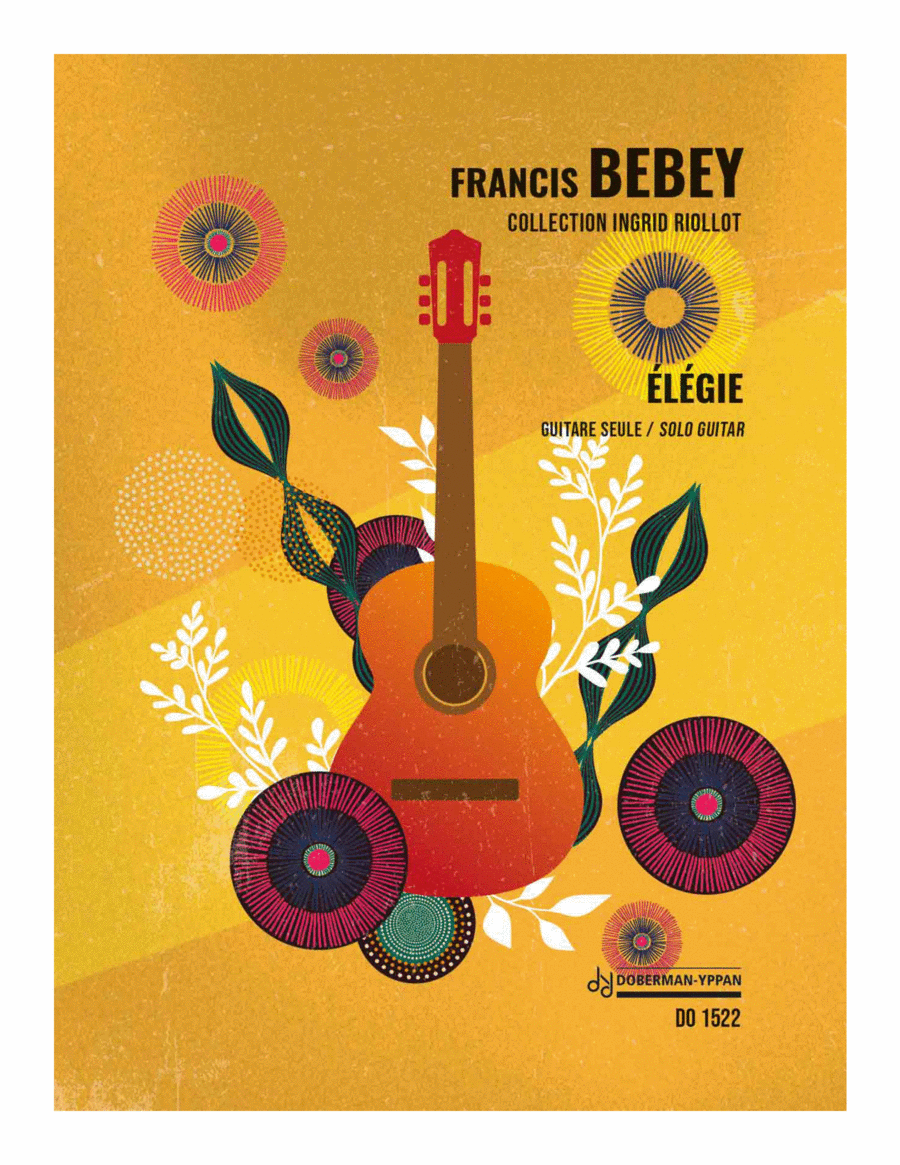
Élégie
Guitare

$3.95 3.43 € Guitare PDF SheetMusicPlus

Full Orchestra - Level 2 - Digital Download SKU: A0.896909 Composed by Marcelo Torca. Arranged by Marcelo Torca. Contemporary,Instructional,Jazz,Pop,Rock. Score and parts. 508 pages. Marcelo Torca #2548811. Published by Marcelo Torca (A0.896909).                                     Este livro dá as noções iniciais para formar uma orquestra de câmara de um grupo instrumental, de instrumentos musicais diferentes dos normalmente utilizados nas orquestras tradicionais.                                   Os instrumentos musicais trabalhados serão: Flauta-doce Sopranino; Flauta-doce Soprano; Flauta-doce Contralto; Escaleta; Bandolim; Cavaco; Violão; Guitarra; Viola Caipira; Baixo elétrico; Acordeão; Teclado; Piano; Metalofone; Bateria; Percussão, Pandeiro, Surdo, Tamborim, Agogô, Reco-reco, Tantã ou Timba, Berimbau, Cajón, Rebolo.                                   Os arranjos para estes instrumentos, a forma como organizar as ideias musicais e como interpretar, seguem nas páginas seguintes.                                   As Grades fornecidas, são ideias de formação de conjuntos e como organizar.                                   Há arranjos para ritmos para percussão e para os demais instrumentos musicais abordados neste livro, exemplos de como pode se organizar as ideias rítmicas.                                   Nos exercícios de Harmonizando, com início na página trinta, coloca-se na prática as ideias, lembrando que nem sempre a ideia funciona bem, a confirmação é através do som.                                   Depois de ter feito os arranjos, basta transferir para a grade, este livro tem a preocupação de ensinar uma forma de arranjo, organizando as ideias, pois num conjunto grande, é fácil se perder, principalmente quando não tem algo fixo a ser seguido. O solo pode ser distribuído em vários instrumentos, assim como tocar todos os instrumentos de uma vez fica bom em trechos da música, mas não sempre a totalidade da música, assim vai dar as características mais de orquestra e não somente de um conjunto.                                   Este livro também fala sobre a grade dos instrumentos de percussão utilizados na OGI – Orquestra Grupo Instrumental, e o arranjo para várias levadas, assim como, várias levadas para a bateria. Percussão e Bateria, onde se podem tocar juntos, ou separados. As levadas são apenas uma noção do que se pode fazer, é apenas um guia, o arranjo de cada música é único e sempre tem que ser criativo.                                   Na última página encontra-se a legenda da notação musical para cada instrumento de percussão, respeitando sua característica sonora.                                   Há várias opções de organização e possibilidades.
Coleção OGI: Orquestra Grupo Instrumental
Orchestre

$20.00 17.34 € Orchestre PDF SheetMusicPlus

Choral Choir (SATB) - Level 4 - Digital Download SKU: A0.976710 Composed by Robert Myers. Christian,Concert,Contemporary,Easter,Sacred. Octavo. 10 pages. WheatMyer Music #4767525. Published by WheatMyer Music (A0.976710). It Is Not Death to Die is a new setting of French poet Henri Abraham César Malan's Non, ce n'est pas mourir as translated by George Washington Bethune and adapted for this work. Why this text? It first came to my notice shortly after the passing of Billy Graham, who was known to paraphrase D. L. Moody,   Someday you will read or hear that Billy Graham is dead. Don’t you believe a word of it. I shall be more alive than I   am now. I will just have changed my address. I will have gone into the presence of God.Graham's bold proclamation and Malan's poetry motivated me to focus anew on the resurrection, re-remembering it as the pivotal element of the Christian faith. For if there is no resurrection, Paul says in 1 Cor 15, our faith is useless. But Christ has indeed been raised from the dead! Unfortunately, singing about heaven has, perhaps, been neglected of recent decades. We seem to have focused more on the already to the detriment of the not yet. But it is important to remember that this life is not all there is! Quoting Paul again, the sufferings of this present time are not worth comparing with the glory that is to be revealed to us (Rom 8:18). Yet, if Christ delays, the grim inevitability of our transition into eternity is a certain experience we all face. Malan's poetry so poignantly and eloquently captures this tension that it compelled me to compose a fresh musical setting that attempts to captures the mixture of dread and hope borne out in the acclamation that death is swallowed up in victory! I pray that this setting aids the Church to remember the great hope and promise Christ has granted us:   O Death, where is your victory?    O Death, where is your sting?_______________________________________________________________________________________________The music opens with a C# diminished chord in a very still and somber texture reflective of grief. The text is introduced with the first of two main motives, a rising 4-note outline of B minor in a triple repetition of It Is Not Death. As each stanza proceeds the music concludes on the second motive, a 5-note descending span of a minor 7th in Bb Lydian. The energy and mood of the music gradually shift over the five stanzas, as the focus moves from this life to the next; the texture thickens, the harmony expands, and the dynamic grows into the music’s pinnacle on reign with You on high! The music closes on a reprise of the opening section, simultaneously mindful of our mortality and our eternity.
It Is Not Death to Die
Chorale SATB

$2.25 1.95 € Chorale SATB PDF SheetMusicPlus

Small Ensemble - Digital Download SKU: A0.976717 Composed by Robert Myers. Contemporary,Easter,Sacred. Score and parts. 67 pages. WheatMyer Music #4794639. Published by WheatMyer Music (A0.976717). It Is Not Death to Die is a new setting of French poet Henri Abraham César Malan's Non, ce n'est pas mourir as translated by George Washington Bethune and adapted for this work. Why this text? It first came to my notice shortly after the passing of Billy Graham, who was known to paraphrase D. L. Moody,   Someday you will read or hear that Billy Graham is dead. Don’t you believe a word of it. I shall be more alive than I   am now. I will just have changed my address. I will have gone into the presence of God.Graham's bold proclamation and Malan's poetry motivated me to focus anew on the resurrection, re-remembering it as the pivotal element of the Christian faith. For if there is no resurrection, Paul says in 1 Cor 15, our faith is useless. But Christ has indeed been raised from the dead! Unfortunately, singing about heaven has, perhaps, been neglected of recent decades. We seem to have focused more on the already to the detriment of the not yet. But it is important to remember that this life is not all there is! Quoting Paul again, the sufferings of this present time are not worth comparing with the glory that is to be revealed to us (Rom 8:18). Yet, if Christ delays, the grim inevitability of our transition into eternity is a certain experience we all face. Malan's poetry so poignantly and eloquently captures this tension that it compelled me to compose a fresh musical setting that attempts to captures the mixture of dread and hope borne out in the acclamation that death is swallowed up in victory! I pray that this setting aids the Church to remember the great hope and promise Christ has granted us:   O Death, where is your victory?    O Death, where is your sting?_______________________________________________________________________________________________The music opens with a C# diminished chord in a very still and somber texture reflective of grief. The text is introduced with the first of two main motives, a rising 4-note outline of B minor in a triple repetition of It Is Not Death. As each stanza proceeds the music concludes on the second motive, a 5-note descending span of a minor 7th in Bb Lydian. The energy and mood of the music gradually shift over the five stanzas, as the focus moves from this life to the next; the texture thickens, the harmony expands, and the dynamic grows into the music’s pinnacle on reign with You on high! The music closes on a reprise of the opening section, simultaneously mindful of our mortality and our eternity.Available with orchestral (this version) or piano accompaniment, It Is Not Death to Die is a fitting close to the Easter season, or is suitable for Ascension Sunday, a funeral or memorial service, or any time in the church year to remind Christians of the central hope of our faith, eternal life in Christ.Robert MyersS.D.G.Orchestration   2 1 1 1 1   2 2 2 1 1   Timp   Glock   Perc            Mark Tree, Sus Cym, Crash Cym, Snare, Bass Drum, Mid Tom, Triangle, Tam Tam   Piano   Strings
It Is Not Death to Die - Orchestration

$75.00 65.04 € PDF SheetMusicPlus


Partitions Gratuites
Acheter des Partitions Musicales
Acheter des Partitions Digitales à Imprimer
Acheter des Instruments de Musique

© 2000 - 2026

Accueil - Version intégrale





