EUROPE
484 articles
USA
0 articles
DIGITAL
9657 articles (à imprimer)
Partitions Digitales
Partitions à imprimer
9657 partitions trouvées


Guitar - Intermediate - Digital Download SKU: ZY.DO-1522 Composed by Francis Bebey. Arranged by Ingrid Riollot. Score. 5 pages. Les Editions Doberman-Yppan (digital) #DO 1522. Published by Les Editions Doberman-Yppan (digital) (ZY.DO-1522). Francis Bebey est né à Douala en juillet 1929, dans une grande famille où son père, pasteur, luttait pour nourrir ses enfants. Mais Francis a eu l'opportunité d'aller à l'école. Admirant son frère aîné, Marcel Eyidi Bebey, il s'est éduqué, s'est distingué, et a finalement reçu une bourse pour passer son baccalauréat en France.Nous approchions de la fin des années 1950 lorsqu'il est arrivé à La Rochelle. Plus que jamais, dans cette France où les Africains étaient regardés avec curiosité, condescendance ou dédain, Francis s'appuyait sur ses ressources intellectuelles. Travailleur assidu, il a obtenu son baccalauréat, puis s'est installé à Paris où il a commencé des études d'anglais à la Sorbonne. Un jour, il a su ce qui l'attirait vraiment : il voulait faire de la radio. Francis a appris son métier en France et aux Ã?tats-Unis.Après avoir travaillé quelques années comme reporter, il a été embauché en 1961 en tant que fonctionnaire international au Département de l'information de l'UNESCO.Parallèlement, Francis a toujours été attiré par la création musicale. Son activité diurne très sérieuse ne l'empêchait pas de fréquenter les clubs de jazz le soir. Ã? Paris, le jazz, la musique à la mode à cette époque, mais aussi la rumba et la salsa l'attiraient. Il collectionnait les disques et assistait à de nombreux concerts. Avec son complice Manu Dibango, Francis montait sur scène et jouait de la musique.Francis aimait la musique classique depuis son enfance. Il avait grandi en écoutant les cantates et les oratorios de Bach ou Handel que son père chantait au temple. Il s'est passionné pour la guitare, impressionné par les maîtres espagnols et sud-américains, et a décidé d'apprendre à jouer de l'instrument lui-même.Il a commencé à composer des pièces pour guitare, mêlant les diverses influences qui le traversaient avec la musique traditionnelle africaine qu'il portait en lui depuis son enfance. Son approche a captivé le directeur du Centre culturel américain (alors situé dans le quartier de Saint-Germain à Paris), qui lui a offert l'opportunité de se produire devant un public. Francis y a donné son premier récital de guitare (1963) devant un public hypnotisé. Son premier album solo est sorti peu de temps après.Progressivement, Francis est devenu reconnu comme musicien et compositeur. Plusieurs albums de l'ambassadeur africain de la guitare, comme le décrivait la presse, sont sortis. Il a également écrit des livres, au point que sa carrière artistique est devenue difficile à concilier avec sa carrière de fonctionnaire. En 1974, même s'il était devenu le directeur général chargé de la musique à l'UNESCO, il a fait le saut audacieux et a démissionné de cette prestigieuse institution pour se consacrer aux trois activités qui l'intéressaient : la musique, la littérature et le journalisme.Il a exploré le patrimoine musical traditionnel du continent africain, notamment à travers le piano à pouce sanza et la musique polyphonique des pygmées d'Afrique centrale, ou en chantant dans sa langue maternelle et en composant des chansons humoristiques en français !Le succès a suivi. Francis Bebey a parcouru le monde : de la France au Brésil, du Cameroun à la Suède, de l'Allemagne aux Caraïbes, ou du Maroc au Japon... la liste des pays où il a été invité à se produire, à donner des conférences ou à rencontrer des lecteurs est très longue. En plus de la reconnaissance publique, il bénéficiait de la reconnaissance de ses collègues musiciens, tels que le guitariste John Williams ou le Vénézuélien Antonio Lauro, qui l'ont invité à faire partie du jury d'un concours de guitare classique à Caracas.Sa vie était le voyage d'un pionnier africain, un homme enraciné dans son patrimoine culturel et portant un message de partage et d'espoir pour le monde. Son originalité continue de résonner dans le monde entier depuis son décès à la fin du mois de mai 2001.Francis Bebey was born in Douala in July 1929, into a large family where his father, a pastor, struggled to feed his children. But Francis had the opportunity to go to school. Admiring his elder brother, Marcel Eyidi Bebey, he educated himself, distinguished himself, and eventually received a scholarship to go and take his baccalaureate in France.We approached the end of the 1950s when he arrived in La Rochelle. More than ever, in this France where Africans were looked at with curiosity, condescension, or disdain, Francis relied on his intellectual resources. A diligent worker, he obtained his Baccalaureate, then moved to Paris where he started English studies at the Sorbonne. One day, he knew what truly attracted him: he wanted to do radio. Francis learned his craft in France and in the USA.After working for a few years as a reporter, he was hired in 1961 as an international civil servant in the UNESCO Information Department.In parallel, Francis had always been drawn to musical creation. His very serious daytime activity didnâ??t prevent him from frequenting jazz clubs in the evenings. In Paris, the Jazz, the trendy music of that time, but also rumba and salsa attracted him. He collected records and attended numerous concerts. With his accomplice Manu Dibango, Francis took the stage and played music.Francis liked classical music since his childhood. He grew up listening to the cantatas and oratorios of Bach or Handel that his father had sung in the temple. He became passionate about the guitar, impressed by the Spanish and South American masters, and decided to learn to strum the instrument himself.He started composing guitar pieces, blending the various influences that flow through him with the traditional African music he had carried within since childhood. His approach captivated the director of the American Cultural Center (then located in the Saint-Germain neighborhood of Paris), who offered him the opportunity to perform in front of an audience. Francis gave his first guitar recital there (1963) in front of a mesmerized audience. His first solo album was released shortly thereafter.Gradually, Francis became recognized as a musician and composer. Several albums of the African guitar ambassador, as described by the press, were released. He also wrote books, to the point that his artistic career became challenging to reconcile with his career as a civil servant. In 1974, even though he had become the General Manager in charge of music at UNESCO, he took the bold leap and resigned from this prestigious institution to dedicated himself to the three activities that interested him: music, literature, and journalism. He explored the traditional musical heritage of the African continent, notably through the thumb piano sanza, and the polyphonic music of the Central African pygmies, or singing in his native language and composing humoristic songs in French!Success followed. Francis Bebey traveled the world: from France to Brazil, Cameroon to Sweden, Germany to the Carribean, or Morocco to Japan... the list of countries where he was invited to perform, gives lectures, or meets readers is very long. In addition to public recognition, he enjoyed the recognition of his fellow musicians, such as guitarist John Williams or Venezuelan Antonio Lauro, who invited him to be a part of the jury for a classical guitar competition in Caracas.His life was the journey of an African pioneer, a man rooted in his cultural heritage and carrying a message of sharing and hope for the world. His originality continues to vibrate around the world since his passing at the end of May 2001.
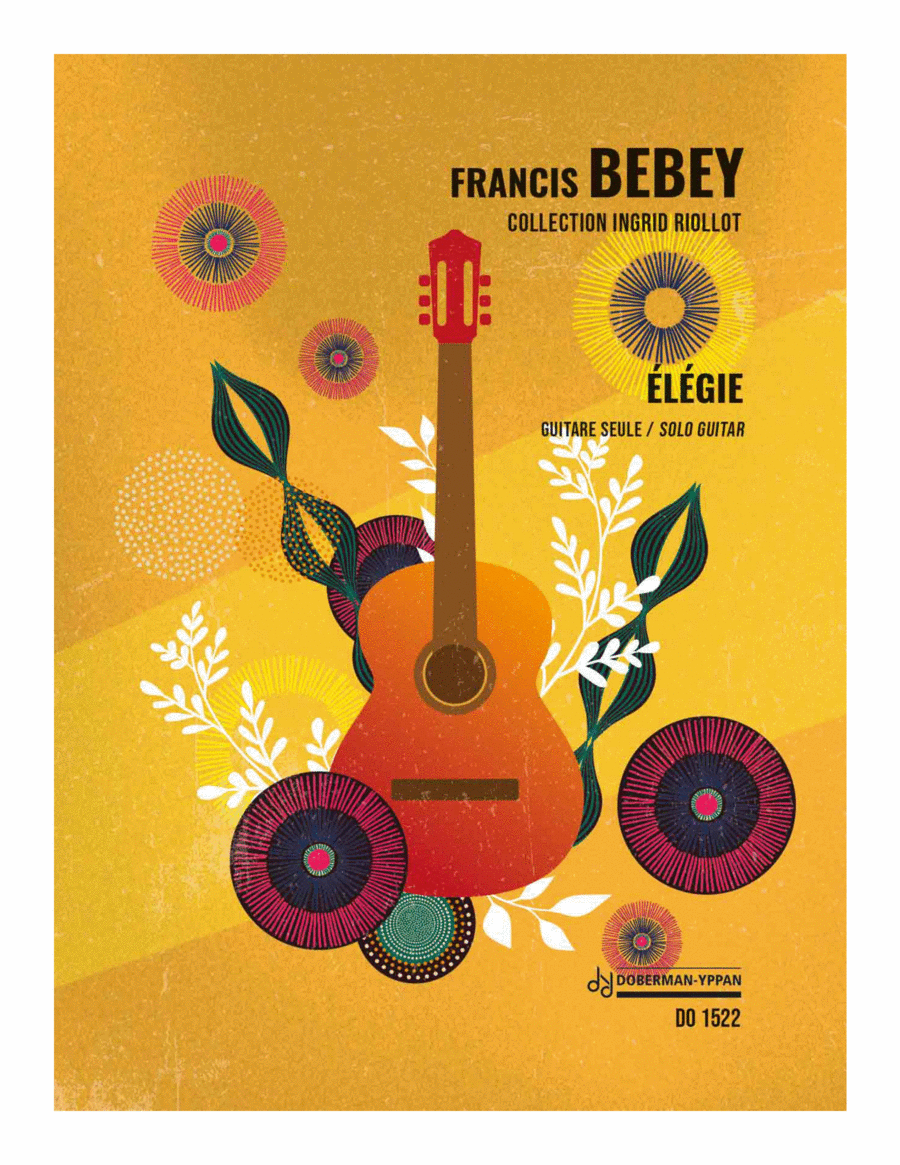
Élégie
Guitare

$3.95 3.44 € Guitare PDF SheetMusicPlus

Baritone Saxophone,Piano - Level 3 - Digital Download SKU: A0.549893 Composed by Felix Bartholdy Mendelssohn. Arranged by James M. Guthrie, ASCAP. Romantic Period,Standards,Wedding. Score and part. 23 pages. Jmsgu3 #3603411. Published by jmsgu3 (A0.549893). Score: 12 pages, piano part: 6 pages, baritone sax part: 4 pages. duration: ca. 5'. Mendelssohn: Wedding March Mendelssohn’s Wedding March is so popular that it’s difficult to imagine a wedding without it. It seems like it’s been around for eternity. In any case, it was only 150 years or so ago that the Wedding March came about. It was performed in Potsdam for the first time in 1842, as a piece of Mendelssohn’s music for the Shakespeare play A Midsummer Night’s Dream. It was first used for a wedding in 1858 Mendelssohn Background Felix Mendelssohn (1809 –1847) was, by all means, a German mastermind composer, musician and orchestra conductor of the Romantic period. Consequently, Mendelssohn composed in the usual forms of the time - symphonies, concertos, oratorios, piano music, and chamber music. To summarize, his most famous works include his music for A Midsummer Night's Dream, the Italian Symphony, the Scottish Symphony, The Hebrides Overture, his later Concerto for Violin & Orchestra, and his Octet for Strings. His most well-known piano pieces, by and large, are the Songs Without Words.  Artistic Standing  Musical tastes change from time to time. Moreover, just such a change occurred in the late 19th and early 20th centuries. This plus rampant antisemitism brought a corresponding amount of undue criticism. Fortunately, however, his artistic inventiveness has indeed been critically re-evaluated. As a result, Mendelssohn is once again among the most prevalent composers of the Romantic era. Early Family Life Mendelssohn was, in fact, born into a prominent Jewish family. His grandfather was, notably, the philosopher Moses Mendelssohn. Felix was, in fact, raised without religion. At the age of seven, he was all of a sudden baptized as a Reformed Christian. He was, moreover, a child musical prodigy. Nevertheless, his parents did not attempt to exploit his talent. Early Adulthood Mendelssohn was, in general, successful in Germany. He conducted, in particular, a revival of the music of Johann Sebastian Bach, specifically with his presentation of the St Matthew Passion in 1829. Felix was truly in demand throughout Europe as a composer, conductor, and soloist. For example, he visited Britain ten times. There, he premiered, namely, many of his major works. His taste in music was. To be sure, inventive and well-crafted yet markedly conservative. This conservatism separated him by all means from more audacious musical colleagues like Liszt, Wagner, and Berlioz. Mendelssohn founded the Leipzig Conservatoire which, to clarify, became a defender of this conservative viewpoint. Mature Adulthood Schumann notably wrote that Mendelssohn was the Mozart of the nineteenth century, the most brilliant musician, the one who most clearly sees through the contradictions of the age and for the first time reconciles them. This observation points to a couple of features in particular that illustrate Mendelssohn's works and his artistic procedure. Musical Features In the first place, his musical style was fixed in his methodical mastery of the style of preceding masters. This being said, he certainly recognized and even developed early romanticism from the music of Beethoven and Weber. Secondly, it indicates that Mendelssohn sought to strengthen his inherited musical legacy rather than to exchange it with new forms and styles or replace it with exotic orchestration. Consequently, he diverged his contemporaries in the romantic period, such as Wagner, Berlioz, and Liszt. Mendelssohn revered Liszt's virtuosity at the keyboard but found his music rather insubstantial.Register for free lifetime revisions and updates at www.jamesguthrie.com     &n.
Mendelssohn: Wedding March for Baritone Sax & Piano
Saxophone Baryton, Piano

$24.95 21.74 € Saxophone Baryton, Piano PDF SheetMusicPlus

Oboe,Piano - Level 3 - Digital Download SKU: A0.549510 Composed by Edvard Grieg. Arranged by James M. Guthrie, ASCAP. Instructional,Romantic Period,Sacred,Standards. Score and part. 16 pages. Jmsgu3 #3502271. Published by jmsgu3 (A0.549510). Super-famous, Instantly recognizable tune, not very difficult - suitable for a recital or church meditation. Grieg Background: Edvard Grieg (1843 –1907) was a Norwegian composer and concert pianist. Most music historians consider him one of the foremost Romantic-era composers. Consequently, his music is part of the international standard classical repertoire. Grieg, moreover, used Norwegian folk music in his compositions. Therefore, he ushered Norwegian music to transnational consciousness. Furthermore, he forged a national musical identity for Norway. It is essential to realize that he did this like Jean Sibelius in Finland and Bedřich Smetana in Bohemia. Legacy Grieg is mainly celebrated in the city of Bergen. For example, the city has erected numerous statues depicting Grieg. Specifically, the city has named a concert hall (Grieg Hall), a music school (Grieg Academy), and a professional choir (Edvard Grieg Kor) after him. There is also a museum located at his former home in Troldhaugen.  Peer Gynt Suite No. 1 (Op. 46) Grieg wrote incidental music to illustrate a play by Ibsen known as Peer Gynt. The space includes, in particular, the famous selection entitled In the Hall of the Mountain King. In this composition, Grieg depicts the exploits of the scoundrel Peer Gynt. In one favorite episode, for example, Peer steals a bride at her wedding.
Grieg: Morning Mood from Peer Gynt Suite for Oboe & Piano
Hautbois, Piano (duo)

$32.95 28.71 € Hautbois, Piano (duo) PDF SheetMusicPlus

Clarinet - Digital Download SKU: IZ.9780976508106 Composed by Phillip Paglialonga. Score. 111 pages. Imagine Music - Digital #9780976508106. Published by Imagine Music - Digital (IZ.9780976508106). 9 x 12 in inches.Squeak Big teaches aspiring clarinetists the fundamentals necessary for success on the instrument through conceptual development and practical exercises. It will undoubtedly become an important resource for aspiring clarinetists and educators worldwide.For years, Dr. Paglialonga has helped his students improve by creating exercises and explanations to address fundamental playing issues. These materials circulated throughout the clarinet community, leading to numerous requests for materials to address other specific problems. Squeak Big answers those requests, making these materials available to a wider audience in a simple, easy-to-use format.Squeak Big is filled with healthy, concise, no-nonsense advice, as well as some great tips and tricks. I would recommend it to anyone wanting to advance their relationship with the clarinet. (Samuel Caviezel - Associate Principal Clarinet, Philadelphia Orchestra) Squeak Big is a wonderful resource for student and teacher alike. In it, Dr. Paglialonga provides helpful insights on clarinet playing from the fundamentals of producing a beautiful sound to hints on practicing in real life situations. His methodical approach helps to demystify clarinet playing and is geared towards helping improve both technique and musicianship. A must-have for any clarinetist's library! (Benjamin Lulich - Principal Clarinet, Cleveland Orchestra) Squeak Big is full of useful information. I highly recommend it to anyone who's looking for practical ways to become a better clarinetist! (Alexander Fiterstein - Prominent International Soloist) I would recommend Squeak Big to anyone wanting to improve or better understand the fundamentals of sound clarinet playing. (Carey Bell - Principal Clarinet, San Francisco Symphony) Phillip Paglialonga has written a thoughtful and detailed treatise on playing the clarinet. He communicates from a thorough knowledge of the instrument and its workings. This volume is a valuable reference for teachers and performers alike, replete with numerous practical suggestions and exercises. If only every clarinet player could digest the information Dr. Paglialonga sets forth herein, good solid foundations would be formed and bad habits easily prevented. (John Bruce Yeh - Assistant Principal Clarinet, Chicago Symphony) Squeak Big provides valuable advice for players at every stage of development, with easy practical methods, useful exercises, and even a bit of historical context. I've already been able to incorporate many of these ideas, not only into my teaching, but also into my own playing! (Ralph Skiano - Principal Clarinet, Detroit Symphony) Squeak Big is excellent and I'm sure it will be of great value to many players. Phillip Paglialonga explains so many of the fundamentals in a very clear, concise way. Bravo! (Larry Guy - Prominent Pedagogue).
Squeak Big: Practical Fundamentals for the Successful Clarinetist
Clarinette

$32.00 27.88 € Clarinette PDF SheetMusicPlus

Hohe Stimmen (Fl. · Ob. · Vl. 1) - mittlere Stimmen in C oder B (Klar. · Trp. · Vl. 2) - tiefe Stimmen in Violin- und Bassschlüssel (Fg. · Vl. 3 · Vc.) - Sopran-, Alt- und Tenor-Blockflöten - S. (Trgl. oder Tamb. · Trommel) - Klav. children's choir (SMez), melody instruments and percussion - very easy - Digital Download SKU: S9.Q22789 Spiel für Kinder nach einem Text von Robert Seitz. Composed by Paul Hindemith. This edition: score. Downloadable, Score. Duration 30 minutes. Schott Music - Digital #Q22789. Published by Schott Music - Digital (S9.Q22789). German.CONTENT How does a town intended for children evolve, who lives in it, what forms of transport can be used to get around and how it is also possible that unpleasant moments occur in an urban community? These are all questions which Wir bauen eine Stadt answers in a playful and child-oriented mode. COMMENTARY Since 1926, Hindemith had been pursuing the objective of attracting children and amateur musicians to contemporary music through the composition of especially suitable musical works. In 1927, his musical-educational ambitions led among other projects to the involvement of the youth music movement in his plans for the Baden- Baden chamber music festival in which he was deeply involved in his capacity as member of the programme committee. Neue Musik Berlin 1930, a supplementary event following the Baden-Baden music festival, was to be devoted not only to radio plays, amateur choirs and electric music, but also to the field of ‘plays and songs for children’. The play for children Wir bauen eine Stadt was created in collaboration with the Berlin author Robert Seitz who provided the text and was premièred on 21 June 1930 by children aged between eight and twelve years old providing the final work in the concert Neue Musik Berlin 1930. The work swiftly achieved widespread dissemination and was available in a number of different languages within two years of its completion. Hindemith explained his pedagogical concept behind Wir bauen eine Stadt in a preface to the score as follows: ‘A play for children: this means that this work was more intended as a lesson and exercise for children themselves rather than for the entertainment of adult audiences. The form of the work can be altered according to the appropriate needs of the group of children involved: songs can be omitted and other musical pieces, dances or scenes inserted. An infinite number of children can participate in this work; apart from the minimum of three players for the “orchestraâ€, no specific instrumentation is specified. If numerous musicians are available (perhaps also those with instruments which are played in other registers than the pitches indicated in this work), these can be employed doubling at the octave of the two outer parts to achieve a more interesting texture. The music can additionally be livened up by tambourines, drums and other easily playable percussion. […]’ Alongside three instrumental movements, Hindemith’s play for children primarily consists of choral songs in verse form for one- and two-voice choir with a few simple individual solo parts. This classic children’s theatre composition has up to the present day retained its prominent place within the (school) theatre repertoire. Six pieces from this work were issued in a piano version for children in 1931 under the title: Wir bauen eine Stadt. Klavierstücke für Kinder. (S. Sch.-G.) EDITOR’S NOTE A documentation of national premieres is not possible with Wir bauen eine Stadt. The performance material is on sale at music dealers and performance right is included by purchasing the material, without further involvement of the publisher.
Wir bauen eine Stadt

$15.99 13.93 € PDF SheetMusicPlus

Baritone Saxophone,Piano - Level 2 - Digital Download SKU: A0.548979 Composed by Johann Sebastian Bach. Arranged by James M. Guthrie, ASCAP. Baroque,Holiday,Standards,Wedding. Score and part. 11 pages. Jmsgu3 #3444583. Published by jmsgu3 (A0.548979). Was mir behagt, ist nur die muntre Jagd (The lively hunt is all my heart's desire), BWV 208 is the earliest secular cantata by Bach composed in 1713 for the birthday of the Duke of Weissenfels. It is also called the Hunting Cantata, and/or the Birthday Cantata. The most famous piece from this collection is the soprano aria Sheep may safely graze. Duration: 5:50, Score - 6 pg. Solo part - 2 pg. Piano part - 3 pg. 41 ms. Melodic range: M10 Level: Early intermediate and up. A popular choice for weddings, Christmas, Easter, birthdays, and recitals. Sheep May Safely Graze Sheep may safely graze (Schafe können sicher weiden) is an aria from the Cantata BWV 208. The title of the Cantata, Was mir behagt, ist nur die muntre Jagd (nicknamed the Hunting Cantata) translates as The lively hunt is all my heart's desire. Programming Similar to Bach’s Jesu, Joy of Man's Desiring, or I Stand at the Threshold, it is an all-time favorite and frequently requested at weddings. Originally, Bach composed this aria for a royal birthday celebration, that of the Duke of Saxe-Weissenfels. Lyrics Sheep may safely graze and pasture In a watchful Shepherd’s sight. Those who rule with wisdom guiding Bring to hearts a peace abiding Bless a land with joy made bright.   Bach Overview First of all, Johann Sebastian Bach is maybe the greatest composer in music history. Indeed, he was prolific. As a result, everyone has heard of his works. Furthermore, these works number well over a thousand. People are probably most familiar with instrumental works such as the Brandenburg Concertos, and the Goldberg Variations. But, similarly famous are such noteworthy works as the Well-Tempered Clavier, the Musical Offering, and the Art of Fugue. Seems like his most famous vocal works include the most noteworthy Mass in B Minor. Also, most noteworthy, though, are the St. John Passion, and certainly the Christmas Oratorio.  History Bach came from a long line of musicians and above all, composers. Consequently, he, first of all, pursued a career as a church organist. So as a result, he gained employment in various Protestant churches in Germany. For a while, he worked as a court musician in Weimar and Köthen. Here he probably developed his organ style and likewise his chamber music style. Eventually, he, therefore, gained an appointment as Cantor of St. Thomas in Leipzig. Here he worked until difficulties with his employer ultimately drove him away. The King of Poland finally appointed him as court composer.  Style It seems like Bach created a fascinating new international style. He synthesized elements of the most noteworthy European music ideas into his new style. Even more, this new style was probably his synthesis of European musical rhythm and form. Furthermore, he demonstrated a complete mastery of counterpoint and motivic development. His sense of harmonic organization probably propelled him to the top. Revival               Mendelssohn conducted a Bach revival in the nineteenth century. His effort probably helped to re-familiarize the public with the magnitude of Bach’s works. During this period, scholars published many noteworthy Bach biographies. Moreover, Wolfgang Schmieder published the BWV (Bach Werke Verzeichnis). As a result, this is now the official catalog of his entire artistic output. The BWV number allows us to locate a work in the catalog. Sometimes scholars will simply use an S (Schmieder) as an abbreviation for BWV.
Bach: Sheep May Safely Graze for Baritone Sax & Piano
Saxophone Baryton, Piano

$32.95 28.71 € Saxophone Baryton, Piano PDF SheetMusicPlus

Alto Saxophone,Piano - Level 2 - Digital Download SKU: A0.548976 Composed by Johann Sebastian Bach. Arranged by James M. Guthrie, ASCAP. Baroque,Holiday,Standards,Wedding. Score and part. 11 pages. Jmsgu3 #3444569. Published by jmsgu3 (A0.548976). Was mir behagt, ist nur die muntre Jagd (The lively hunt is all my heart's desire), BWV 208 is the earliest secular cantata by Bach composed in 1713 for the birthday of the Duke of Weissenfels. It is also called the Hunting Cantata, and/or the Birthday Cantata. The most famous piece from this collection is the soprano aria Sheep may safely graze. Duration: 5:50, Score - 6 pg. Solo part - 2 pg. Piano part - 3 pg. 41 ms. Melodic range: M10 Sheep May Safely Graze Sheep may safely graze (Schafe können sicher weiden) is an aria from the Cantata BWV 208. The title of the Cantata, Was mir behagt, ist nur die muntre Jagd (nicknamed the Hunting Cantata) translates as The lively hunt is all my heart's desire. Programming Similar to Bach’s Jesu, Joy of Man's Desiring, or I Stand at the Threshold, it is an all-time favorite and frequently requested at weddings. Originally, Bach composed this aria for a royal birthday celebration, that of the Duke of Saxe-Weissenfels. Lyrics Sheep may safely graze and pasture In a watchful Shepherd’s sight. Those who rule with wisdom guiding Bring to hearts a peace abiding Bless a land with joy made bright.   Bach Overview First of all, Johann Sebastian Bach is maybe the greatest composer in music history. Indeed, he was prolific. As a result, everyone has heard of his works. Furthermore, these works number well over a thousand. People are probably most familiar with instrumental works such as the Brandenburg Concertos, and the Goldberg Variations. But, similarly famous are such noteworthy works as the Well-Tempered Clavier, the Musical Offering, and the Art of Fugue. Seems like his most famous vocal works include the most noteworthy Mass in B Minor. Also, most noteworthy, though, are the St. John Passion, and certainly the Christmas Oratorio.  History Bach came from a long line of musicians and above all, composers. Consequently, he, first of all, pursued a career as a church organist. So as a result, he gained employment in various Protestant churches in Germany. For a while, he worked as a court musician in Weimar and Köthen. Here he probably developed his organ style and likewise his chamber music style. Eventually, he, therefore, gained an appointment as Cantor of St. Thomas in Leipzig. Here he worked until difficulties with his employer ultimately drove him away. The King of Poland finally appointed him as court composer.  Style It seems like Bach created a fascinating new international style. He synthesized elements of the most noteworthy European music ideas into his new style. Even more, this new style was probably his synthesis of European musical rhythm and form. Furthermore, he demonstrated a complete mastery of counterpoint and motivic development. His sense of harmonic organization probably propelled him to the top. Revival               Mendelssohn conducted a Bach revival in the nineteenth century. His effort probably helped to re-familiarize the public with the magnitude of Bach’s works. During this period, scholars published many noteworthy Bach biographies. Moreover, Wolfgang Schmieder published the BWV (Bach Werke Verzeichnis). As a result, this is now the official catalog of his entire artistic output. The BWV number allows us to locate a work in the catalog. Sometimes scholars will simply use an S (Schmieder) as an abbreviation for BWV.
Bach: Sheep May Safely Graze for Alto Sax & Piano
Saxophone Alto et Piano

$32.95 28.71 € Saxophone Alto et Piano PDF SheetMusicPlus

Choral Choir (TTBB) - Level 2 - Digital Download SKU: A0.1270160 By Arlo Guthrie. By Arlo Guthrie. Arranged by Craig Hanson. A Cappella,Comedy,Folk. Octavo. 6 pages. Edition Craig Hanson #862589. Published by Edition Craig Hanson (A0.1270160). For TTBB chorus a cappella and solo voice. As performed by Arlo Guthrie.Wanna hear something? You know that Indians never ate clams. They didn't have linguini! And so what happened was that clams was allowed to grow unmolested in the coastal waters of America for millions of years. And they got big, and I ain't talking about clams in general, I'm talking about each clam! Individually. I mean each one was a couple of million years old or older. So imagine they could have got bigger than this whole room. And when they get that big, God gives them little feet so that they could walk around easier. And when they get feet, they get dangerous. I'm talking about real dangerous. I ain't talking about sitting under the water waiting for you. I'm talking about coming after you.Imagine being on one of them boats coming over to discover America, like Columbus or something, standing there at night on watch, everyone else is either drunk or asleep. And you're watching for America and the boat's going up and down. And you don't like it anyhow but you gotta stand there and watch, for what? Only he knows, and he ain't watching. You hear the waves lapping against the side of the ship. The moon is going behind the clouds. You hear the pitter patter of little footprints on deck. ‘Is that you kids?’ It ain't! My god! It's this humongous, giant clam!Imagine those little feet coming on deck. A clam twice the size of the ship. Feet first. You're standing there shivering with fear, you grab one of these. This is a belaying pin. They used to have these stuck in the holes all around the ship… You probably didn't know what this is for; you probably had an idea, but you were wrong. They used to have these stuck in the holes all along the sides of the ship, everywhere. You wouldn't know what this is for unless you was that guy that night.I mean, you'd grab this out of the hole, run on over there, bam bam on them little feet! Back into the ocean would go a hurt, but not defeated, humongous, giant clam. Ready to strike again when opportunity was better.You know not even the coastal villages was safe from them big clams. You know them big clams had an inland range of about 15 miles. Think of that. I mean our early pioneers and the settlers built little houses all up and down the coast you know. A little inland and stuff like that and they didn't have houses like we got now, with bathrooms and stuff. They built little privies out back. And late at night, maybe a kid would have to go, and he'd go stomping out there in the moonlight. And all they'd hear for miles around...(loud clap/belch).... One less kid for America. One more smiling, smurking, humongous, giant clam.So Americans built forts. Them forts --you know—them pictures of them forts with the wooden points all around. You probably thought them points was for Indians but that's stupid! 'Cause Indians know about doors. But clams didn't. Even if a clam knew about a door, so what? A clam couldn't fit in a door. I mean, he'd come stomping up to a fort at night, put them feet on them points, jump back crying, tears coming out of them everywhere. But Americans couldn't live in forts forever. You couldn't just build one big fort around America. How would you go to the beach?So what they did was they formed groups of people. I mean they had groups of people all up and down the coast form these little alliances. Like up North it was call the Clamshell Alliance. And farther down South it was called the Catfish Alliance. They had these Alliances all up and down the coast defending themselves against these threatening monsters. These humongous giant clams. Andt hey'd go out there, if there was maybe fifteen of them they'd be singing songs in fifteen part harmony. And when one part disappeared, that's how they knew where the clam would be.Which is why Americans only sing in four part harmony to this very day. That proved to be too dangerous. See, what they did was they'd be singing these songs called Clam Chanties, and they'd have these big spears called clampoons. And they'd be walking up and down the beach and the method they eventually devised where they'd have this guy, the most strongest heavy duty true blue American, courageous type dude they could find and they'd have him out there walking up and down the beach by himself with other chicken dudes hiding behind the sand dunes somewhere.He'd be singing the verses. They'd be singing the chorus, and clams would hear 'em. And clams hate music. So clams would come out of the water and they'd come after this one guy. And all you'd see pretty soon was flying all over the sand flying up and down the beach manmanclamclammanmanclam manclamclamman up and down the beach going this way and that way up the hills in the water out of the water behind the trees everywhere. Finally the man would jump over a big sand dune, roll over the side, the clam would come over the dune, fall in the hole and fourteen guys would come out there and stab the shit out of him with their clampoons.That's the way it was. That was one way to deal with them. The other way was to weld two clams together. [I don't believe it. I'm losing it. Hey. What can you do. Another night shot to hell.] Hey, this was serious back then. This was very serious. I mean these songs now are just piddly folk songs. But back then these songs were controversial. These was radical, almost revolutionary songs. Because times was different and clams was a threat to America. That's right. So we want to sing this song tonight about the one last... You see what they did was there was one man, he was one of these men, his name will always be remembered, his name was Reuben Clamzo, and he was one of the last great clam men there ever was. He stuck the last clam stab. The last clampoon into the last clam that was ever seen on this continent. Knowing he would be out of work in an hour. He did it anyway so that you and me could go to the beach in relative safety. That's right. Made America safe for the likes of you and me. And so we sing this song in his memory. He went into whaling like most of them guys did and he got out of that, when he died. You know, clams was much more dangerous than whales. Clams can run in the water, on the water or on the ground, and they are so big sometimes that they can jump and they can spread their kinda shells and kinda almost fly like one of them flying squirrels.You could be standing there thinking that your perfectly safe and all of a sudden whop.... That's true... And so this is the song of this guy by the name of Reuben Clamzo and the song takes place right after he stabbed this clam and the clam was, going through this kinda death dance over on the side somewhere. The song starts there and he goes into whaling and takes you through the next...I sing the part of the guy on the beach by himself. I go like this: Poor old Reuben Clamzo and you go Clamzo Boys Clamzo. That's the part of the fourteen chicken dudes over on the other side. That's what they used to sing. They'd be calling these clams out of the water. Like taunting them making fun of them. Clams would get real mad and come out. Here we go. I want you to sing it in case you ever have an occasion to join such an alliance. You know some of these alliances are still around. Still defending America against things like them clams. If you ever wants to join one, now you have some historic background. So you know where these guys are coming from. It's not just some 60's movement or something, these things go back a long time.Notice the distinction you're going to have to make now between the first and easy Clamzo Boys Clamzo and the more complicated Clamzo Me Boys Clamzo. Stay serious! Folk songs are serious. That's what Pete Seeger told me. Arlo I only want to tell you one thing... Folk songs are serious. I said right. Let's do it in C for Clam...Iet's do it in B... For boy that's a big clam... Iet' s do it in G for Gee, I hope that big clam don't see me. Let's do it in F... For …he sees me. Let's do it back in A...for a clam is coming. Better get this song done quick. The Story of Reuben Clamzo and His Strange Daughter in the Key of A.
The Story Of Reuben Clamzo & His Strange Daughter
Chorale TTBB
Arlo Guthrie
$3.99 3.48 € Chorale TTBB PDF SheetMusicPlus

Large Ensemble Alto Saxophone,Baritone Saxophone,Bass Guitar,Clarinet,Drums,Flute,Piano,Tenor Saxophone - Level 4 - Digital Download SKU: A0.876448 Composed by Joe Procopio. Dance,Jazz,Pop. Score and parts. 23 pages. JoeCopio Music LLC #53327. Published by JoeCopio Music LLC (A0.876448). MARY ~ ELAINE Back to School 2015 From PAPA’S FAMOUS DANCES by Joe Procopio MARY ~ ELAINE is a dance written and arranged by Joe Procopio for a small ensemble, band, stage band or combo. It was originally composed for a small band with flexible instrumentation. It may be performed with only two Saxophones (Alto Sax I and Alto Sax II) and a standard backup with Piano/Keyboard, Guitar, Bass and Drums. In addition, any combo may be augmented by adding any or all of the parts included for Flute, Clarinet, Tenor Sax, and Baritone Sax. This flexible or variable instrumentation of MARY ~ ELAINE makes it unique and perfect for schools and colleges that do not have a permanent roster of music students entering their music programs annually. It also eases the burden for Directors searching for good music to perform for groups with ever changing numbers of music students. What’s more, MARY ~ ELAINE has a section open for solos to enable the ensemble to feature players who can improvise well enhancing not only the group’s enjoyment but also everyone’s listening pleasure. This piece has been performed by College and High School students in many major concert events all along the East Coast with great success. It is published separately and in a set entitled PAPA’S FAMOUS DANCES PART 1 from the sets PAPA’S FAMOUS DANCES Part I and Part II. Each Part contains 3 Dances. I have adapted the audio here for synthesizer so that it may be previewed. It is one of 6 works named and dedicated to each of my 6 Grandchildren: Lilly, Mary, Lydia, Emma, Joey and Wilson. Instrumentation for MARY ~ ELAINE includes SCORE and parts for: ALTO SAX I ALTO SAX II TENOR SAX BARITONE SAX FLUTE CLARINET PIANO/KEYBOARD - GUITAR - BASS - DRUMS VITA Joe Procopio is a master musician and teacher with proven success for over 50 years. His purpose in teaching, writing music and books is to make his successful method of making musicians available to as many people as possible around the world. While I cannot guarantee that my methods will make you a great musician as they have for many others, says Procopio, I can say that they are designed to magnify your love of music - and that I guarantee each will enrich and enhance your life. People from all over the world have written to me to tell me so. As a Master Musician , Joe Procopio is an ASCAP Artist, composer, conductor and professional musician. He was the Lead Reed for many of the nation's top recording artists including: The Temptations, Steve and Eydie Gorme, Aretha Franklin, Tony Bennett, Lawrence Welk, Frankie Avalon, Frankie Laine, Jack Jones, Kathryn Grayson, Carmel Quinn, Don Cornell, Bobby Rydell, Vic Damone, Rodney Dangerfield, Foster Brooks, The Vagabonds, The Ritz Brothers, Sammy Cohn, Jimmy Van Heusen, Tiny Tim, Al Martino, Petula Clark, Wayne Newton, Pat Cooper, The Four Tops, The Spinners, etc. Lead Alto Sax Jimmy Dorsey Orchestra and the Palace Theater Myrtle Beach, SC He is listed in The Encyclopedia of Saxophone Music Londeix, Roncorp Pub. He is the teacher of Guitarist T. Maxwell heard in TV’s Magnum P.I., The Rockford Files and Kojak ; the vocalist/bassist I. Cattell of Brit Floyd (Pink Floyd) and New York Tenor Saxophonist Paul Carlon to mention a few. His accomplishments as a teacher include: The Miles Clark Endowed Chair, Music, College of the Albemarle, Elizabeth City, NC, Chair Music Department Cazenovia Central School NY Director Of Instrumental Music Chapel Hill/Carrboro City Schools NC Adjunct Professor Applied Music Cazenovia College, NY.
MARY ~ ELAINE
Saxophone Tenor et Piano

$4.99 4.35 € Saxophone Tenor et Piano PDF SheetMusicPlus

Woodwind Ensemble Flute - Level 3 - Digital Download SKU: A0.971647 Composed by Jeffrey Hoover. 20th Century,Contemporary,World. 200 pages. Musicart Publications #4330117. Published by Musicart Publications (A0.971647). A New Tattoo: Scottish Landscape.  Score and parts available for immediate download and use - 199 pages. 12 min. 30 sec. For five flutes (picc, 3 fl, alto fl) expandable to large flute choir with optional string bass and small percussion.   A tattoo is an exciting performance of pipe and drum bands. In recent years tattoos have come to include other entertainments as well. In five movements, A New Tattoo: Scottish Landscape shares a range of Scottish life – from a contemporary Tattoo to rich stories captured in lyrical ballads, the skirl and sound of bagpipes, dancing, and celebrations.  A New Tattoo was commissioned by Lee Glendening Koss for The Silvertones of Maplewood Community Music, Maplewood, New Jersey.Required: piccolo, 3 flutes, alto flute. Full choir: 2 picc, G treble flute, Eb flute, flutes 1 - 5 (5th flute may double on percussion), 6th flute as alto 1 substitute for rehearsals, 2 alto flutes, bass flute, contrabass flute, string bass, small percussion.Jeffrey Hoover's compositions- music ranging from soloist to symphony orchestra -have received recognition through the prestigious Trieste prize, the international Luigi Russolo competition, awards from Mu Phi Epsilon, the Lancaster Fine Arts Festival, grants, publications fellowships and more than 20 commissions. He is a member of the ACME roster of Mu Phi Epsilon, recognized for distinguished achievement as a composer. One unique aspect of Hoover’s work is when he combines composition with his paintings, creating synergetic art that intrigues and captivate audiences and performers alike. His paintings are seen in exhibitions and in concerts where his paintings are projected while musicians perform his music. Whether making interdisciplinary works, or traditional stand-alone sonic or visual art, Hoover shapes his work through inner vision and practical experience. Jeffrey Hoover’s background as a performer includes both classical and jazz music, as saxophonist and conductor. His book The Arts and Society: Making New Worlds is published by Kendall Hunt Publishing.Hoover was born on September 11, 1959, in Anderson, Indiana. He holds a Ph.D. in Fine Arts (Composition and Interdisciplinary Fine Arts) from Texas Tech University, as well as a M.M. and Bch.Sc. from Ball State University. His career in higher education has included both faculty and arts administration appointments.
A New Tattoo: Scottish Landscape (for flute ensemble or large flute choir - score and parts)

$38.00 33.11 € PDF SheetMusicPlus

Brass Quintet Horn,Trombone,Trumpet,Tuba - Digital Download SKU: A0.1468129 Composed by F. Leslie Smith. Arranged by F. Leslie Smith. 19th Century,Chamber,Folk,Historic,Traditional. 49 pages. Sweetwater Brass Press #1046440. Published by Sweetwater Brass Press (A0.1468129). In 1856 Joseph P. Webster, a Wisconsin songwriter, met Henry D.L. Webster (no relation), formerly the minister of Zanesville, Ohio’s Universalist Church.  Joseph was in the process of writing a song but needed lyrics to go with his melody.  Henry obliged by writing a longish poem about the love of his life, Ella Blocksom.  She had been his fiancée, but the engagement had been broken and, apparently, so had Henry’s heart.  Joseph’s melody needed a name that would fit into a three-note phrase, so “Ella” was changed to “Lorena.”  Chicago’s Higgins Brothers published the song in 1857, and it became widely popular.  When the American Civil war broke out, “Lorena” was beloved by both Union and Confederate soldiers as they thought of the wives and girlfriends they had left behind.       J.P. Webster’s “Lorena” is beautiful and plaintive. It is no wonder that this song has remained a sentimental favorite over the years and is still performed and recorded.  In this composition, “Lorena: A Brass Quintet Setting,” the “Lorena” tune has been expanded and transformed to create additional melodies that enhance and complement the original.  You’ll find it a pleasure to play and a real crowd pleaser for audiences.     This composition is 201 measures in length.  It begins in the key of E-flat, transitions to B-flat at section C (measure 51) and goes to F at section G (measure 141).  Initial tempo marking is Adagio, increasing to Moderato at section C.  There are a number of temporary tempo variations and fermata marks, and the last 9 measures are characterized by a gradual slowing.     The introduction is 21 measures in length.  It leads to the second section, which consists of a plain, simple and straightforward statement of J.P. Webster’s “Lorena” theme, complete with grace notes and gruppetto.  In this section, Horn and Trumpet 1 do the honors, eventually joined by Tuba, and it should be played with great expression.       At section C, tempo then picks up, and the arrangement presents a series of explications of the theme in various styles.       The final section, I (measure 179), reprises most of the variations and ends with a partial reiteration of the “Lorena” theme.     Performance time is about eight minutes, forty seconds.  Tuba plays several notes near the top of its scale; otherwise, all notes are within the normal playing range of each instrument.     The composer, Les Smith, will be happy to provide substitute parts (for example, treble clef baritone for trombone) at no charge.  He would like to receive your suggestions, comments, corrections and criticisms.  Contact him at lessmith61@bellsouth.net.  For more arrangements by Les, enter Sweetwater Brass Press (without the quotation marks) in the Sheet Music Plus or Sheet Music Direct search box.
Lorena: A Brass Quintet Setting
Quintette de Cuivres: 2 trompettes, Cor, trombone, tuba

$6.99 6.09 € Quintette de Cuivres: 2 trompettes, Cor, trombone, tuba PDF SheetMusicPlus


Partitions Gratuites
Acheter des Partitions Musicales
Acheter des Partitions Digitales à Imprimer
Acheter des Instruments de Musique

© 2000 - 2026

Accueil - Version intégrale





