EUROPE
14421 articles
USA
56850 articles
DIGITAL
142545 articles (à imprimer)
Partitions Digitales
Partitions à imprimer
142545 partitions trouvées


Choral Choir (SATB) - Level 3 - Digital Download SKU: A0.779554 Composed by Kim Kirkman. A Cappella,Christian,Concert,Contemporary,Praise & Worship,Sacred. Octavo. 7 pages. Kim Kirkman #5292007. Published by Kim Kirkman (A0.779554). John One for SATB a cappellaThis sacred choral work uses the text from the beginning of John's Gospel.It underlies the mystery of creation and how word (or some might think, sound) created the universe.The lyrics are:In the beginning was the Word, The Word was with Word And the Word was God. He was with God in the beginning. Through him all things came to be, Not one thing had its being but through him. All that came to be had life in him, life in him And that life was the light of men, a light that shines in the dark, A light that darkness could not over-power. The word was the true light That enlightens all men And he was coming into the world. He was in the world that had its being through him, and the world did not know him. He came to his own domain And his own people did not accept him. But to all who did accept him, He gave power to become children of God, To all who believe in the name of him Who was born not out of human stock Or urge of flesh or will of man but of God Himself. The word was made flesh He lived among usAnd we saw his glory.
John One for SATB a cappella
Chorale SATB

$1.99 1.68 € Chorale SATB PDF SheetMusicPlus

Choral 4-Part Chorus,Choir,Choral - Level 3 - Digital Download SKU: A0.1410546 By Edith Piaf. By Edith Piaf and Louis Guglielmi. Arranged by Glauco Fernandes. Film/TV,Jazz,Pop,Singer/Songwriter,Wedding. 3 pages. Glauco Fernandes #992965. Published by Glauco Fernandes (A0.1410546). La Vie en Rose - Exclusive Choral ArrangementImmerse yourself in the timeless beauty of La Vie en Rose, the classic made immortal by the legendary Édith Piaf, through our exclusive choral arrangement. This score has been meticulously crafted to capture the romantic essence and emotional depth of the original song, while providing an accessible and profoundly enriching collective singing experience.Arrangement Features:Unparalleled Beauty: Our arrangement breathes new life into La Vie en Rose, with delicate harmonies and vocal textures that paint each phrase with tones of love and hope. The song, known for its ability to touch hearts through the decades, is reinterpreted here in a way that maintains its eternal charm while introducing new sonic nuances.Elegant Simplicity: Designed with both singers and listeners in mind, this arrangement stands out for its elegant simplicity. It offers an accessible approach without sacrificing depth and professionalism, making it perfect for choirs of all skill levels.Professionalism and Versatility: Every note has been written with precision, ensuring that the arrangement is both technically flawless and emotionally captivating. This score is an excellent addition to any choir's repertoire, suitable for performances at a wide variety of events, from formal concerts to more intimate moments.Why Choose Our Arrangement?This arrangement of La Vie en Rose is not just a score; it's a musical experience that invites both singers and the audience to lose themselves in an ethereal love story. It was created with passion and meticulous attention to detail, ensuring that each performance is memorable.If you're looking to enrich your choir's repertoire with a work that is both classic and fresh, our score of La Vie en Rose is the perfect choice. Purchase today and let the magic of Édith Piaf rekindle your passion for choral music.Tags: La Vie en Rose, Edith Piaf, choral arrangement, choral music, choral score, classical music, choir repertoire, vocal harmony, choir performance, choral sheet music, musical arrangement, French music, music classics, love in music, choir singing.
La Vie En Rose
Edith Piaf
$1.99 1.68 € PDF SheetMusicPlus

String Ensemble Cello,Double Bass,Viola,Violin - Level 3 - Digital Download SKU: A0.813994 Composed by Franz Xaver Gruber. Arranged by Regis Bookshar. Instructional,Multicultural,World. Score and parts. 12 pages. Regis Bookshar #6636651. Published by Regis Bookshar (A0.813994). String Octet - Intermediate - Digital Download. This arrangement of Silent Night, or in German, Stille Nacht, would be a wonderful addition to any music library and could be performed for Christmas concerts, recitals, and, especially, church services. It is equally suitable for junior and senior high school students and even older musicians. Depending on their ability, younger musicians would also enjoy playing this selection. Included are a score and a complete set of parts (12 pages). This selection is one of the many arrangements from The Regis Bookshar Trumpet Ensemble's extensive music library which are being made available for the first time.Silent Night is probably the most popular Christmas carol ever written. It was composed in 1818 by Franz Xaver Gruber to lyrics by Joseph Mohr and was first performed on Christmas Eve at St. Nicholas parish church in Oberndorf, a small village in present-day Austria. A young Catholic priest, Father Joseph Mohr, had written the poem, Stille Nacht, in 1816 and had gone to Oberndorf in 1817. The melody was composed by Franz Xaver Gruber, schoolmaster and organist in the nearby village of Arnsdorf. On Christmas Eve, 1818, Mohr brought the words to Gruber and asked him to compose a melody and guitar accompaniment for that night's mass, after river flooding had possibly damaged the church organ. The church was eventually destroyed by repeated flooding and has since been replaced with the Silent-Night-Chapel.According to Gruber, Karl Mauracher, an organ builder who serviced the instrument at the Oberndorf church, was enamored with the song, and took the composition home with him to the Ziller Valley in Tyrol, Austria. From there, two traveling families of folk singers, the Strassers and the Rainers, included the tune in their shows. The Rainers were already singing it around Christmas, 1819, and once performed it for an audience that included Franz I of Austria and Alexander I of Russia. They also gave the first performance of the song in the United States in New York City in 1839. By the 1840's, the song was well known and was reported to be a favorite of Frederick William IV of Prussia. During this period, the melody changed slightly to become the version that is commonly heard today. The version of the melody that is generally used today is a slow, meditative lullaby, or pastoral, differing slightly from Gruber's original which has a moderate tempo. The song has been translated into about 140 languages and has been recorded by many singers across many music genres. The version sung by Bing Crosby in 1935, has sold over 10 million copies as a single.In this arrangement of Silent Night, Regis Bookshar has kept the basic form of this familiar Christmas carol, but has also included a descant during the third verse. Also, in addition to this version for a String Octet, consisting of 3 Violins, 2 Violas, 2 Violoncellos and 1 Double Bass, there are other arrangements of Silent Night available for a variety of instrumental ensembles. There are Quintets and Octets readily available for purchase. Please take the time to look for other versions of this composition. You may find something else that might also suit your needs.I would also encourage you to search for other arrangements by Regis Bookshar, as well, as there are numerous arrangements in a wide variety of styles, also available for purchase. You may find something else which might interest you. Please continue to check periodically because new arrangements are being added as often as possible. I'm certain that this wonderful arrangement of Silent Night will continue to entertain both performers and audiences alike for years to come.
Silent Night (Bb) (String Octet - 3 Violins, 2 Violas, 2 Cellos, 1 Bass)
the 1840's, the song was well known and was reported to be a favorite of Frederick William IV of Prussia During this period, the melody changed slightly to become the version that is commonly heard today
$8.00 6.74 € PDF SheetMusicPlus

Solo Guitar - Level 2 - Digital Download SKU: A0.1028891 Composed by Scott A. Niebauer. 20th Century,Contemporary. Individual part. 7 pages. Ponticello Music #4364608. Published by Ponticello Music (A0.1028891). A suite of short pieces for solo guitar intended to capture a unique yet popular idiosyncratic sound. Some of these are new works, some have been re-worked from older ideas. They all incorporate the idea of popular rock style guitar music being combined with standard classical guitar technique and notation.Andante Tremolo creates an eerie yet nostalgic mood with a sixteenth note tremolo figure at the beginning that bursts into a middle section utilizing pull offs to open strings and a more rapid tremolo. It features a descending melodic figure that leads to nowhere... Anniversary Theme is a half-remembered hum-along melody at the end of the formal celebration when the chairs are being put away but the decorations are still up. It uses simple harmonies that don't really make sense but just follow that same half-forgotten melody, cadencing here and there when they feel like it. Cloudburst Arpeggio focuses on the chime-like campanella effect produced by a descending slur pulled-off to an open string, and then hammering it back on again. It begins with a straight-ahead arpeggio pattern going through a standard chord change, and then jumps off the edge of the cliff into other areas...Mobile is a perpetual motion machine that rocks its way into an Arabic sounding riff in the middle. The low D tuning allows utilization of a drone on the high open D string that produces interesting sonic effects allowing for unique sounds to pull off to open strings. 
Four Short Single Focus Compositions for Guitar Solo
Guitare

$5.00 4.22 € Guitare PDF SheetMusicPlus

Brass Quintet Baritone Horn TC,Bass Trombone,Cornet,Euphonium,Flugelhorn,Trumpet,Tuba - Level 3 - Digital Download SKU: A0.1321540 Composed by Pietro Mascagni. Arranged by Rob Bushnell. Classical,Easter,Film/TV,Opera,Romantic Period. 18 pages. RBMusic #910007. Published by RBMusic (A0.1321540). In 1889, a struggling composer called Pietro Mascagni heard about a sponsored competition for one-act operas, specifically for young Italian composers who had not yet had an opera performed, only two months before the deadline. With little time, he selected the subject for his opera and asked his childhood friend, Giovanni Targioni-Tozzetti (who was helped by Guido Menasci), to write a libretto for him. Mascagni selected a story that he had seen as a play in Milan in early 1884 by realist writer Giovanni Verga, “Rustic Chivalryâ€, or Cavalleria rusticana. A passionate love tragedy featuring seduction, adultery, revenge and murder, it is surprising set on Easter morning.Mascagni received only a few verses at a time from his librettists, but he was not worried because he had the opera clear in his mind: “I identified with the drama to such an extent that I felt it within myself in terms of music.†After two months’ of work, the music for Cavalleria rusticana was finished but he feared the opera would fail and put the music in a draw. Fortunately, his wife sent it off, he unanimously won the competition and was soon the talk of Europe. (At the premiere in May 1890 in Rome, Mascagni received no fewer than 60 curtain calls.) Unfortunately, it was a one-hit wonder with Mascagni unable to repeat its success, saying towards the end of his life that “it is a pity I wrote Cavalleria first for I was crowned before I became king.†He died, penniless, in 1945.Today, few people have heard of Mascagni’s name, and, if they have, it is rarely in relation to anything but one piece from Cavalleria rusticana, the Intermezzo. A short piece of purely orchestral music that is uses to denote the passage of time, the orchestration is very simple but it is such an indulgently beautiful melody (based on a hymn heard earlier in the short opera) that perfectly captures the peace of country living in Sicily against the intense feelings of the main characters and the looming tragedy to come.The piece is so popular that (along with the “Easter Hymn†from the same opera), it is the only reason Mascagni features in the Classic FM’s Hall of Fame.The piece was used in the 1980 film Raging Bull and the 1990 film The Godfather Part III.This arrangement includes alternative parts for tenor horn, treble-clef trombone/euphonium and tuba. A recording of the original song can be found on YouTube: https://www.youtube.com/watch?v=Kgr-I1y1_2M.Other searchable terms: Italy, Martin Scorsese, Robert De Niro, Joe Pesci, Cathy Moriarty, Nicholas Colasanto, Theresa Saldana, Frank Vincent, Al Pacino, Diane Keaton, Talia Shire, Andy García, Eli Wallach, Joe Mantegna, Bridget Fonda, George Hamilton, Sofia Coppola.
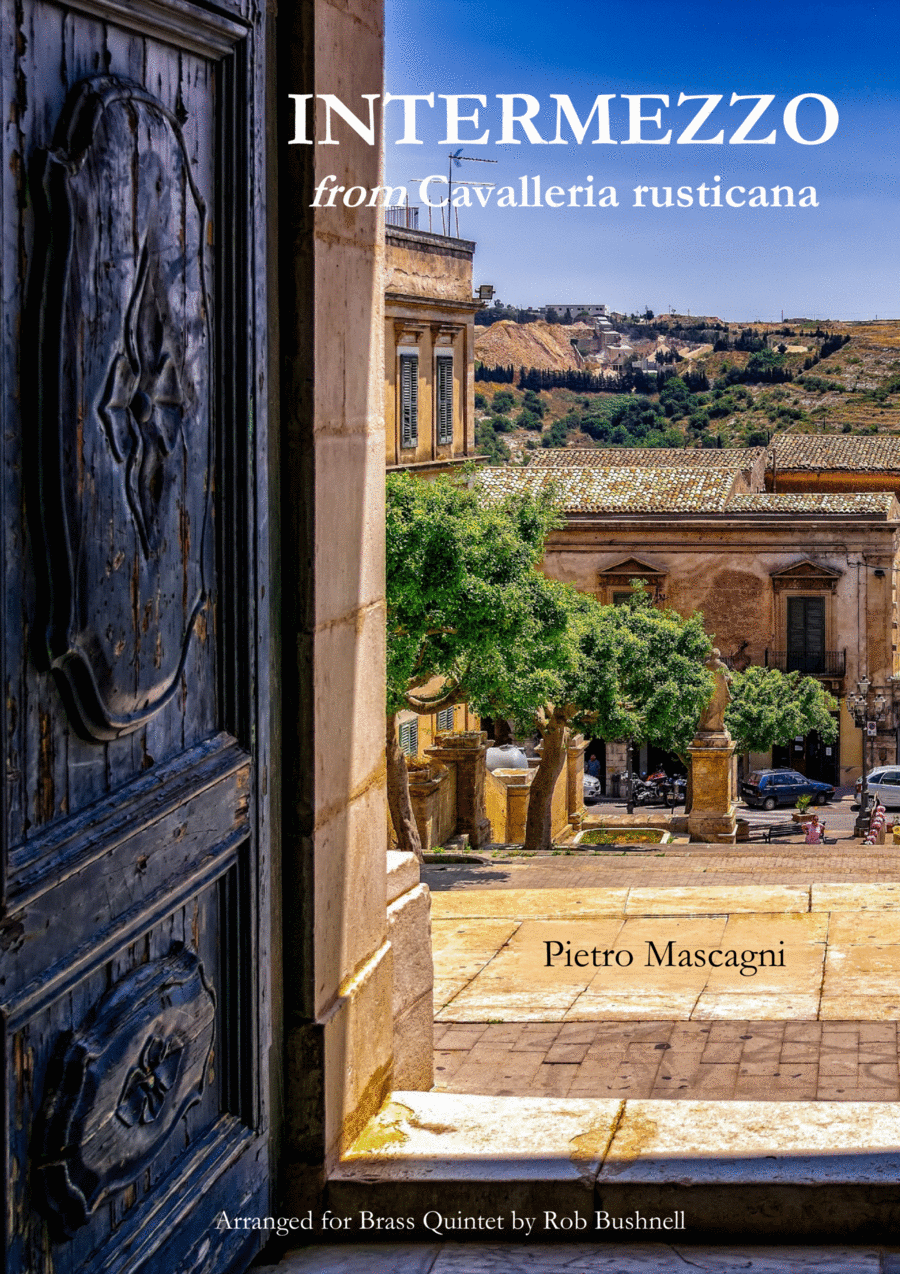
Intermezzo from "Cavalleria rusticana" (Mascagni) - Brass Quintet

$19.99 16.85 € PDF SheetMusicPlus

Small Ensemble Electronic Keyboard - Level 4 - Digital Download SKU: A0.1029103 By a-ha. By Magne Furuholmne and Pal Waaktaar. Arranged by Joshua L. Harris. Contemporary. Score and parts. 32 pages. Joshua Harris #4756217. Published by Joshua Harris (A0.1029103). This arrangement truly embraces the versatile nature of the modern electric keyboard/piano. It is written for 5 electric keyboards played through MIDI patches to sound like different instruments. Although the parts are named for the instrument patch that they begin on, some parts may be required to switch to other patches during the performance. Parts that replicate sounds that are not exclusive to keyboard (i.e. guitar, bass guitar, etc.) could be substituted with the actual instrument. Just remember that the parts are notated in the octave/transposition for keyboard.There is a wide variety of keyboards that could work for producing the sounds for these parts, from digital pianos with built-in sounds, to MIDI controller keyboards connected to MIDI sound modules, to the iconic 1980’s keytar. Find the combination of keyboards that works for you and have fun!
Take On Me
a-ha
$15.00 12.65 € PDF SheetMusicPlus

String Ensemble - Level 2 - Digital Download SKU: A0.1041170 Composed by Pierre Phalèse Jnr. Arranged by Colin Kirkpatrick. Renaissance. Score and parts. 18 pages. Colin Kirkpatrick Publications #645901. Published by Colin Kirkpatrick Publications (A0.1041170). These two dances are taken from a collection entitled Recueil de danseries, contenant presque toutes sortes de danses (“Collection of dances, containing almost every kind of dancesâ€) published in Antwerp in 1583 by Pierre Phalèse Jnr (c.1545-1629). He was continuing the work of his father Pierre Phalèse the Elder (1510-1575) the most important publisher in the Low Countries during the 16th century. The piece known as Ungaresca evokes the atmosphere of street music rather than that of the court and the drone accompaniment that Phalèse provides suggests the sound of the peasant bagpipes. As the name implies, the dance came from Hungary though it may have simply been a dance in the Hungarian style. Even so, the melody was tremendously popular during the fifteenth century though the author is unknown. The dance calls for a lively performance, and you can use plenty of percussion to enliven it. This music was meant for dancing and entertainment and musicians would often combine several dances to make a more substantial piece. In this arrangement, the rather wild Ungaresca is paired with the stately Almande Poussinghe. The music would have been played by any instruments that happened to be available. The dances still retain their freshness and charm today and are sure to be popular at any concerts, public recitals or end-of-semester events. This arrangement is for virtually any string ensemble and the single PDF file includes a full score and parts for violin 1, violin 2, viola (violin 3), cello and bass (combined), keyboard and simple percussion. Two additional melody part are provided in the treble and bass clefs and the chords (for optional guitar) are shown in both keyboard and cello-bass parts. In the spirit of the original publication, you can add to the melody line any other C-pitch instruments that happen to be available. Even the additional of a couple of recorders will enhance the sound. Alternatively, you can do opposite and create a pleasing contrast by omitting various instruments for certain sections. The audio demo will give you an idea how this might be achieved. The keyboard part is intended as a guide and when possible, the keyboard player should feel free to improvise around the part and the chords shown. A digital or acoustic harpsichord sounds more authentic than a piano. Most electronic keyboards have a harpsichord option. The optional percussion instruments used are similar to those found in elementary school music rooms and usually include a tambour or hand-held drum, antique (finger) cymbals, wood-blocks and tambourine. Two or three players can be used (but feel free to add more) and the parts can be interpreted quite freely. Dance music is intended to be fun, and we hope that this arrangement brings you just that.
Ungaresca & Almande Poussinghe (Recueil de Danseries, 1583)

$9.99 8.42 € PDF SheetMusicPlus

Concert Band - Level 3 - Digital Download SKU: A0.1152527 Composed by Hector Berlioz. Arranged by Guilherme Ribeiro. 20th Century,Classical,March,Opera,Romantic Period. Score and Parts. 103 pages. Gui Ribeiro #752748. Published by Gui Ribeiro (A0.1152527). Symphonie fantastique is a piece of program music that tells the story of an artist gifted with a lively imagination who has poisoned himself with opium in the depths of despair because of hopeless, unrequited love. Berlioz provided his own preface and program notes for each movement of the work. Convinced that his love is spurned, the artist poisons himself with opium. The dose of narcotic, while too weak to cause his death, plunges him into a heavy sleep accompanied by the strangest of visions. He dreams that he has killed his beloved, that he is condemned, led to the scaffold and is witnessing his own execution. The procession advances to the sound of a march that is sometimes sombre and wild, and sometimes brilliant and solemn, in which a dull sound of heavy footsteps follows without transition the loudest outbursts. At the end of the march, the first four bars of the idée fixe reappear like a final thought of love interrupted by the fatal blow. Berlioz claimed to have written the fourth movement in a single night, reconstructing music from an unfinished project, the opera Les francs-juges. The movement begins with timpani sextuplets in thirds, for which he directs: The first quaver of each half-bar is to be played with two drumsticks, and the other five with the right hand drumsticks. The movement proceeds as a march filled with blaring horns and rushing passages, and scurrying figures that later show up in the last movement. NOTES: - The two timpani part can be played by only the 2 pairs of timpani. - Measure 93 and 100: Clarinet 1, 2 and 3 play one octave lower as written.
Symphonie Fantastique: IV. Marche au supplice
Orchestre d'harmonie

$14.99 12.64 € Orchestre d'harmonie PDF SheetMusicPlus

String Ensemble,String Quintet Cello - Level 3 - Digital Download SKU: A0.813978 Composed by Franz Xaver Gruber. Arranged by Regis Bookshar. Christmas,Instructional,Multicultural,World. Score and parts. 7 pages. Regis Bookshar #6635883. Published by Regis Bookshar (A0.813978). Violoncello Quintet - Intermediate - Digital Download. This arrangement of Silent Night, or in German, Stille Nacht, would be a wonderful addition to any music library and could be performed for Christmas concerts, recitals, and, especially, church services. It is equally suitable for junior and senior high school students and even older musicians. Depending on their ability, younger musicians would also enjoy playing this selection. Included are a score and a complete set of parts (7 pages). This selection is one of the many arrangements from The Regis Bookshar Trumpet Ensemble's extensive music library which are being made available for the first time.Silent Night is probably the most popular Christmas carol ever written. It was composed in 1818 by Franz Xaver Gruber to lyrics by Joseph Mohr and was first performed on Christmas Eve at St. Nicholas parish church in Oberndorf, a small village in present-day Austria. A young Catholic priest, Father Joseph Mohr, had written the poem, Stille Nacht, in 1816 and had gone to Oberndorf in 1817. The melody was composed by Franz Xaver Gruber, schoolmaster and organist in the nearby village of Arnsdorf. On Christmas Eve, 1818, Mohr brought the words to Gruber and asked him to compose a melody and guitar accompaniment for that night's mass, after river flooding had possibly damaged the church organ. The church was eventually destroyed by repeated flooding and has since been replaced with the Silent-Night-Chapel.According to Gruber, Karl Mauracher, an organ builder who serviced the instrument at the Oberndorf church, was enamored with the song, and took the composition home with him to the Ziller Valley in Tyrol, Austria. From there, two traveling families of folk singers, the Strassers and the Rainers, included the tune in their shows. The Rainers were already singing it around Christmas, 1819, and once performed it for an audience that included Franz I of Austria and Alexander I of Russia. They also gave the first performance of the song in the United States in New York City in 1839. By the 1840's, the song was well known and was reported to be a favorite of Frederick William IV of Prussia. During this period, the melody changed slightly to become the version that is commonly heard today. The version of the melody that is generally used today is a slow, meditative lullaby, or pastoral, differing slightly from Gruber's original which has a moderate tempo. The song has been translated into about 140 languages and has been recorded by many singers across many music genres. The version sung by Bing Crosby in 1935, has sold over 10 million copies as a single.In this arrangement of Silent Night, Regis Bookshar has kept the basic form of this familiar Christmas carol, but has also included a descant during the third verse. Also, in addition to this version for a Violoncello Quintet, there are other arrangements of Silent Night available for a variety of instrumental ensembles. There are Quintets and Octets readily available for purchase. Please take the time to look for other versions of this composition. You may find something else that might also suit your needs.I would also encourage you to search for other arrangements by Regis Bookshar, as well, as there are numerous arrangements in a wide variety of styles, also available for purchase. You may find something else which might interest you. Please continue to check periodically because new arrangements are being added as often as possible. I'm certain that this wonderful arrangement of Silent Night will continue to entertain both performers and audiences alike for years to come.
Silent Night (Bb) (Violoncello Quintet)
the 1840's, the song was well known and was reported to be a favorite of Frederick William IV of Prussia During this period, the melody changed slightly to become the version that is commonly heard today
$5.00 4.22 € PDF SheetMusicPlus

Piano,Viola - Level 1 - Digital Download SKU: A0.548726 Composed by Martin Luther. Arranged by James M. Guthrie, ASCAP. Easter,Instructional,Standards. Score and part. 4 pages. Jmsgu3 #3411767. Published by jmsgu3 (A0.548726). Out of the Depths I Cry to You by Martin Luther. The first verses feature modified counterpoint and harmony proceeding at quarter = 82. The final verse is reharmonized for maximum dramatic effect at a more contemplative tempo such as quarter = 64. Very powerful selection for Lent or Easter. Duration (3 verses) 3:05, 36 ms. Score: 3 pg. Solo part: 1 pg. The piano reads from the score. Out of the Depths Aus tiefer Not schrei ich zu dir (From deep affliction I cry out to you), is, of course, a hymn composed by Martin Luther. Moreover, Luther also wrote the lyrics which are essentially a paraphrase of Psalm 130. First published in 1524, it is also one of eight songs in the original Lutheran hymnal. It appears likewise in many hymnals and in different translations. The lyrics furthermore stimulated compositions from the Renaissance to the contemporary. Consequently, composers such as Johann Sebastian Bach built an entire chorale cantata on it. Other composers similarly contributed compositions, such as Felix Mendelssohn and Max Reger. Luther Background Martin Luther, (1483 –1546) was a German professor of theology, composer, priest, and moreover, an influential character in the Protestant Reformation. Luther had a momentous impact on church and society due to his contributions to the musical arts. He wanted to disseminate the gospel among mankind and with this intention thought that the best way to do that was through music. Influence It is important to realize that other musicians, and their descendants, were encouraged by Luther’s songs and wrote their own hymns. Luther, to be sure, had a thorough musical education. For example, he knew secular and sacred songs from an early age. He, in particular, played the lute well and sang in the monastery when he was a monk. That is to say, music was an essential part of his life. He in fact first began writing songs in 1523, sometimes writing the melody as well as the lyrics. Luther was certainly able to evaluate the composers of his time. He thought especially highly of Josquin des and Ludwig Senfl. He was also acquainted, with this in mind, with other composers and their works. Legacy The Lutheran musical ethos soon covered all of Germany and later significantly fashioned Protestant musical culture. Heinrich Schütz and Johann Sebastian Bach are the most compelling evidence of this Protestant musical culture. Additionally, as a point often overlooked, the pedal organ, first refined in northern Germany, became universally prevalent. As a matter of fact, Dieterich Buxtehude established a regular evening organ concert series in Lübeck. Another key point is that this concert series, in turn, spread North German Musical ideas worldwide. Luther was especially convinced that music is a beautiful and exclusive offering of the divine.
Luther: Out of the Depths for Viola & Piano
Alto, Piano

$24.95 21.03 € Alto, Piano PDF SheetMusicPlus

C Instrument - Level 1 - Digital Download SKU: A0.1500599 By Don Moen. By Don Moen. Arranged by Don Moen. Christian,Praise & Worship,Religious,Spiritual. Lead Sheet / Fake Book. 1 pages. Steven See #1076684. Published by Steven See (A0.1500599). I love You, LordOh, Your mercy never fails meAll my days, I've been held in Your handsFrom the moment that I wake upUntil I lay my headOh, I will sing of the goodness of GodAnd all my life You have been faithfulAnd all my life You have been so, so goodWith every breath that I am ableOh, I will sing of the goodness of GodI love Your voiceYou have led me through the fireAnd in darkest night You are close like no otherI've known You as a FatherI've known You as a FriendAnd I have lived in the goodness of God, yeahAnd all my life You have been faithful, ohAnd all my life You have been so, so goodWith every breath that I am ableOh, I will sing of the goodness of God, yeah'Cause Your goodness is running after, it's running after meYour goodness is running after, it's running after meWith my life laid down, I'm surrendered nowI give You everything'Cause Your goodness is running after, it's running after me, oh-oh'Cause Your goodness is running after, it's running after meYour goodness is running after, it's running after meWith my life laid down, I'm surrendered nowI give You everything'Cause Your goodness is running after, it keeps running after meAnd all my life You have been faithfulAnd all my life You have been so, so goodWith every breath that I am ableOh, I'm gonna sing of the goodness of GodI'm gonna sing, I'm gonna singOh, 'cause'Cause all my life You have been faithfulAnd all my life You have been so, so goodWith every breath that I am ableOh, I'm gonna sing of the goodness of GodOh, I'm gonna sing of the goodness of GodWe love You for thatOne for all my days.
Goodness of God
Instruments en Do
Don Moen
$3.99 3.36 € Instruments en Do PDF SheetMusicPlus

Piano Solo - Level 3 - Digital Download SKU: A0.1477548 Composed by Hal Sharper and Jerry Goldsmith. Arranged by Timothy Stapay. Film/TV,Jazz,Pop,Singer/Songwriter,Standards. Score. 4 pages. Timothy Stapay #1054944. Published by Timothy Stapay (A0.1477548). Free As The Wind was composed by Jerry Goldsmith, a very prolific composer of film scores.  This is the main theme from the movie Papillon starring Steve McQueen and Dustin Hoffman.Yesterday's world is a dream like a river that runs through my mind Made of fields and the white pebbled stream that I knew as a child Butterfly wings in the sun taught me all that I needed to see For they sang sang to my heart oh look at me look at me Free as the wind free as the wind that is the way you should be. Love was the dream of my life And I gave it the best I knew how So it always brings tears to my eyes when I think of it now Gone like the butterfly days And the boy that I once used to be But my heart still hears a voice Telling me look , look and you will see There's no regret that I feel For the bitter sweet taste of it all If you love there's a chance you may fly If you fall, well you fall.
Free As The Wind
Piano seul

$6.99 5.89 € Piano seul PDF SheetMusicPlus

Brass Ensemble - Digital Download SKU: A0.1028133 Composed by Arwyn Bailey. Christian,Gospel,Jewish,Sacred,Spiritual. Score and parts. 113 pages. Galactic Publishers Limited #3382201. Published by Galactic Publishers Limited (A0.1028133). Hope PrevailsThe composition consists of six movements and is for a Brass Quintet with guest instrumentalists of Oboe, Violin, Viola and Soprano voice.The piece explores the moods that many encounter as they go through life from loneliness through to elation. the composers brother experienced these extreme emotions and it resulted in him taking his own life. This piece is dedicated to his memory.The MP3 contains a very short extract from each movement that is a direct download from computer composition software and is therefore not of great quality.The composer is looking for a group to record this piece. Please get in touch if you wish to be part fo a collaborative project perhaps as a school, college, university or other group.The Struggle of the night - 4:09 in length:The first movement commences with sonorous chord sequences and quickly moves to a lively section. The piece incorporates the tune of the Welsh National Anthem along with the hymn tune Cwm Rhondda. The movement moves between the despair and loneliness of the night that one can feel, even when sleeping next to a close partner, and the racing desperation of the mind, whereby patriotic affiliations will calm the soul at these times.  the movement finishes with the tune of Land of my father's resonating but even this is of no comfort, and the troubled mind lies awake and the movement finishes with a flurry of discord.The Solitude - 5.34 in length:The movement begins with a haunting melody led by the Oboe. the Horn soon joins in as do other instruments of the quintet. A simple Gregorian type rhythm and chant passes through the quintet with the Oboe leading the movement.Crescendos and attacked notes give the piece a rise and fall showing the mood of the soul that alternates between a calm and a peak of mood as sleep is hard to come by and a restless state is invoked.It appears that the oboe will be leading the soul into peace yet, at the last moment, the quintet joins in with chords of attack and crescendo followed by a sharp diminuendo to end the piece.The soul has sought solace, yet, all they find is loneliness.Brad's Broadcast - 3:01 in length:The restless soul awakes after a restless night.  The world is full of voices, advice, motivation and answers.In this lively movement, the soul searches for solace and finds sense from some sources, yet, the cacophony of contrary advice and the nature of some disciples of business and life coaches becomes confusing. there are some real gems of advice available, but, the noise of others drowns out the sense and sanity.The soul manages to find some humour in the forums and media, they smile, but the relief is short lived.The movement ends with all voices descending away in a glissando and silence is restored.By His Own Hand - 4:26 in length:This movement reflects the desperation of the soul. they have sought solace, humour has passed them by, they do not feel that they can continue to live.The piece starts with a cadenza played by a viola.  A violin soon duets in this Jewish styled lament.Throughout the movement the brass are spartan, reflecting the confusion of the soul. The ability to cling onto the world and to continue living is a losing battle.The waves of the lament increase in their presence, but not velocity, for the depressed souul is reaching the point of no return and of no choice.They will soon depart from the world by their own hand. The end ofthe movement is a descent and a unifying discordant sound as the soul leaves.Dreaming of Heaven - 2:31 in length:The soul is now rising and an ancient Celtic tune accompanies the soul in the form of a Soprano voice singing words of hope and light.The soul's path is lit and the ancient bell of.
Hope Prevails
Ensemble de cuivres
His Own Hand - 4:26 in length:

This movement reflects the desperation of the soul
they have sought solace, humour has passed them by, they do not feel that they can continue to live
$5.00 4.22 € Ensemble de cuivres PDF SheetMusicPlus

Baritone Horn TC,Euphonium,Piano - Level 1 - Digital Download SKU: A0.552826 Composed by James Pierpont. Arranged by James M. Guthrie, ASCAP. Christmas. Score and part. 8 pages. Jmsgu3 #3408519. Published by jmsgu3 (A0.552826). Jingle Bells arranged for baritone horn (treble clef) and piano. Easy! Jingle Bells is perhaps the most famous songs in American music history. James L. Pierpont published the song as One Horse Open Sleigh in the late 1850’s. Since its introduction, people began to insist that Pierpont wrote it for a Sunday school choir. However, it seems unlikely that such a secular song would be considered appropriate during that historical period for Sunday school.Christmas Repertoire Pierpont wrote the song for the Thanksgiving holidays, but over time people began to think of it more as a Christmas song. Some choirs adopted it as part of their Christmas repertoire in the 1860s and 1870s. Jingle Bells was first recorded in 1889 on a wax cylinder. Origins No one knows where Pierpont composed the song. One theory suggests he wrote it in Medford Massachusetts in 1850. Sleigh races were certainly popular in 19th Century Massachusetts. To this day, a commemorative placard appears in Medford square claiming that it is the birthplace of Jingle Bells. Others suggest that he wrote it in Savannah, Georgia where he was an organist and music director at the Unitarian Church. This theory gains support from the copyright date of 1857. We know he was living in Savannah by then. Traffic Signals Horse-drawn sleighs are relatively quiet in the snow. Consequently, horses were usually equipped with bell-laden straps so as to avoid accidents at blind intersections. Sleigh drivers in 19th Century New England were constantly vigilant, listening for the sounds of approaching horse-drawn sleighs. The tune imitates the rhythm that the trotting horse bells produce. Social Context Jingle Bells was sung as a drinking song at local revelries: during the song folks would rhythmically jangle the ice in their glasses. A sleigh ride gave couples an opportunity to be alone together. The term Jingle bells is a poetic descriptive adjective referring specifically to the more accurate term sleigh bells. In many arrangements, sleigh bells are used to accentuate the rhythm during the song chorus.  Register for free lifetime updates and revisions at www.jamesguthrie.com
Jingle Bells for Baritone Horn & Piano

$24.95 21.03 € PDF SheetMusicPlus

Clarinet Choir,Woodwind Ensemble Bass Clarinet,E-Flat Clarinet - Level 3 - Digital Download SKU: A0.1163661 Composed by Simon Franglen. Arranged by Lisa Ochoco. Contemporary,Film/TV. 19 pages. Lisa L Ochoco #764005. Published by Lisa L Ochoco (A0.1163661). Avatar: The Way of Water, is the long-awaited sequel to the award-winning film from 2009.  The soundtrack for the new film was written by Simon Franglen, who originally wrote 5 hours of music to cover any and all situations in the almost 3-hour movie.The Songcord is a beautiful song that is heard twice in the film – at the beginning and at the end.  A songcord is a mnemonic device used by the Na’vi that assists them in storytelling.  In this song, Neytiri is thanking Eywa – the Great Mother - for her family.This arrangement is scored for clarinet choir – Eb, 4 Bb, alto, bass, and contrabass. One of the most important parts of this piece is what helps create the mood, which is where the part called “Shimmer†comes in.  In an interview, Simon Franglen said that an important part of the music is the feeling of light, and he achieved that by including shimmering sounds into his tunes.  With that in mind, “Shimmer†part can be played by hanging a few keys (house keys, car keys, etc.) that have different pitches on short lengths of string.  Use a small metal or wooden object to lightly hit the keys to create little “dingsâ€.Be creative with this percussive part!  You can use a little xylophone, bells, etc.  The idea is to create a magical mood without overpowering the music.  Play this part wherever there is a note in the measure.Always keep the melody prominent.  Play this slowly and freely, with a lot of rubato.  Duration: 3.75 minutes.
The Songcord
Ensemble de Clarinettes

$16.00 13.49 € Ensemble de Clarinettes PDF SheetMusicPlus


Partitions Gratuites
Acheter des Partitions Musicales
Acheter des Partitions Digitales à Imprimer
Acheter des Instruments de Musique

© 2000 - 2026

Accueil - Version intégrale





