EUROPE
4451 articles
USA
4164 articles
DIGITAL
6992 articles (à imprimer)
Partitions Digitales
Partitions à imprimer
6992 partitions trouvées


Alto Saxophone,Bass Guitar,Drums,Piano Accompaniment,Tenor Saxophone,Trombone,Trumpet - Level 3 - Digital Download SKU: A0.1279326 By Wings. By Linda McCartney and Paul McCartney. Arranged by Jim Farley. Film/TV,Pop,Rock. 49 pages. Jim Farley arrangementsone.com #870811. Published by Jim Farley arrangementsone.com (A0.1279326). Arranged for 7-9 piece horn band, including: Directors Score, Piano/Vocal/Chords, Guitar (chords only), Bass Guitar, Drums, Alto Sax, Tenor Sax (identical to Alto), Trumpets 1 & 2 and Trombone.ABOUT THE ARRANGER: Jim Farley has been a professional musician, arranger, composer, transcriptionist and copyist since the mid 1970's and has thousands of works, spanning various genres, in his catalogue: Musical Theater, College and High School Pep Band, Orchestra and Show Choir, Cruise Ship and Las Vegas Performers as well as dozens of classic rock horn bands throughout the U.S., Canada & Europe. If you have any additional arranging needs, feel free to contact Jim at jfarley@arrangementsone.com and visit his website at ARRANGEMENTS ON E!
Live And Let Die
Wings
$74.99 63.44 € PDF SheetMusicPlus

Choral Choir,Choral,SATB Chorus - Level 2 - Digital Download SKU: A0.1477296 Composed by Felix Mendelssohn (1809-1847). Arranged by Laurie de Leonne. 19th Century,Classical,Holiday,Romantic Period. 60 pages. Dandelion Music Press #1054717. Published by Dandelion Music Press (A0.1477296). Community, collegiate, and high school choirs alike can perform this previously unsung Romantic-Era piano work by Felix Mendelssohn Songs Without Words Op. 19.  16'30 total performance time.  Moderate/Easy difficulty, Intermediate/Advanced piano part.  Can also be practiced or performed with a recording of the original Mendelssohn work as an accompaniment track.  This new yet historical winter cantata features 6 new secular texts on varying themes of winter: 1.  Winter Comes Again-- the changing of seasons from autumn to winter, evoking themes of Thanksgiving2.  The Wind-- blustery winter storms, vividly described3.  Let's Go Sledding-- lighthearted and enthusiastic zeal for winter play4.  So Long Ago-- hearing family stories by the fireside5.  Your Brother Called-- a frantic family member relays news of a flight delay6.  In Wintertime-- deep and silent winter weather, looking toward springtimeMovements 1-3:  https://youtu.be/ckogojxzsEM?si=lmD7kycUKrvBnQC6Movements 4-6:  https://youtu.be/3QMQrETUg-Q?si=u-d7-iDCyVWIkCNQ.
Winter Suite: Songs Without Words ...With Words
Chorale SATB

$12.99 10.99 € Chorale SATB PDF SheetMusicPlus

Small Ensemble Alto Saxophone,Bass Guitar,Drums,Piano,Trombone,Trumpet,Voice - Level 3 - Digital Download SKU: A0.765123 By The Commodores. By Terry Skinner. Arranged by Jim Farley www.arrangementsone.com. Rock. Score and parts. 47 pages. Jim Farley arrangementsone.com #3925547. Published by Jim Farley arrangementsone.com (A0.765123). Arranged for 7 piece horn band... with guitar solo written out... Also included: Conductor Score, Piano/Vocal/Chords, Lead Sheet, Guitar, Bass Guitar, Alto Sax, Trumpet & Trombone.ABOUT THE ARRANGER: Jim Farley has been a professional music arranger, transcriptionist and copyist since the mid 1970’s,and has thousands of works, spanning various genres in his catalog: musical theater, pep band, orchestra, show choir, cruise ship performers as well as arranging for dozens of classic rock horn bands across the U.S. and Europe. He thrives on creating arrangements and transcriptionsthat are true to the original versions and strives to produce clean, easy to read music. For questions or more information, please contact the arranger at: jfarley@arrangementsone.com and visit his website at www.arrangementsone.com.
Easy
The Commodores
$39.99 33.83 € PDF SheetMusicPlus

String Quartet Cello,String Quartet,Viola,Violin - Digital Download SKU: A0.504112 By John Denver. By Johnny Marks. Arranged by Thomas Graf. Christmas,Jazz. Score and parts. 15 pages. Published by Thomas Graf - the-hit-factory.com (A0.504112). Rudolph, the Red-Nosed Reindeer is a song by Johnny Marks based on the 1939 story Rudolph the Red-Nosed Reindeer, wich became a real Christmas All-Time Classic. Gene Autry's recording hit No. 1 on the U.S. charts the week of Christmas 1949. Instrumentation: Violin 1/2, Viola, Cello Listen to the video recording - a challenge for your ensemble. Please don't forget to review your purchase - you will help other musicians to choose the perfect arrangement for their ensemble. Thank you very much! Important note: All our arrangements, esp. Big Band and Concert Band arrangements are played and prooved with our own ensembles with great fun and success. Please let us know if you have any request, question or if you need transposed parts.
Rudolph The Red-nosed Reindeer
Quatuor à cordes: 2 violons, alto, violoncelle
John Denver
$20.00 16.92 € Quatuor à cordes: 2 violons, alto, violoncelle PDF SheetMusicPlus

Guitar - Advanced - Digital Download SKU: ZZ.DZ-4244 Composed by Konstantin Bliokh. Score. 13 pages. Les Productions d'OZ - Digital #DZ 4244. Published by Les Productions d'OZ - Digital (ZZ.DZ-4244). La Sonate n° 6 Kharkiv pour guitare solo a été composée en 2021, à la fin du confinement lié au COVID-19. Ã? ce moment-là, ma famille et moi étions restés dans notre ville natale de Kharkiv (également connue sous le nom de Kharkov), en Ukraine, pendant près de deux ans. Nous considérions cette période de pandémie comme un désastre, mais nous avons réalisé plus tard que c'était en fait un moment plutôt heureux, car la guerre est arrivée dans notre pays quelques mois plus tard. Depuis 2022, une fraction considérable des 1,5 million de citoyens de Kharkiv ont quitté leur foyer, ceux qui sont restés vivent sous des attaques incessantes de missiles, et beaucoup ont été tués. Je voudrais dédier cette Sonate à la ville frontalière de Kharkiv et, surtout, à ses citoyens souffrant de la guerre.Pourtant, la musique de la Sonate n'a aucun programme spécifique. Ici, je donnerai un bref aperçu de ses principaux éléments de composition pour faciliter les interprétations futures.Les premier et quatrième mouvements de cette Sonate sont basés sur l'interaction entre le principe dodécaphonique et le centre tonal de sol majeur, naturel pour la guitare. En particulier, le premier mouvement est basé sur l'interaction de la triade de sol majeur Solâ??Siâ??Ré des cordes de guitare à vide 2â??3â??4, le motif ascendant 1 impliquant les notes Miâ??Fa#â??Laâ??Do# (à l'origine sur la première corde), et le motif descendant 2 utilisant les notes Miâ??Doâ??Sibâ??La (à l'origine sur la corde de basse 6). Ces éléments se complètent presque pour former douze tons (à l'exception du Fa manquant), et les motifs alternent avec des fragments ostinato où chaque note de la triade de sol majeur est déplacée pas à pas d'un demi-ton vers le haut ou vers le bas.Le deuxième mouvement est un Scherzo impliquant de nombreux demi-tons dans des accords accentués et des passages rapides, ainsi qu'un mouvement mélodique chromatique dans la voix de basse. Il est presque atonal dans certains fragments, mais a un centre tonal global de la mineur.Le troisième mouvement est un Adagio méditatif basé sur un thème composé dans l'échelle hexatonique Réâ??Miâ??Faâ??Sol#â??Laâ??Si et des accords ostinato impliquant les cordes de basse à vide Miâ??Laâ??Ré et le demi-ton Siâ??Do.Enfin, le quatrième mouvement est basé sur le thème dodécaphonique complet composé de deux phrases comprenant les motifs 1 et 2 du premier mouvement : Solâ??Faâ??Sibâ??Labâ??Doâ??Mibâ??Ré et Miâ??Siâ??Do#â??Laâ??Fa#. Ce thème est présenté dans ses formes prime et rétrograde. Il y a des dialogues entre la première corde, les basses et les cordes médianes à vide, similaires au premier mouvement. Ã? son apogée, le thème dodécaphonique est interprété en utilisant le mouvement parallèle de l'accord de sol majeur standard de la guitare avec les cordes médianes à vide sur douze positions.La Sonate a été créée en première et enregistrée (CD Naxos No. 8.574630) par le célèbre guitariste ukrainien Marko Topchii, qui a également vécu et étudié à Kharkiv. Je lui suis extrêmement reconnaissant pour l'interprétation brillante de cette pièce.Je suis très redevable envers Productions d'Oz d'avoir conservé mes notations originales là où celles-ci ne correspondent pas au style de l'éditeur.Sonata No. 6 Kharkiv for guitar solo was composed in 2021, in the end of the COVID-19 lockdown. At that time my family and I were staying in our home city of Kharkiv (also known as Kharkov), Ukraine for almost two years. We considered that pandemic period as a disaster, but later have realized that it actually was a rather happy time, because a war came to our homeland just a few months later. Since 2022 a considerable fraction of the 1.5 millions of Kharkiv citizens have left their homes, those who stayed have been living under ceaseless missile attacks, and many have been killed. I would like to dedicate this Sonata to the frontier city of Kharkiv and, most of all, to its citizens suffering from the war.Yet, the music of the Sonata does not have any specific program. Here I will give a brief overview of its main composition elements to facilitate future interpretations.The first and fourth movements of this Sonata are based on the interplay between the twelve-tone principle and the G-major tonal center, natural for the guitar. Namely, the first movement is based on the interaction of the G-major triad Gâ??Bâ??D of the open guitar strings 2â??3â??4, ascending motif 1 involving the notes Eâ??F#â??Aâ??C# (originally on the first string), and descending motif 2 using the notes E-â??Câ??Bbâ??A- (originally, on the bass string 6). These elements supplement each other to almost make up twelve tones (apart from the missing F), and the motifs alternate with ostinato fragments where each note in the G major triad is step-by-step moved by a semitone up or down.The second movement is a Scherzo involving numerous semitones in accented chords and fast passages, as well as chromatic melodic motion in the bass voice. It is almost atonal in some fragments, but has an overall tonal center of A-minor.The third movement is a meditative Adagio based on a theme composed within hexatonic scale Dâ??Eâ??Fâ??G#â??Aâ??B and ostinato chords involving open bass strings Eâ??Aâ??D and semitone Bâ??C.Finally, the fourth movement is based on the complete twelve-tone theme consisting of two phrases including motifs 1 and 2 from the first movement: Gâ??Fâ??Bbâ??Abâ??Câ??Ebâ??D and Eâ??Bâ??C#â??Aâ??F#. This theme is presented in its prime and retrograde forms. There are dialogues between the first string, basses and open middle strings, similar to the first movement. In the culmination, the twelve-tone theme is performed using the parallel motion of the standard guitar G-major chord with open middle strings across twelve positions.The Sonata was premiered and recorded (CD Naxos No. 8.574630) by the prominent Ukrainian guitarist Marko Topchii who has also lived and studied in Kharkiv. I am extremely grateful to him for the brilliant performance of this piece.I am greatly indebted to Productions dâ??Oz for keeping my original notations in places where these do not conform to the publisherâ??s style.
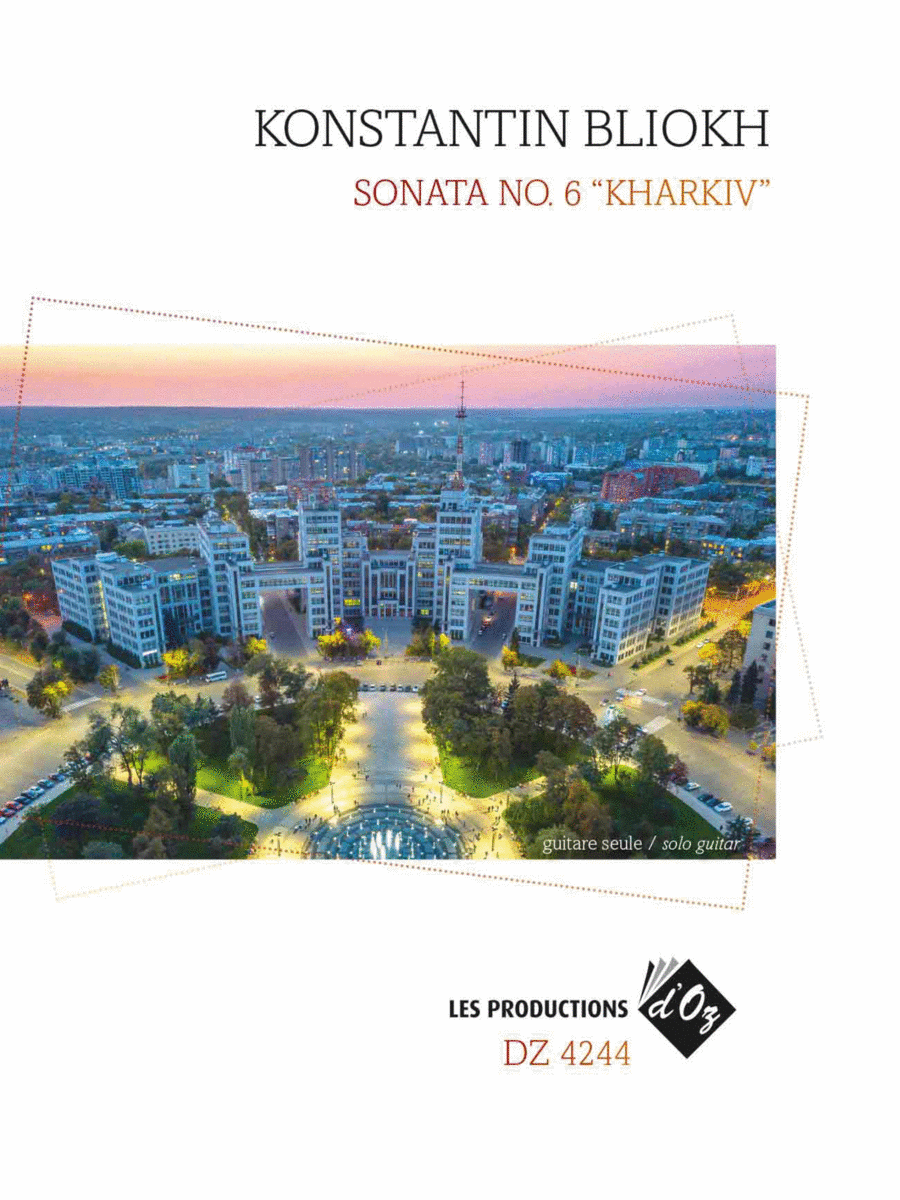
Sonata No. 6 "Kharkiv", Op. 48
Guitare

$7.95 6.73 € Guitare PDF SheetMusicPlus

Concert Band - Digital Download SKU: AX.00-PC-0017458_T2 2nd B-flat Trumpet. Composed by William Palange. Instructional. Part. 2 pages. Alfred Music - Digital Sheet Music #00-PC-0017458_T2. Published by Alfred Music - Digital Sheet Music (AX.00-PC-0017458_T2). UPC: 038081517896.In July, 2013, the wreckage of a commercial schooner named Atlas was discovered in Lake Ontario in nearly 300 feet of water just outside the Port of Oswego, NY. The Atlas was carrying a load of limestone meant for the U.S. government harbor in Oswego on the day of its fateful journey in May, 1839. Only two miles from port, a gale-force wind rocked the ship and its heavy load shifted, causing the vessel to sink and all of its crew members to perish. This piece was written to portray the majesty of Lake Ontario as well as the brave sailors, young and old, who navigated her volatile waters. (4:50) This title is available in SmartMusic.Concert/Contest; Festival.
Atlas: 2nd B-flat Trumpet
Orchestre d'harmonie

$3.00 2.54 € Orchestre d'harmonie PDF SheetMusicPlus

Large Ensemble Alto Saxophone,Drum Set,Tenor Saxophone,Trombone,Trumpet,Tuba - Level 3 - Digital Download SKU: A0.765460 By The Rolling Stones. By Barrett Strong and Norman Whitfield. Arranged by Jim Farley www.arrangementsone.com. Contemporary,Jazz. Score and parts. 54 pages. Jim Farley arrangementsone.com #6493945. Published by Jim Farley arrangementsone.com (A0.765460). ABOUT THE ARRANGER: Jim Farley has been a professional music arranger, transcriptionist and copyist since the mid 1970’s, and has thousands of works, spanning various genres in his catalog: musical theater, pep band, orchestra, show choir, cruise ship performers as well as arranging for dozens of classic rock horn bands across the U.S. and Europe. He thrives on creating arrangements and transcriptions that are true to the original versions and strives to produce clean, easy to read music. For questions or more information, please contact the arranger at: jfarley@arrangementsone.com and visit his website at www.arrangementsone.com
Just My Imagination (running Away With Me)
The Rolling Stones
$39.99 33.83 € PDF SheetMusicPlus

Small Ensemble Alto Saxophone,Baritone Saxophone,Drum Set,Piano,Tenor Saxophone,Trombone,Trumpet - Level 3 - Digital Download SKU: A0.734627 Composed by Eliot Daniel. Arranged by Dennis Ruello. Contemporary. Score and parts. 21 pages. Chicory Music #6707191. Published by Chicory Music (A0.734627). On October 15, 1951, the very first episode of the I Love Lucy show aired on CBS and became the most watched TV show in the U.S. for four of its seven-year run. Fun trivia about the opening theme song is that during the first season the show opened with their sponsor Philip Morris’ animation of stick figure cartoons of Lucy and Desi climbing down a pack of Philip Morris cigarettes. It was scored with Ferde Grofé’s Jr. The Grand Canyon Suite theme (a composition from 1931).From the second season onwards, the I Love Lucy signature tune we all know so well became the main theme, and one of the most recognizable pieces of music on the planet. It was written by composer Eliot Daniel who cranked it out in an afternoon as a favor to his old Coast Guard buddy Jess Oppenheimer, the show’s producer. Since Daniel still had another year under his exclusive contract to Fox, he asked Oppenheimer to keep his name out of it. Consequently his name does not appear on first or the second season TV credits for what became one of the most popular TV themes. Later, Daniel did seek credit and received royalties from syndicated reruns for the rest of his life.The lyrics were written by Harold Adamson for an episode in the third season in which Lucy believes everyone has forgotten her birthday. So of course Ricky saves the day after a near disaster.This arrangement for Jazz / Big Band is written at the Intermediate Level in a Slow Ballad Tempo.Performance Time: Approx. 1 minute 40 seconds
I Love Lucy

$19.99 16.91 € PDF SheetMusicPlus


Partitions Gratuites
Acheter des Partitions Musicales
Acheter des Partitions Digitales à Imprimer
Acheter des Instruments de Musique

© 2000 - 2026

Accueil - Version intégrale





