EUROPE
53614 articles
USA
0 articles
DIGITAL
97141 articles (à imprimer)
Partitions Digitales
Partitions à imprimer
97141 partitions trouvées


Quique Sinesi : 14 estudios para Guitarra Fusión - Estudio para púa n° 2
Guitare
Téléchargez la tablature et la partition Guitare 14 estudios para Guitarra F…
3.99 € Guitare PDF Tomplay

Guitar - Intermediate - Digital Download SKU: ZY.DO-1522 Composed by Francis Bebey. Arranged by Ingrid Riollot. Score. 5 pages. Les Editions Doberman-Yppan (digital) #DO 1522. Published by Les Editions Doberman-Yppan (digital) (ZY.DO-1522). Francis Bebey est né à Douala en juillet 1929, dans une grande famille où son père, pasteur, luttait pour nourrir ses enfants. Mais Francis a eu l'opportunité d'aller à l'école. Admirant son frère aîné, Marcel Eyidi Bebey, il s'est éduqué, s'est distingué, et a finalement reçu une bourse pour passer son baccalauréat en France.Nous approchions de la fin des années 1950 lorsqu'il est arrivé à La Rochelle. Plus que jamais, dans cette France où les Africains étaient regardés avec curiosité, condescendance ou dédain, Francis s'appuyait sur ses ressources intellectuelles. Travailleur assidu, il a obtenu son baccalauréat, puis s'est installé à Paris où il a commencé des études d'anglais à la Sorbonne. Un jour, il a su ce qui l'attirait vraiment : il voulait faire de la radio. Francis a appris son métier en France et aux Ã?tats-Unis.Après avoir travaillé quelques années comme reporter, il a été embauché en 1961 en tant que fonctionnaire international au Département de l'information de l'UNESCO.Parallèlement, Francis a toujours été attiré par la création musicale. Son activité diurne très sérieuse ne l'empêchait pas de fréquenter les clubs de jazz le soir. Ã? Paris, le jazz, la musique à la mode à cette époque, mais aussi la rumba et la salsa l'attiraient. Il collectionnait les disques et assistait à de nombreux concerts. Avec son complice Manu Dibango, Francis montait sur scène et jouait de la musique.Francis aimait la musique classique depuis son enfance. Il avait grandi en écoutant les cantates et les oratorios de Bach ou Handel que son père chantait au temple. Il s'est passionné pour la guitare, impressionné par les maîtres espagnols et sud-américains, et a décidé d'apprendre à jouer de l'instrument lui-même.Il a commencé à composer des pièces pour guitare, mêlant les diverses influences qui le traversaient avec la musique traditionnelle africaine qu'il portait en lui depuis son enfance. Son approche a captivé le directeur du Centre culturel américain (alors situé dans le quartier de Saint-Germain à Paris), qui lui a offert l'opportunité de se produire devant un public. Francis y a donné son premier récital de guitare (1963) devant un public hypnotisé. Son premier album solo est sorti peu de temps après.Progressivement, Francis est devenu reconnu comme musicien et compositeur. Plusieurs albums de l'ambassadeur africain de la guitare, comme le décrivait la presse, sont sortis. Il a également écrit des livres, au point que sa carrière artistique est devenue difficile à concilier avec sa carrière de fonctionnaire. En 1974, même s'il était devenu le directeur général chargé de la musique à l'UNESCO, il a fait le saut audacieux et a démissionné de cette prestigieuse institution pour se consacrer aux trois activités qui l'intéressaient : la musique, la littérature et le journalisme.Il a exploré le patrimoine musical traditionnel du continent africain, notamment à travers le piano à pouce sanza et la musique polyphonique des pygmées d'Afrique centrale, ou en chantant dans sa langue maternelle et en composant des chansons humoristiques en français !Le succès a suivi. Francis Bebey a parcouru le monde : de la France au Brésil, du Cameroun à la Suède, de l'Allemagne aux Caraïbes, ou du Maroc au Japon... la liste des pays où il a été invité à se produire, à donner des conférences ou à rencontrer des lecteurs est très longue. En plus de la reconnaissance publique, il bénéficiait de la reconnaissance de ses collègues musiciens, tels que le guitariste John Williams ou le Vénézuélien Antonio Lauro, qui l'ont invité à faire partie du jury d'un concours de guitare classique à Caracas.Sa vie était le voyage d'un pionnier africain, un homme enraciné dans son patrimoine culturel et portant un message de partage et d'espoir pour le monde. Son originalité continue de résonner dans le monde entier depuis son décès à la fin du mois de mai 2001.Francis Bebey was born in Douala in July 1929, into a large family where his father, a pastor, struggled to feed his children. But Francis had the opportunity to go to school. Admiring his elder brother, Marcel Eyidi Bebey, he educated himself, distinguished himself, and eventually received a scholarship to go and take his baccalaureate in France.We approached the end of the 1950s when he arrived in La Rochelle. More than ever, in this France where Africans were looked at with curiosity, condescension, or disdain, Francis relied on his intellectual resources. A diligent worker, he obtained his Baccalaureate, then moved to Paris where he started English studies at the Sorbonne. One day, he knew what truly attracted him: he wanted to do radio. Francis learned his craft in France and in the USA.After working for a few years as a reporter, he was hired in 1961 as an international civil servant in the UNESCO Information Department.In parallel, Francis had always been drawn to musical creation. His very serious daytime activity didnâ??t prevent him from frequenting jazz clubs in the evenings. In Paris, the Jazz, the trendy music of that time, but also rumba and salsa attracted him. He collected records and attended numerous concerts. With his accomplice Manu Dibango, Francis took the stage and played music.Francis liked classical music since his childhood. He grew up listening to the cantatas and oratorios of Bach or Handel that his father had sung in the temple. He became passionate about the guitar, impressed by the Spanish and South American masters, and decided to learn to strum the instrument himself.He started composing guitar pieces, blending the various influences that flow through him with the traditional African music he had carried within since childhood. His approach captivated the director of the American Cultural Center (then located in the Saint-Germain neighborhood of Paris), who offered him the opportunity to perform in front of an audience. Francis gave his first guitar recital there (1963) in front of a mesmerized audience. His first solo album was released shortly thereafter.Gradually, Francis became recognized as a musician and composer. Several albums of the African guitar ambassador, as described by the press, were released. He also wrote books, to the point that his artistic career became challenging to reconcile with his career as a civil servant. In 1974, even though he had become the General Manager in charge of music at UNESCO, he took the bold leap and resigned from this prestigious institution to dedicated himself to the three activities that interested him: music, literature, and journalism. He explored the traditional musical heritage of the African continent, notably through the thumb piano sanza, and the polyphonic music of the Central African pygmies, or singing in his native language and composing humoristic songs in French!Success followed. Francis Bebey traveled the world: from France to Brazil, Cameroon to Sweden, Germany to the Carribean, or Morocco to Japan... the list of countries where he was invited to perform, gives lectures, or meets readers is very long. In addition to public recognition, he enjoyed the recognition of his fellow musicians, such as guitarist John Williams or Venezuelan Antonio Lauro, who invited him to be a part of the jury for a classical guitar competition in Caracas.His life was the journey of an African pioneer, a man rooted in his cultural heritage and carrying a message of sharing and hope for the world. His originality continues to vibrate around the world since his passing at the end of May 2001.
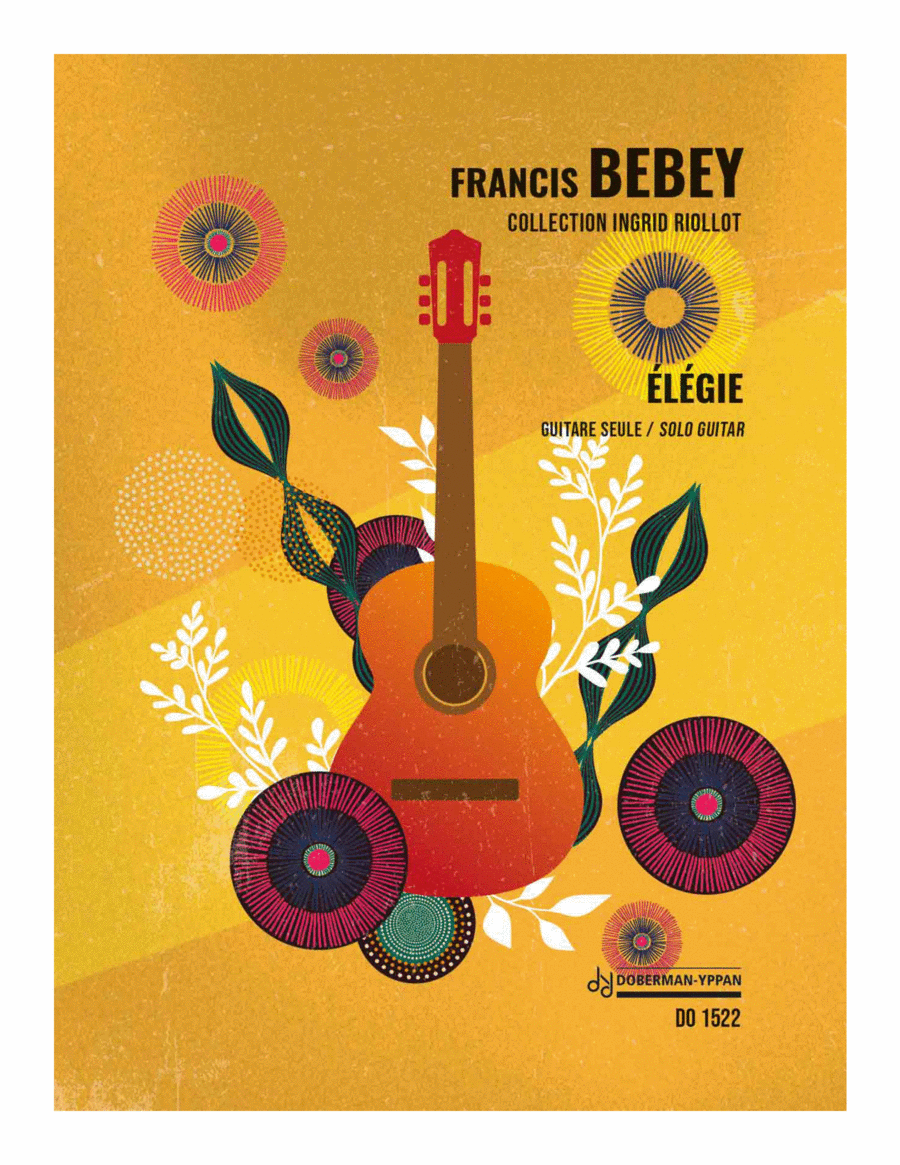
Élégie
Guitare

$3.95 3.44 € Guitare PDF SheetMusicPlus

Choral Choir (SATB) - Digital Download SKU: A0.828730 Composed by Giuseppe Dogliani. Arranged by Guido Menestrina. Romantic Period,Sacred. Octavo. 6 pages. Guido Menestrina #1986533. Published by Guido Menestrina (A0.828730). SATB + Piano solo Musica dal dramma (su libretto di Jean-Baptiste Lemoyne) Cristoforo Colombo, 1896. Qui di seguito info sul compositore. n. a Costigliole di Saluzzo (Cuneo-Italia) il 13 maggio 1849; prof. a Lanzo il 23 settemre 1870; m. a Torino il 22 ottobre 1934. Fu accolto da don Bosco nel suo Oratorio di Valdocco (Torino) nel 1864, a 14 anni di età, come allievo falegname. Egli però, già cantore del duomo di Saluzzo, aveva una spiccata inclinazione alla musica, e trovò in don Bosco chi lo comprese e l'assecondò. Sotto la guida del M. De Vecchi poté studiare musica strumentale, armonia e composizione. I suoi progressi furono così rapidi che, fattosi salesiano, divenne il più attivo collaboratore del M. Cagliero, e, allorché questi partì per l'Argentina a capo della prima spedizione di missionari salesiani (1875), a lui fu affidata la direzione della Schola cantorum,e nel 1889 anche della banda musicale dell'Oratorio. Maestro impareggiabile - come attesta un suo ex-allievo, don Alberto Caviglia - trasformò la scuola di canto col suo metodo d'insegnamento, sia nella preparazione della lettura, sia nell'educazione delle voci bianche e nell'addestramento delle masse corali, che giunsero fino a quattrocento voci. Con mezzi così poderosi il M. Dogliani ricondusse in chiesa la musica classica, e la Basilica di Maria Ausiliatrice fu rinomata per le grandiose esecuzioni inappuntabili degli spartiti di Rossini, Cherubini, Haydn, Gounod, Sgambati, Bossi, Tebaldini, Pagella, Perosi, Bottazzo, Ravanello, Mattioli, Donini, giungendo perfino a eseguire la Missa Papae Marcelli del Palestrina, senza accompagnamento (1876), e le classiche composizioni di Vittoria, Lolli, Gabrielli, Orlando di Lasso. La presenza della sua Schola cantorum e della sua banda strumentale fu spesso ambita e richiesta in altre città d'Italia in solenni circostanze, meritando elogi e premi, e perfino a Marsiglia per le feste centenarie di santa Giovanna d'Arco e l'inaugurazione della nuova cattedrale (1894). Il Cagliero - di cui ridusse a stile liturgico le più solenni composizioni - lo invitò in Argentina per portarvi la sua esperienza pratica d'insegnamento, che poi concretò nel celebre Metodo di canto corale, edito varie volte e su cui si formarono generazioni di Pueri cantores. Fu pure compositore di musica sacra e inni d'occasione di ottimo effetto: notevole l'antifona Corona aurea, composta per l'incoronazione dell'effige di Maria Ausiliatrice nel suo santuario (1903). Ma soprattutto egli - seguendo il metodo educativo di don Bosco - seppe fare della scuola di canto e di banda validi strumenti di formazione interiore, educando soprattutto con l'esempio di perfetto religioso, sicché i suoi allievi, per la sua abituale compostezza e inalterabile pazienza, lo tenevano in concetto di santo. Tra essi vi fu pure il celebre tenore Francesco Tamagno; altro suo discepolo affezionatissimo fu Federico Caudana, poi maestro di cappella a Cremona e buon compositore di musica. È da notare che il M. Dogliani, col suo insegnamento e col suo esempio, precorse di un trentennio la riforma della musica sacra fatta da san Pio X col Motu proprio del 1903. (da http://www.coadiutoresalesiano.net/ ) follow the score online on youtube: https://youtu.be/kAj11WStQqc.
Giuseppe Dogliani - Salve o Regina (1896)
Chorale SATB

$1.99 1.73 € Chorale SATB PDF SheetMusicPlus

String Quartet Cello,String Quartet,Viola,Violin - Level 3 - Digital Download SKU: A0.1452189 By Mr. Rain. By Federica Abbate, Lorenzo Vizzini Bisaccia, and Mattia Balardi. Arranged by Luis Turina and Nonamé Música. 21st Century,Contest,Festival,Patriotic,Pop,Singer/Songwriter. 18 pages. Nonamé Música #1031508. Published by Nonamé Música (A0.1452189). (English & Spanish below) Arrangiamento realizzato per Edu e Álex per l'ingresso di quest'ultimo al loro matrimonio, il 1 giugno 2024. Canzone epica, terzo posto alla 73a edizione del Festival di San Remo, 2023. La partitura non ha difficoltà per il violoncello, mentre le parti rappato e quasi tutte le seconde voci sono alla viola; il secondo violino, dopo l'intervento iniziale con un solo, esegue accompagnamenti acuti. Il violino 1 fa la maggior parte della melodia. Il corale di apertura elimina completamente la parte recitata. Il giorno della prima, l'intero quartetto si innamorò dell'arrangiamento (e della canzone).Disposto su due pagine per strumento per facilitare le performance all'aperto. Archi, diteggiature e sfumature per poterne fare una buona lettura a prima vista.Altri arrangiamenti di Noname sul nostro canale: Nonamé Musica.Arrangement made for Edu and Álex for Álex's entrance at their wedding, on June 1, 2024. Epic song, third place at the 73rd edition of the San Remo Festival, 2023. The score has zero difficulty for the cello, while the rapped parts and almost all the second voices are in the viola; the second violin, after the initial intervention with a solo, makes high-pitched accompaniments. Violin 1 carries most of the melody. The opening chorale eliminates the recited part entirely. On the day of its premiere, the entire quartet fell in love with the arrangement (and the song).Arrangement on only two pages per instrument to facilitate its interpretation outdoors. Bowings and dynamics to facilitate a good sightreading.More Noname Music arrangements on our channel: Noname Music.Arreglo realizado para Edu y Álex para la entrada de este último en su boda, el 1 de Junio de 2024. Épica canción, tercer puesto en la 73ª edición del Festival de San Remo, 2023. La partitura tiene una nula dificultad para el cello, mientras que las partes rapeadas y casi todas las segunda voces están en la viola y el violín segundo, tras la intervención inicial con un solo, hace acompañamientos agudos. El violín 1 lleva la mayor parte de la melodía. El coral inicial elimina por completo la parte recitada. El día de su estreno, el arreglo (y la canción) enamoró a todo el cuarteto.Arreglo en dos páginas por instrumento para facilitar su interpretación al aire libre. Arcos, digitaciones y matices para poder hacer una buena lectura a primera vista.Más arreglos de Nonamé en nuestro canal: Nonamé Música.
Supereroi
Quatuor à cordes: 2 violons, alto, violoncelle
Mr Rain
$14.99 13.05 € Quatuor à cordes: 2 violons, alto, violoncelle PDF SheetMusicPlus

Camille,Michael Giacchino : Le Festin (niveau intermédiaire, avec orchestre)
Piano seul
Téléchargez la partition Piano Le Festin (niveau intermédiaire, avec orchestre) de Camille…
5.99 € Piano seul PDF Tomplay

Camille,Michael Giacchino : Le Festin (niveau très facile, avec orchestre)
Accordéon
Téléchargez la partition Accordéon Le Festin (niveau très facile, avec orchestre) de Camil…
5.99 € Accordéon PDF Tomplay

Camille,Michael Giacchino : Le Festin (niveau facile, avec orchestre)
Accordéon
Téléchargez la partition Accordéon Le Festin (niveau facile, avec orchestre) de Camille. P…
5.99 € Accordéon PDF Tomplay

Camille,Michael Giacchino : Ratatouille - Le Festin (niveau intermédiaire, avec orchestre)
Accordéon
Téléchargez la partition Accordéon Ratatouille - Le Festin (niveau intermédiaire, avec orc…
5.99 € Accordéon PDF Tomplay

Camille,Michael Giacchino : Ratatouille - Le Festin (niveau intermédiaire, accordéon basses chromatiques avec orchestre)
Accordéon
Téléchargez la partition Accordéon Ratatouille - Le Festin (niveau intermédiaire, accordéo…
5.99 € Accordéon PDF Tomplay

Camille,Michael Giacchino : Le Festin (niveau facile/intermédiaire, avec orchestre)
Piano seul
Téléchargez la partition Piano Le Festin (niveau facile/intermédiaire, avec orchestre) de …
5.99 € Piano seul PDF Tomplay

Camille,Michael Giacchino : Ratatouille - Le Festin (voix Camille, acc. piano et orchestre)
Piano seul
Téléchargez la partition Piano Ratatouille - Le Festin (voix Camille, acc. piano et orches…
5.99 € Piano seul PDF Tomplay

Camille,Michael Giacchino : Ratatouille - Le Festin (niveau facile, avec orchestre)
Accordéon
Téléchargez la partition Accordéon Ratatouille - Le Festin (niveau facile, avec orchestre)…
5.99 € Accordéon PDF Tomplay

Camille,Michael Giacchino : Ratatouille - Le Festin (niveau très facile, avec orchestre)
Accordéon
Téléchargez la partition Accordéon Ratatouille - Le Festin (niveau très facile, avec orche…
5.99 € Accordéon PDF Tomplay

Camille,Michael Giacchino : Ratatouille - Le Festin (niveau facile, accordéon basses chromatiques avec orchestre)
Accordéon
Téléchargez la partition Accordéon Ratatouille - Le Festin (niveau facile, accordéon basse…
5.99 € Accordéon PDF Tomplay


Partitions Gratuites
Acheter des Partitions Musicales
Acheter des Partitions Digitales à Imprimer
Acheter des Instruments de Musique

© 2000 - 2026

Accueil - Version intégrale





