EUROPE
6706 articles
USA
0 articles
DIGITAL
13175 articles (à imprimer)
Partitions Digitales
Partitions à imprimer
13175 partitions trouvées


Small Ensemble - Level 5 - Digital Download SKU: A0.614503 By Daniel Kelley. By Various. Arranged by Daniel Kelley. 20th Century,Classical,Romantic Period,Wedding. Score and parts. 92 pages. Last Resort Music Publishing #223667. Published by Last Resort Music Publishing (A0.614503). Score - Music for Three, Volume 5 Late 19th & Early 20th Century Favorites Includes works by Debussy, Elgar, Rachmaninoff, Brahms, Kreisler, Prokofiev & more! An incredible collection of 35 arrangements for strings, woodwinds and piano – these mix and match trios allow the performer to pick the instrumentation. A versatile must-have for any musician, Music for Three is perfect for weddings, recitals, concerts, and any chamber music gatherings. Parts are available separately or may be purchased as sets. The keyboard/guitar part encompasses both parts 2 and 3. Therefore, the arrangements could be played as a piano trio, or an entire trio can play with a pianist - as long as Part 1 is being played. Table of Contents Braul, Joc Cu Bata, Maruntel from Rumanian Folk Dances (Bartok) Clair de Lune from Suite Bergamasque for piano (Debussy) Fille aux Cheveux de Lin, La from Douze Preludes, Book 1 (Debussy) Golliwog's Cake-walk from Children's Corner Suite (Debussy) Reverie (Debussy) Nimrod from Enigma Variations, Op. 35 (Elgar) Pomp and Circumstance March #1 (Elgar) Salut d'Amor, Op. 12 (Elgar) Ritual Fire Dance from El Amor Brujo (de Falla) Molly on the Shore Irish Reel (Grainger) Shepherd's Hey English Morris Dance Tune (Grainger) Liebesfreud from Alt-Wiener Tanzweisen (Kreisler) Liebeslied (Kreisler) Schon Rosmarian from Alt-Wiener Tanzweisen (Kreisler) To a Wild Rose from Woodland Sketches, Op. 51 (MacDowell) Gavotte and Larghetto from Classical Symphony, Op. 25 (Prokofiev) March from The Love of Three Oranges, Op. 33 (Prokofiev) Theme from 1st and 3rd Movements from Piano Concerto #2 (Rachmaninoff) Theme from 1st Movement from Piano Concerto #3 (Rachmaninoff) Le Jardin Feerique & Pavane de la Belle au Bois Dormant from Ma Mere l'Oye (Ravel) Pavane pour une Infante Defunte (Ravel) Menuet & Rigaudon from Tombeau de Couperin (Ravel) Balletto & Passo Mezzo e Mascherada from Ancient Airs & Dances (Respighi) Gymnopedie No. 1 from Trois Gymnopedies (Satie) Larghetto (Stravinsky) Gavotta, Overture and Serenata from Pulcinella (Stravinsky) Other Parts Available: 50511 Part 1 Flute or Oboe or Violin 50513 Part 1 Clarinet in Bb 50521 Part 2 Flute or Oboe or Violin 50522 Part 2 Viola 50523 Part 2 Clarinet in Bb 50531 Part 3 Cello or Bassoon 50540 Keyboard or Guitar 50599 Score (Parts 1-3 in C).
Music for Three, Volume 5 - Score 50599
Daniel Kelley
$39.95 34.69 € PDF SheetMusicPlus

Woodwind Ensemble,Woodwind Quintet Bassoon,Clarinet,Flute,Horn,Oboe - Level 3 - Digital Download SKU: A0.1302815 Composed by Erik Satie. Arranged by Ray Thompson. 20th Century,Chamber. 10 pages. RayThompsonMusic #892418. Published by RayThompsonMusic (A0.1302815). Satie: Sarabande No.1  Arranged standard wind quintetThe Sarabandes are three dances for solo piano composed in 1887 by Erik Satie. Along with the famous Gymnopédies (1888) they are regarded as his first important works, and the ones upon which his reputation as a harmonic innovator and precursor of modern French music, beginning with Debussy, principally rests. The Sarabandes also played a key role in Satie's belated discovery by his country's musical establishment in the 1910s, setting the stage for his international notoriety.French composer and critic Alexis Roland-Manuel wrote in 1916 that the Sarabandes represented a milestone in the evolution of our music...pieces of an unprecedented harmonic technique, born of an entirely new aesthetic, which create a unique atmosphere, a sonorous magic of complete originality.The sarabande is a dance in triple meter that originated in the Spanish colonies of Central America in the mid-1500s. It had migrated to Europe by the 17th Century, where in France it became a popular slow court dance. Satie's modern reinterpretations consist of three dances with a total duration of roughly 15 minutes:Sarabande No. 1 - A-flat major (This one)Sarabande No. 2 - D-sharp minorSarabande No. 3 - B-flat minorThe melody is shared amongst the top 4 instruments, and the quintet do not play tutti all of the time. This adds more interest and variation to the piece.Enjoy.
Satie: Sarabande No.1 - wind quintet
Quintette à Vent: flûte, Hautbois, basson, clarinette, Cor

$9.95 8.64 € Quintette à Vent: flûte, Hautbois, basson, clarinette, Cor PDF SheetMusicPlus

Small Ensemble Flute,Oboe,Violin - Level 5 - Digital Download SKU: A0.614504 By Daniel Kelley. By Various. Arranged by Daniel Kelley. 20th Century,Classical,Romantic Period,Wedding. Score and parts. 49 pages. Last Resort Music Publishing #223669. Published by Last Resort Music Publishing (A0.614504). Part 2 for Flute or Oboe or Violin - Music for Three, Volume 5 Late 19th & Early 20th Century Favorites Includes works by Debussy, Elgar, Rachmaninoff, Brahms, Kreisler, Prokofiev & more! An incredible collection of 35 arrangements for strings, woodwinds and piano – these mix and match trios allow the performer to pick the instrumentation. A versatile must-have for any musician, Music for Three is perfect for weddings, recitals, concerts, and any chamber music gatherings. Parts are available separately or may be purchased as sets. The keyboard/guitar part encompasses both parts 2 and 3. Therefore, the arrangements could be played as a piano trio, or an entire trio can play with a pianist - as long as Part 1 is being played. Table of Contents Braul, Joc Cu Bata, Maruntel from Rumanian Folk Dances (Bartok) Clair de Lune from Suite Bergamasque for piano (Debussy) Fille aux Cheveux de Lin, La from Douze Preludes, Book 1 (Debussy) Golliwog's Cake-walk from Children's Corner Suite (Debussy) Reverie (Debussy) Nimrod from Enigma Variations, Op. 35 (Elgar) Pomp and Circumstance March #1 (Elgar) Salut d'Amor, Op. 12 (Elgar) Ritual Fire Dance from El Amor Brujo (de Falla) Molly on the Shore Irish Reel (Grainger) Shepherd's Hey English Morris Dance Tune (Grainger) Liebesfreud from Alt-Wiener Tanzweisen (Kreisler) Liebeslied (Kreisler) Schon Rosmarian from Alt-Wiener Tanzweisen (Kreisler) To a Wild Rose from Woodland Sketches, Op. 51 (MacDowell) Gavotte and Larghetto from Classical Symphony, Op. 25 (Prokofiev) March from The Love of Three Oranges, Op. 33 (Prokofiev) Theme from 1st and 3rd Movements from Piano Concerto #2 (Rachmaninoff) Theme from 1st Movement from Piano Concerto #3 (Rachmaninoff) Le Jardin Feerique & Pavane de la Belle au Bois Dormant from Ma Mere l'Oye (Ravel) Pavane pour une Infante Defunte (Ravel) Menuet & Rigaudon from Tombeau de Couperin (Ravel) Balletto & Passo Mezzo e Mascherada from Ancient Airs & Dances (Respighi) Gymnopedie No. 1 from Trois Gymnopedies (Satie) Larghetto (Stravinsky) Gavotta, Overture and Serenata from Pulcinella (Stravinsky) Other Parts Available: 50511 Part 1 Flute or Oboe or Violin 50513 Part 1 Clarinet in Bb 50521 Part 2 Flute or Oboe or Violin 50522 Part 2 Viola 50523 Part 2 Clarinet in Bb 50531 Part 3 Cello or Bassoon 50540 Keyboard or Guitar 50599 Score (Parts 1-3 in C).
Music for Three, Volume 5 - Part for Flute or Oboe or Violin 50521
Daniel Kelley
$20.00 17.37 € PDF SheetMusicPlus

Small Ensemble Flute,Harp,Violin - Level 3 - Digital Download SKU: A0.797341 Arranged by Beth Kolle. Concert,Folk,World. Score and parts. 40 pages. Afghan Press Music for the Harp #4808447. Published by Afghan Press Music for the Harp (A0.797341). Songs for the Midnight Sun comprises fifteen Nordic folk melodies, dance tunes, songs and ballads that have captured the arranger's imagination over the years. For Beth Kolle, Scandinavian music is the expression of the unparalleled beauty of the Nordic countries. The exotically different modes and harmonies evoke wild nature, and unseen beings of the ancient folk beliefs. This is music meant to be sung, danced to, or crooned to sleepy children, preferably in an age-old log cabin redolent of sweet, mellow resin and many years of comforting fires. As with all her other books, these arrangements are meant to be adjusted to your own playing style. Use them as a stepping-off point for making the arrangement your own, or use some of my ideas in a different song. Consider yourself warned: many Scandinavian tunes are addictive and tend to roll around in your head. The cure for that, of course, is to find another tune to replace the one in your head. And so on....good luck with that.Contains:  Song from Venjan, Traditional Song, Dalarna, Sweden, The Dream, Göran ‘Freddy’ Fredriksson, Sweden (also has flute/fiddle part), Polska from Hälleforsnäs, Traditional Polska, Sweden, Ball Polska, Traditional Polska, Sweden, Funk Fars Polska, Traditional Polska, Rättvik, Sweden, Marjankukka (Berry Flower), Lauri Keskinen, Finland (Flute or Fiddle part included), Springtime Waltz, Traditional Waltz, Sweden (Flute or Fiddle included), Walking Tune (GÃ¥nglÃ¥t efter Hamare), Traditional GÃ¥nglÃ¥t, Sweden, The Lost Sheep, Traditional Melody, Telemark, Norway, Waltz from Denmark, Traditional Waltz, Denmark, Amanda, Roger Tallroth, Sweden ,Waltz from Folldal, Traditional Waltz, Norway (Flute or Fiddle part included), Bridal March from Äppelbo, Traditional Wedding March, Sweden, Griffenfeldt, Traditional Reinlender, Norway, La Folia, Traditional Polska, Sweden (Flute or Fiddle part included)
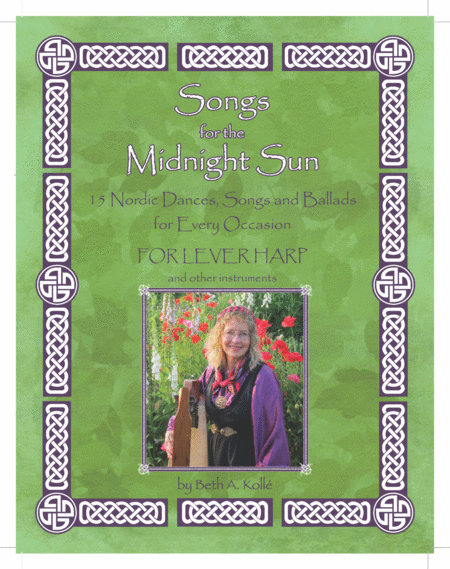
Songs for the Midnight Sun
Flute, harpe et violon

$20.00 17.37 € Flute, harpe et violon PDF SheetMusicPlus

Piano Quintet,String Ensemble Cello,Piano,Viola,Violin - Level 3 - Digital Download SKU: A0.1200955 By E.F.J. Fagan. By Henry Purcell. Arranged by E.F.J. Fagan. Baroque. Score and parts. 5 pages. Erin Fagan #799606. Published by Erin Fagan (A0.1200955). The Hole in the Wall by Henry Purcell arranged for Piano Quintet. This work (also known as Hornpipe No. 8) originally comes from Purcell's work 'Abdelazer' or 'The Moor's Revenge', a suite of dance pieces. The tune has been rearranged for Piano Quintet here and turned into a chamber music performance piece. This can still be danced to!This can easily be played by a beginner to intermediate group as none of the parts are particulalry difficult, though some natural creative licence has been taken with the original interweaving parts for the harmony and rhythm. Parts are available on request after proof of purchase by contacting e_fagan@hotmail.co.nz.
The Hole in the Wall
Piano Quintette: piano, 2 violons, alto, violoncelle
E F
$25.00 21.71 € Piano Quintette: piano, 2 violons, alto, violoncelle PDF SheetMusicPlus

Brass Ensemble Trumpet - Level 3 - Digital Download SKU: A0.813075 Composed by Traditional French Melodies. Arranged by Regis Bookshar. Christmas,Classical,Instructional,Multicultural,Standards,World. Score and parts. 22 pages. Regis Bookshar #6097387. Published by Regis Bookshar (A0.813075). Trumpet Quintet - Intermediate - Digital Download. This selection, Burgundian Air/March of the Three Kings, has been arranged for 5 Trumpets, by Regis Bookshar and is one of the many arrangements from The Regis Bookshar Trumpet Ensemble's extensive music library which are becoming available for the first time. It would be a great addition to any music library. It incorporates two traditional French melodies into one exciting arrangement, which, I'm certain, will entertain both performers and audiences alike. It is suitable for high school and college students and is perfect for Christmas concerts and church services but could be performed anytime and anywhere. Included are a score and a complete set of parts (22 pages). It begins with a Burgundian Air, played by a solo instrument. The melody is then played by two instruments in harmony before the rest of the ensemble joins in. This is followed by the March of the Three Kings, a Provencal melody (La Marche Des Rois Mages) which dates from the 13th century and recalls the Three Kings of the Christmas story. The peasants probably sang and danced to this tune, even perhaps honoring their own folk heroes, the French dukes, dressed in their shining armor and carrying brilliant banners, as they marched off to the Crusades. Georges Bizet utilized this tune as a farandole, or stately dance, in his incidental music for Alphonse Daudet's play L'Arlesienne (The Girl from Arles). There is a fugal section in which each instrument enters, playing an embellished version of the tune before concluding the arrangement. Also available are other settings of these two Traditional French melodies for a variety of instrumental ensembles as well as numerous other arrangements in a variety of styles. Please feel free to search for other arrangements by Regis Bookshar. You may find something else which might interest you as well. I'm certain that students will enjoy playing this arrangement.
Burgundian Air/March of the Three Kings (F min) (Trumpet Quintet)
Ensemble de Trompettes

$18.00 15.63 € Ensemble de Trompettes PDF SheetMusicPlus

Full Orchestra - Level 4 - Digital Download SKU: A0.511812 Composed by Han-Ki Kim. Classical,Contemporary,Multicultural,Standards,World. Score and parts. 186 pages. Han-Ki Kim #6440929. Published by Han-Ki Kim (A0.511812). Symphony No.1 “KangKangSullae†Symphony No. 1 has the name “KangKangSullaeâ€, and the composer is like any other korean composer. “What does it mean to be Korean?†With the question, he is trying to compose such works. A Korean work means a work that contains Korean emotions and spirit, and the melody of “KangKangSullae†has been handed down through a long history to this day, so it can be said that it is a keepsake containing the soul of Korea. With this in mind, the theme of “KangKangSullae†was cited in the 4th movement, and it was named as a representative name for the Symphony as an element that forms the basic character of this movement.For reference, the origin of “KangKangSullae†is from women's circular dance. It was because they valued the relationship between each other. They held hands, sang and danced, and it was a representative event to commemorate the full moon and the harvest.The first movement is in 6/8 time, and two contrasting themes, masculine and feminine, appear in normal sonata form.The second movement crosses the natural harmonics of the violin and the normal playing method in 4/4 time, expressing oriental excellence and emotion.The third movement is composed in a short ABA form with a humorous lightness and weight in 3/8 time.The fourth movement quoted the theme of “Ganggangsullae†in 8/12 time, and was composed in the form of variations that change with various personalities, sometimes majestic, sometimes sobbing, calmly, etc.Attached Music file is only 1st. movement, it's just for a reference.  
Symphony No.1
Orchestre

$45.00 39.07 € Orchestre PDF SheetMusicPlus

Solo Guitar - Level 3 - Digital Download SKU: A0.747009 By The Andrews Sisters. By Aloysio Oliveira, Ervin Drake, and Zequinha Abreu. Arranged by Music for all Occasions. Classical,Latin,Multicultural,World. Individual part. 3 pages. Keith Terrett #5869485. Published by Keith Terrett (A0.747009). Arranged for solo Guitar, Tico-Tico no fubá (sparrow in the cornmeal, or, literally, rufous-collared sparrow in the cornmeal) is a Brazilian choro song written by Zequinha de Abreu in 1917. A great arrangement for your next performance, sure to be a big hit with your audience!Its original title was Tico-Tico no farelo (sparrow in the bran), but since Brazilian guitarist Américo Jacomino Canhoto (1889–1928) had a work with the same title, Abreu's work was given its present name in 1931, and sometime afterward Aloysio de Oliveira wrote the original Portuguese lyrics.Eros Volusia and her dancers dance to Tico-Tico in 1942 Rio Rita. Ethel Smith performed Tico-Tico onscreen in Bathing Beauty (1944). Carmen Miranda performed Tico-Tico onscreen in Copacabana (1947); It was also featured in the Aquarela do Brasil segment of the Walt Disney film Saludos Amigos (1942) and in Woody Allen's Radio Days (1987).In Quebec the song has been used for several decades in commercials for Sico paint.In season three of Mama's Family episode An Ill Wind, an intoxicated Iola briefly sings the song's chorus before passing out onto a bed.This song can be heard on various episodes of the Belgian Kabouter Wesley cartoon.In season one of Narcos: Mexico, episode 3 (El Padrino), the orchestral version of the song is played by a band during a reception. A biographical movie about Zequinha de Abreu with the same title, Tico-Tico no Fubá was produced in 1952 by the Brazilian film studio Companhia Cinematográfica Vera Cruz, starring Anselmo Duarte as Abreu.The title phrase also features in the lyrics to the song O Pato made famous by João Gilberto.Choro (Portuguese pronunciation: [ˈʃoɾu], cry or lament), also popularly called chorinho (little cry or little lament), is an instrumental Brazilian popular music genre which originated in 19th century Rio de Janeiro. Despite its name, the music often has a fast and happy rhythm. It is characterized by virtuosity, improvisation and subtle modulations, and is full of syncopation and counterpoint. Choro is considered the first characteristically Brazilian genre of urban popular music. The serenaders who play choros are known as chorões.
Tico Tico (tico Tico No Fuba)
Guitare
The Andrews Sisters
$7.99 6.94 € Guitare PDF SheetMusicPlus

Woodwind Ensemble,Woodwind Quartet - Level 4 - Digital Download SKU: A0.747011 By The Andrews Sisters. By Aloysio Oliveira, Ervin Drake, and Zequinha Abreu. Arranged by Keith Terrett. Classical,Latin,Multicultural,World. 14 pages. Keith Terrett #5869499. Published by Keith Terrett (A0.747011). Arranged for Recorder Quartet  Tico-Tico no fubá (sparrow in the cornmeal, or, literally, rufous-collared sparrow in the cornmeal) is a Brazilian choro song written by Zequinha de Abreu in 1917. A great arrangement for your next performance, sure to be a big hit with your audience!Its original title was Tico-Tico no farelo (sparrow in the bran), but since Brazilian guitarist Américo Jacomino Canhoto (1889–1928) had a work with the same title, Abreu's work was given its present name in 1931, and sometime afterward Aloysio de Oliveira wrote the original Portuguese lyrics.Eros Volusia and her dancers dance to Tico-Tico in 1942 Rio Rita. Ethel Smith performed Tico-Tico onscreen in Bathing Beauty (1944). Carmen Miranda performed Tico-Tico onscreen in Copacabana (1947); It was also featured in the Aquarela do Brasil segment of the Walt Disney film Saludos Amigos (1942) and in Woody Allen's Radio Days (1987).In Quebec the song has been used for several decades in commercials for Sico paint.In season three of Mama's Family episode An Ill Wind, an intoxicated Iola briefly sings the song's chorus before passing out onto a bed.This song can be heard on various episodes of the Belgian Kabouter Wesley cartoon.In season one of Narcos: Mexico, episode 3 (El Padrino), the orchestral version of the song is played by a band during a reception. A biographical movie about Zequinha de Abreu with the same title, Tico-Tico no Fubá was produced in 1952 by the Brazilian film studio Companhia Cinematográfica Vera Cruz, starring Anselmo Duarte as Abreu.The title phrase also features in the lyrics to the song O Pato made famous by João Gilberto.Choro (Portuguese pronunciation: [ˈʃoɾu], cry or lament), also popularly called chorinho (little cry or little lament), is an instrumental Brazilian popular music genre which originated in 19th century Rio de Janeiro. Despite its name, the music often has a fast and happy rhythm. It is characterized by virtuosity, improvisation and subtle modulations, and is full of syncopation and counterpoint. Choro is considered the first characteristically Brazilian genre of urban popular music. The serenaders who play choros are known as chorões.
Tico Tico (tico Tico No Fuba)
Flûte, Hautbois, Clarinette, Basson
The Andrews Sisters
$12.99 11.28 € Flûte, Hautbois, Clarinette, Basson PDF SheetMusicPlus

Choral Piano,Vocal,Voice - Level 4 - Digital Download SKU: A0.730382 Composed by James Nathaniel Holland. Broadway,Children,Contemporary,Musical/Show. Score. 133 pages. James Nathaniel Holland #3070675. Published by James Nathaniel Holland (A0.730382). Kenneth Grahame's classic children's novel is brought to musical life by American Costa Rican composer James Nathaniel Holland in his adaptation of The Wind in the Willows for theatrical dance production, orchestra, soloists and chorus. This fine work is waiting to be premiered. Perfect for children's concerts.A musically sophisticated, lyrical and sentimental adaptation of Grahame's novel, which emphasizes his poetic chapters of Rat and Mole, while maintaining the comedy of Mr. Toad. The genius of this adaptation is full of orchestral colors; a fine introduction to classical music and the orchestra for any young person or novice. --- The Nutley Globe This reduced orchestral score for piano and voices includes all stage directions and aligns measure by measure with the full score for orchestra.  Can be used for dancers, or vocalists and final conducting for easier use and rehearsal.  Can be used with the performance CDs of this work also.
The Wind in the Willows, A Ballet Pantomime in Three Acts Piano Vocal (Reduced) Score
Piano, Voix

$19.95 17.32 € Piano, Voix PDF SheetMusicPlus

String Quartet Cello,Double Bass,String Quartet,Viola,Violin - Level 4 - Digital Download SKU: A0.747013 By The Andrews Sisters. By Aloysio Oliveira, Ervin Drake, and Zequinha Abreu. Arranged by Keith Terrett. Classical,Latin,Multicultural,World. 14 pages. Keith Terrett #5869549. Published by Keith Terrett (A0.747013). Arranged for String Orchestra Tico-Tico no fubá (sparrow in the cornmeal, or, literally, rufous-collared sparrow in the cornmeal) is a Brazilian choro song written by Zequinha de Abreu in 1917. A great arrangement for your next performance, sure to be a big hit with your audience!Its original title was Tico-Tico no farelo (sparrow in the bran), but since Brazilian guitarist Américo Jacomino Canhoto (1889–1928) had a work with the same title, Abreu's work was given its present name in 1931, and sometime afterward Aloysio de Oliveira wrote the original Portuguese lyrics.Eros Volusia and her dancers dance to Tico-Tico in 1942 Rio Rita. Ethel Smith performed Tico-Tico onscreen in Bathing Beauty (1944). Carmen Miranda performed Tico-Tico onscreen in Copacabana (1947); It was also featured in the Aquarela do Brasil segment of the Walt Disney film Saludos Amigos (1942) and in Woody Allen's Radio Days (1987).In Quebec the song has been used for several decades in commercials for Sico paint.In season three of Mama's Family episode An Ill Wind, an intoxicated Iola briefly sings the song's chorus before passing out onto a bed.This song can be heard on various episodes of the Belgian Kabouter Wesley cartoon.In season one of Narcos: Mexico, episode 3 (El Padrino), the orchestral version of the song is played by a band during a reception. A biographical movie about Zequinha de Abreu with the same title, Tico-Tico no Fubá was produced in 1952 by the Brazilian film studio Companhia Cinematográfica Vera Cruz, starring Anselmo Duarte as Abreu.The title phrase also features in the lyrics to the song O Pato made famous by João Gilberto.Choro (Portuguese pronunciation: [ˈʃoɾu], cry or lament), also popularly called chorinho (little cry or little lament), is an instrumental Brazilian popular music genre which originated in 19th century Rio de Janeiro. Despite its name, the music often has a fast and happy rhythm. It is characterized by virtuosity, improvisation and subtle modulations, and is full of syncopation and counterpoint. Choro is considered the first characteristically Brazilian genre of urban popular music. The serenaders who play choros are known as chorões.
Tico Tico (tico Tico No Fuba)
Quatuor à cordes: 2 violons, alto, violoncelle
The Andrews Sisters
$12.99 11.28 € Quatuor à cordes: 2 violons, alto, violoncelle PDF SheetMusicPlus

Woodwind Ensemble,Woodwind Quintet Bassoon,Clarinet,Flute,Horn,Oboe - Level 3 - Digital Download SKU: A0.1145747 Composed by Wolfgang Amadeus Mozart. Arranged by Ray Thompson. Classical. 10 pages. RayThompsonMusic #745951. Published by RayThompsonMusic (A0.1145747). Arranged wind quintet Horn in G and Clarinet in A Alt parts for hn in F and Bb clt Mozart composed this set of three Teutsche (German Dances) in the early months of 1791. The three dances of K. 605 are usually listed with the six dances of K. 600 and the four of K. 602 as Dreizehn deutsche Tänze (Thirteen German Dances). The pieces first appear on 12 February 1791 on Mozart's List of all my Works, and are the penultimate set of German Dances that Mozart would compose before his death on 5 December 1791. This is my arrangement of dance no 2 Dances 1 and 3 (Sleigh Ride) are also available for wind quintet.
Mozart: 3 Deutsche Tänze K605 No.2 in G - wind quintet
Quintette à Vent: flûte, Hautbois, basson, clarinette, Cor

$9.95 8.64 € Quintette à Vent: flûte, Hautbois, basson, clarinette, Cor PDF SheetMusicPlus

Woodwind Ensemble,Woodwind Quintet Bassoon,Clarinet,Flute,Horn,Oboe - Level 5 - Digital Download SKU: A0.1271263 Composed by Edvard Grieg. Arranged by Ted R. Marcus. 19th Century,Chamber,Folk,Romantic Period. 30 pages. Ted R. Marcus #863662. Published by Ted R. Marcus (A0.1271263). A suite of five selections from Edvard Grieg's 25 Norwegian Folk Songs and Dances for piano, Op. 71. Although much of Grieg's work is imbued with the flavor of Norwegian folk music, these are actual folk tunes from rural Norway set in his distinctive style, and now freshly painted in the colors of the woodwind quintet. The selections offer a range of emotions and colors, from spirited dances to melancholy folk songs: Leaping Dance (Springdans, No. 1), Last Saturday Night (Den siste lørdagskvelden, No. 15), Travel Song (Reiselåt, No. 13), The Horsefly and the Housefly (Kleggen og flugga, No. 17), and Peasant Dance (Stabbelåten, No. 18). This suite makes a delightful concert piece or encore for an advanced woodwind quintet. Duration: 6:05Please visit my Web site to explore more classics for adventurous woodwind quintets.
Five Norwegian Folk Tunes from Op. 17 for Woodwind Quintet
Quintette à Vent: flûte, Hautbois, basson, clarinette, Cor

$18.00 15.63 € Quintette à Vent: flûte, Hautbois, basson, clarinette, Cor PDF SheetMusicPlus


Partitions Gratuites
Acheter des Partitions Musicales
Acheter des Partitions Digitales à Imprimer
Acheter des Instruments de Musique

© 2000 - 2026

Accueil - Version intégrale





